

How to Identify a Mole
Moles are rarely seen as they spend almost all of their lives underground. They feed, travel, and even raise their young underground. If a mole stays underground, how does a homeowner know when they have a mole problem?
What Do Moles Look Like?
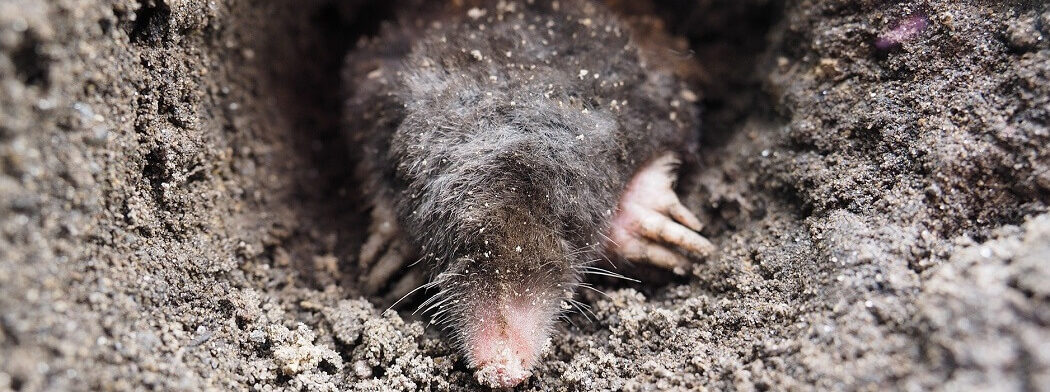
Many people think moles are rodents. But moles are part of the order Talpidae, a different family from that of the rodents. Moles are small insect-eating mammals that range from five to eight inches in length and usually weigh three to five ounces. Their coloring runs from brown to gray, with tubular bodies and short, thick tails.
Their defining features are their oversized pink feet with long claws on the front feet. These are used for digging, and their long, hairless snout is for touch. Moles have small eyes and ears adapted to living in the dark.
What Is the Mole’s Habitat?
Moles thrive anywhere where the soil is rich, damp, and full of insects. While deciduous woodlands, grasslands, and pastures offer vast areas filled with worms, grubs, and other delicacies, these areas are also attractive to residential lawns and gardens.
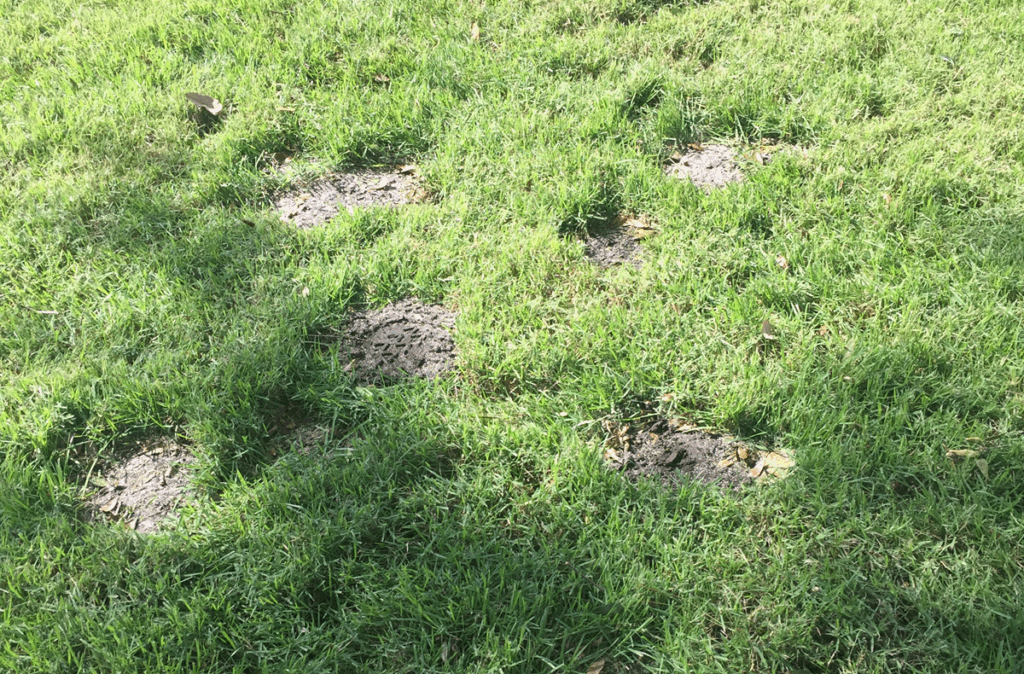
Because people have encroached on natural habitats, moles have discovered that the well-kept, well-aerated lawns in suburbia are a great substitute. Healthy, well-irrigated lawns provide ideal conditions for the food that moles like to eat, such as worms, grubs, insect larvae, beetles, and centipedes. In addition, cared-for lawns get consistent moisture and have loose, aerated soil that is easier for moles to tunnel through.
What States Do Moles Live In?
Moles can be found across much of the country. Different species are more prevalent in different regions, including:
- Eastern Moles: Found throughout much of the eastern and central states from Florida and Texas through the Midwest and parts of the Northeast.
- Star-Nosed Moles: These moles live primarily in the Northeast and Great Lakes region.
- Townsend Moles: These moles live in the Pacific Northwest.
- Coast Moles: This species is found along the Pacific Northwest coast.
- Broad-footed moles: These moles also live in the western U.S., mostly in California.
While moles live in most states east of the Rocky Mountains and along much of the West Coast, they are uncommon in desert regions of Arizona, Nevada, and New Mexico, as well as areas that are extremely rocky, arid, or frozen.
Mole Reproduction
Mole populations tend to fluctuate. There are more moles in habitats that are favorable and fewer in those where food is scarce. Moles reproduce only once per year, bearing three to four young in each litter. These mole babies will stay with the female in deep underground tunnels for about four weeks. After a month, the baby moles will venture out and begin digging their own tunnels. Most baby moles will reach their full-grown size in less than eight weeks.
Getting Rid of Moles
Moles can create quite a bit of damage if left alone to thrive. Critter Control specializes in getting rid of moles and can also help keep the pests away. Our effective and efficient mole control techniques provide the best solution for getting rid of your mole problems.
https://www.crittercontrol.com/wildlife/moles/Critter Control offers several mole control services, including mole removal, mole trapping, mole prevention, and mole damage repair.
No matter what the animal management issue is, Critter Control can help! If you need mole control services, don’t hesitate to contact Critter Control today at 1-(800) 274-8837
Learn more about mole removal.
Get them out.
Keep them out.®
Experiencing a wildlife or pest issue? We can help! Complete this form and your local Critter Control® office will contact you to assist.


- How to Get Rid of Moles in Your Yard
- Moles in the Garage
- Moles in the House
- Mole Trapping
- Moles in the Basement
- Moles in the Garden
- How to Identify Moles in Yard
- Moles vs. Voles
- Do Moles Bite?
- Do Moles Carry Disease?
- Eastern Moles
- Hairy-Tailed Moles
- Mole Hills
- Mole Repellent
- Mole Tracks
- Shrew Moles
- Star-Nosed Moles
- Types of Moles
- Mole Diet
- What Is a Mole?
- Damage Caused by Moles
- Mole Droppings
- Mole Appearance