

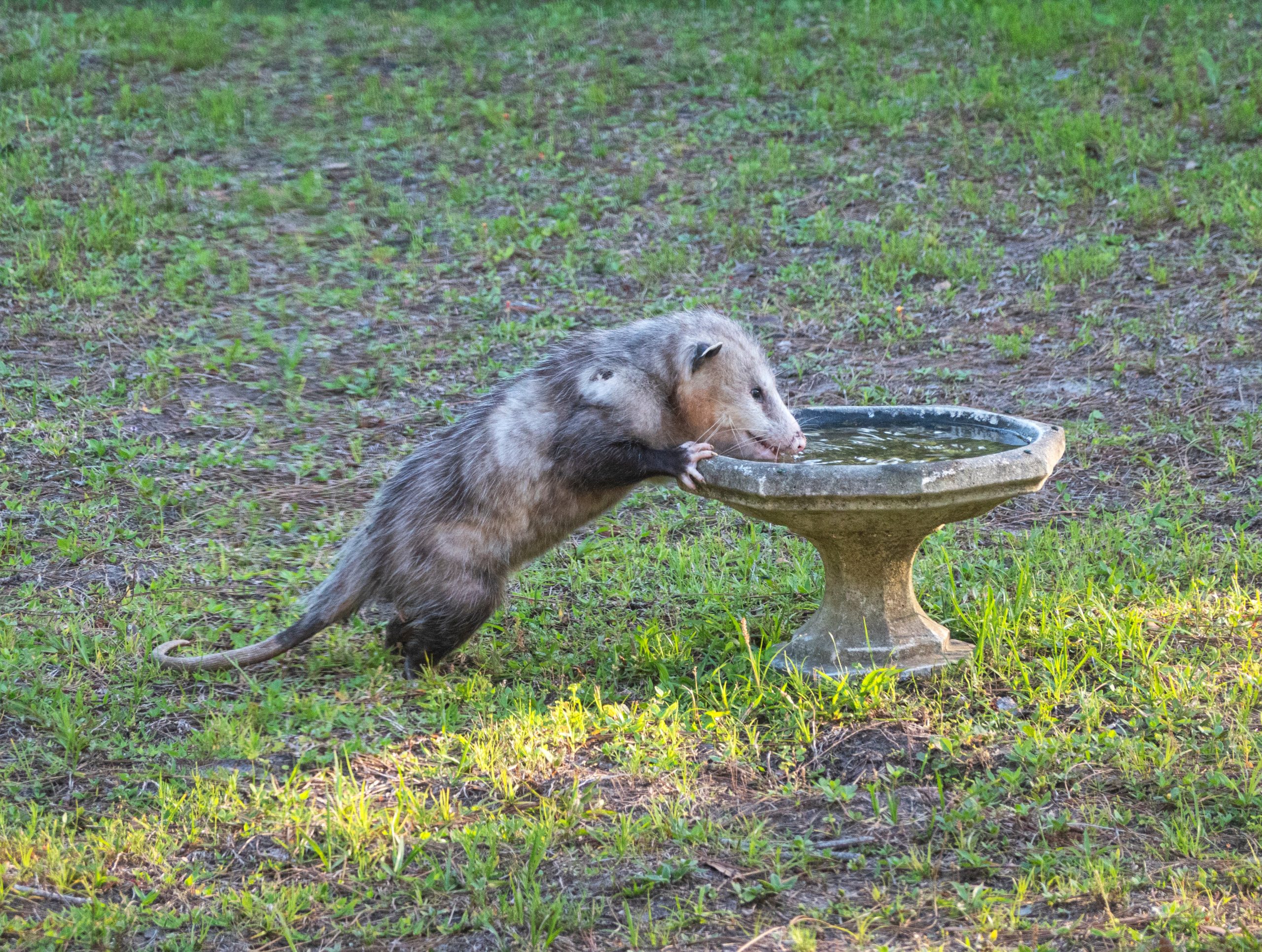
Generally, no opossums, the only marisupal in North America, are not directly dangerous to people.
When encountered directly, the creatures hiss and growl. Even though they have sharp teeth and claws, opossum attacks are rare and unlikely. The main defense mechanism is pretending to be dead (playing possum) or emitting an awful stench from their anal glands when frightened.
Opossum Problems
Mostly considered minor nuisances, opossums become problematic when they decide to nest and forage near residential and commercial areas. Under sheds, decks, and porches, the critters build nests where they take shelter and raise their young. They prefer these enclosed spaces because they’re safe from predators and harsh weather. Once these burrows are established, it can be hard to eliminate an opossum.
Opossums can also cause problems while looking for food. They are omnivores, and an opossum diet includes insects, small rodents, frogs, birds, and berries. Opossums can dig up your lawn looking for grubs, slugs, and insects. They steal eggs from chicken coops. They make a mess rummaging in garbage cans or eating pet food.
There are some benefits to opossums. They eat ticks which can spread Lyme disease to people. As scavengers, opossums will eat carrion (dead animals).
Opossum Diseases
Opossums become dangerous due to their ability to transmit diseases to pets and people.
- Leptospirosis: This bacterial disease can be transmitted through contact with opossum urine, especially if it contaminates water or soil. Humans and pets can contract it through broken skin or mucous membranes.
- Salmonella: Like raccoons and rodents, opossums can carry salmonella, typically spread through feces.
- Tuberculosis: Opossums are known to carry bovine tuberculosis in some regions, although this is extremely rare in Wisconsin.
- Fleas, Ticks, and Mites: Opossums often host parasites that can transmit diseases such as Lyme disease, murine typhus, and other illnesses to humans and pets.
- Coccidiosis and Toxoplasmosis: These are parasitic infections that can be picked up by pets that come into contact with contaminated opossum feces.
Are Opossums a Rabies Risk?
Opossums are rarely known to contract rabies because their body temperature is too low for the rabies virus. They are even less likely to pass it on to other organisms they come into contact with.
Signs of Opossum Activity Around Your Home
If you suspect an opossum is nearby, look for these signs:
- Noises at night (scratching, rustling, or hissing)
- Overturned garbage cans or compost bins
- Droppings near sheds, porches, or crawlspaces
- Visible burrows or access points under structures
They may also take shelter in attics, basements, or garages if given access.
Opossum Removal: How to Get Rid of an Opossum
While opossums are not naturally aggressive animals, they do cause costly damage and pose health and safety issues to you, your family, and your pets. Before they dig up your garden or gnaw through electrical wires in your attic, it is time to conduct opossum removal.
When an opossum is living in your attic, under your deck, or in your shed, it is not advisable to try getting rid of opossums on your own. An opossum can become aggressive if cornered and can bite and scratch. Plus, they carry parasites and diseases that can be transmitted to people and pets.
Critter Control is a wildlife removal service with over 40 years of experience in humane and effective opossum removal, exclusion, and repair. Critter Control specialists arrive with the proper equipment, know all local, state, and federal ordinances, and will guarantee their work.
Exclusions for Opossum Control
Exclusions are the most effective method of opossum control to keep opossums out of your yard and home. If an opossum is denning inside your attic or crawlspace, we seal all openings after we trap and remove the animal. If the opossum is under your house or shed, we install fences buried into the ground. It prevents the critter from digging under or climbing over the exclusion. Finally, if there is an especially attractive food source in your garden, we can protect your garden with barriers and fences.
Habitat Modification to Prevent Opossums
Habitat modification is the process by which you remove the resources and conditions that make the area attractive to them.
Tips to Keep Opossums Out of Your Yard & House:
- Scrub grills after you use them.
- Keep trash cans tightly sealed.
- Bring pet food indoors.
- Clean up brush piles and leaves from the yard.
- Clean up fallen fruit from around trees.
- Fence in your garden.
- Add mesh around your deck, porch, and shed foundations.
Get them out.
Keep them out.®
Experiencing a wildlife or pest issue? We can help! Complete this form and your local Critter Control® office will contact you to assist.
- How to Identify Opossum Noises
- Opossum Diet
- Opossum Droppings
- Opossum Playing Dead
- Opossum Tracks
- Opossums and Rabies
- What Does an Opossum Look Like?
- Opossum Babies: Identification & Concerns
- Opossums in the Attic
- Opossums in the Day
- Opossums in the Walls – Prevention & Removal
- Opossums and Ticks: Do Opossums Eat Ticks?
- Do Opossums Hibernate in the Winter?
- Opossums on the Roof
- Opossum Under Your House, Deck, or Shed