

It is not uncommon for mice to sneak into homes in search of food or water. Fortunately, there are many easy and effective ways to control and prevent them from harming your home or your family. Whether you already have a mice problem or want to prevent one from happening, there are safe, dependable solutions to meet your family’s needs. For the most trustworthy treatment, contact Critter Control. Our technicians are trained on specific mouse traps and baits to eliminate your rodent problem for good.
Types of Mouse Traps
There are numerous ways to try to exterminate mice from your home, with traps being the most readily available. The most common types of traps include snap, glue, cage, and electric. However, you may want to ask a professional which mouse trap option would be best for your situation.
Snap Traps
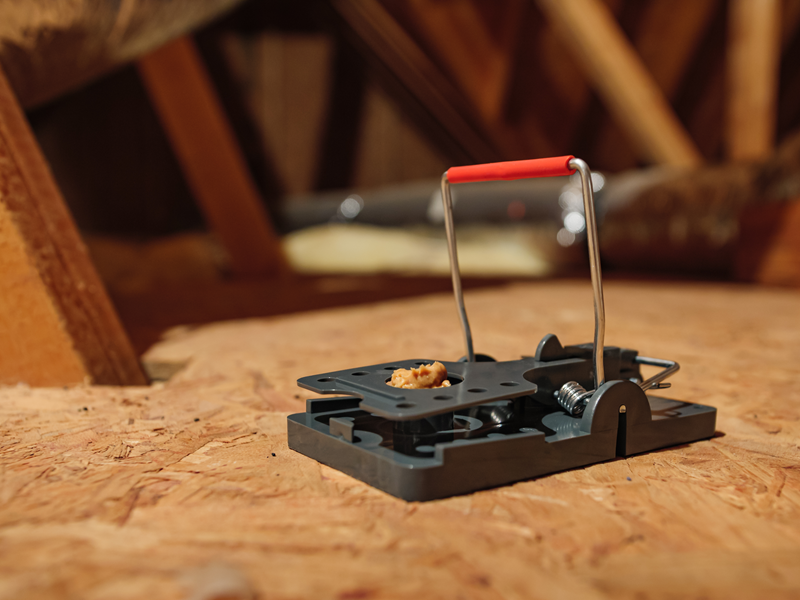
Snap traps are a safe technique when used correctly. They are cheap, practical, and usually consist of a spring-loaded metal bar attached to a wooden plank. You can also find plastic traps that operate using a similar spring-loaded metal bar. Mice activate the trigger by nudging a piece of bait. Knowing the best bait for mouse traps is critical.
Snap traps come in various sizes to meet your needs. Choosing the wrong type and size of humane mouse traps and bait can lead to further infestation. You must also know where to place the trap; otherwise, mice will avoid it.
Need help picking the best mouse trap?

Cage Traps
Cage traps are the most humane way to capture mice, as they do not kill them. Instead, they hold the rodent until you can release it elsewhere. You can reuse it, and with some traps, you can capture up to 30 mice in one use.
There are two versions of live-catch traps: metal cages and plastic tubes, both of which are outfitted with trigger-activated doors. Mice enter a small hole on the exterior of the trap but are unable to exit back through the same way. This kind of trap is the safest and least stressful option for you and the mouse.
When using cage traps, however, there are two crucial steps to follow before trapping a mouse. Know your city’s regulations regarding where and how to release them so you don’t violate them. Fix all areas of your home where mice can enter so that the mice you release do not return.
Electric Traps
Electric mouse traps are expensive, but they can quickly and humanely kill mice. The trap lures mice in with bait placed on a metal plate. When the mouse contacts the metal plate, it releases a sharp jolt of electricity. Mice do not suffer due to the quick jolt.
These traps are engineered with a no-see, no-touch disposal system to protect you and your family. Electric traps also have a light to indicate when a mouse is trapped, so you don’t have to guess. Most importantly, they are designed to prevent humans and pets from being shocked by deactivation when the trap door is open.
As with snap traps, it is essential to know the right bait to lure a mouse.
Glue Traps
Mouse glue traps are one of the cheapest trapping solutions, but they are the least humane. It is usually a rectangular piece of plastic with very sticky, non-drying adhesive or glue on top. You typically place the product somewhere between the mouse’s nest and a food source. Once the mouse attempts to cross it and is caught on the sticky surface, it dies from lack of water and food. Then the card is thrown away.
We do not recommend glue traps. Temperature extremes and dusty areas can make them less effective. If you accidentally touch it or step on the adhesive, the trap can stick to you, and the glue can be challenging to wash off. Most importantly, they are not an ethical method of house mouse control.
What’s the Best Bait to Use for Mouse Traps?
While cheese may be the most famous bait for mouse traps, homeowners should know that mice prefer sweet foods. With that in mind, if you’re using a food-baited snap trap, your best bet for enticing mice to the trap is to bait it with peanut butter or some other light, sweet treat. Pay attention to what the mice are already eating if they have invaded the pantry. If you find a hole chewed in a box of cereal, use that as your bait.
Jason Leinneweber, Division Service Manager
Mouse Bait Stations
Bait stations are only safe when implemented by professional technicians who have the proper gear and equipment and know where to place them so you, your family, and your pets remain safe.
Baits typically consist of toxic ingredients mixed with a food source that mice enjoy. When they eat the bait, it interferes with how their bodies function and ultimately kills them. The toxins are not always immediate, and some mice return to their nests, where a professional will gather and adequately dispose of them.
When used correctly, baits are dependable and humane options that outperform DIY methods. They are typically slow-acting, requiring up to four days and multiple doses to kill a mouse. Baits should not be used if there is a risk of inadvertent contact with pets or small children, unless a technician places them in a tamper-resistant container.
Why You Need a Professional Mouse Control
If you see signs, it’s okay to try getting rid of mice using a simple mouse trap and bait. However, if you have more than a few rodents, you will be better off calling for help from a wildlife removal professional. There are too many risks when dealing with infestations, mainly because mice reproduce frequently, and their numbers can skyrocket. They can tell you how many mice are in your home, the type of mice, their preferred foods, and the correct size and type of trap to use. Even with your best efforts, a mouse problem can get worse.
Critter Control technicians can eliminate your mouse problem and take measures to protect your home and family from future rodent visits. You and your family can enjoy the safety and comfort of your home without interruptions from mice.
Critter Control’s Approach to Mouse Trapping
Critter Control has a proven, comprehensive step-by-step process for dealing with mice that goes far beyond simply getting rid of them.
How We Get Rid of Mice
- Inspection
- Safe trap selection
- Humane removal
- Sanitation and cleanup
- Prevention and exclusion
Critter Control has been helping people get rid of mice for over 40 years. They have long been known for their reliability and professionalism in pest removal.
If you see a mouse or signs of mice activity, you want the quickest, safest, most humane solution. You don’t have to guess and use trial and error to get rid of mice. You also don’t want to put your family or your pets at risk.
The simplest solution is to call the professionals at Critter Control. Hiring someone with expertise can reassure you that mouse problems will be eliminated and prevented.
Learn more about mouse removal.
Get them out.
Keep them out.®
Experiencing a wildlife or pest issue? We can help! Complete this form and your local Critter Control® office will contact you to assist.
- Baby Mice
- Dead Mice
- House Mouse Nest
- How to Get Rid of Mice
- Mice Behavior in the Winter
- Fear of Mice
- How to Catch a Mouse
- Life Cycle of a Mouse
- Mice in Attic Removal
- Mice in Crawl Space
- Mice in the House
- Mice in the Walls
- Mice in Yard
- Mice Problems
- Mouse Poop & Droppings
- Mice in Pantry
- Mouse Noises
- Mouse Repellent
- Mouse Tracks
- Mice vs. Rats
- Types of Mice
- Diseases That Mice Carry
- Mouse Appearance
- Where Do Mice Hide?
- White Footed Mouse Habitat