

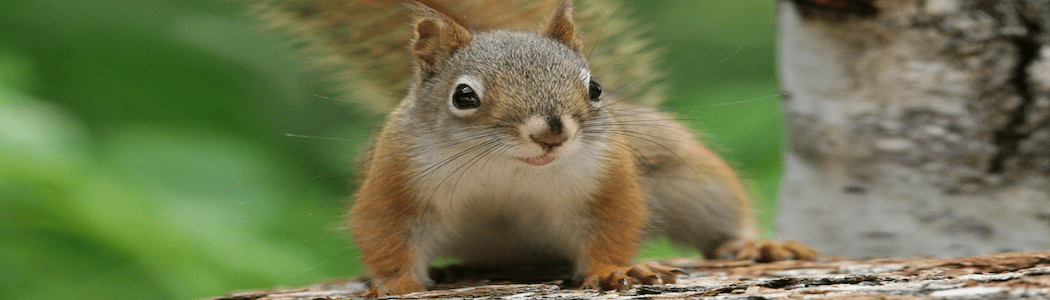
Found strange dark pellets in your attic or roof?
They may look harmless, but squirrel poop can spread hantavirus that is dangerous to humans and pets.
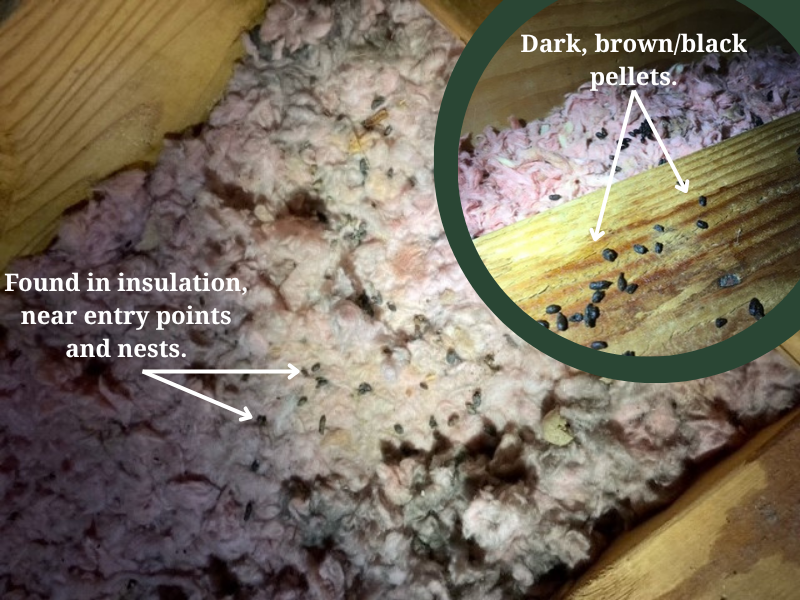
Squirrel Droppings
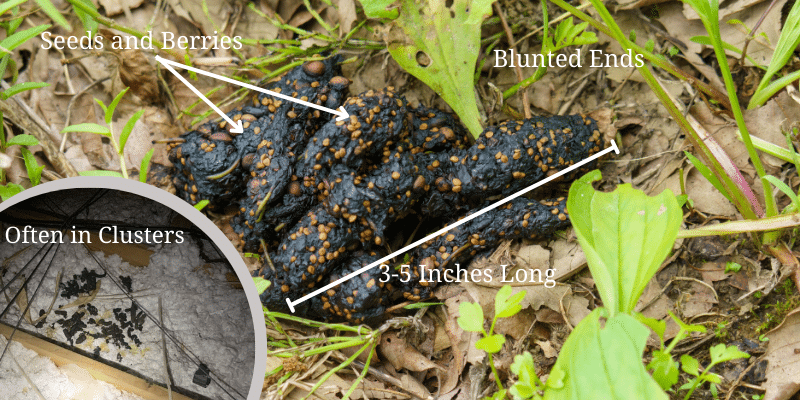
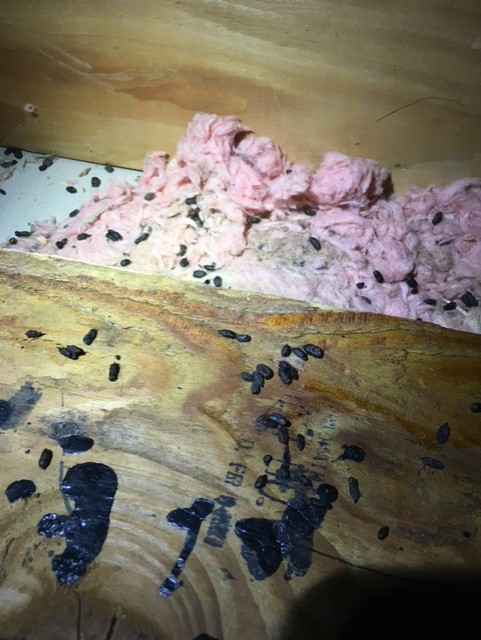
If you suspect a squirrel infestation, droppings are a common sign. These look like brown or black oblong pellets about one-half inch long, becoming lighter and turning whitish yellow or gray as they dry.
Shape & Size
Pellets, 3/8 inces long, 1/8 inch in diameter.
Color:
Dark brown to black. Older droppings look light brown or reddish.
Appearance:
Pellets with rounded edges, shaped like a coffee bean.
Habitat Cues:
Scattered piles in attics and roofs near entry points and nests.
Hazards:
Squirrel droppings can spread diseases like hantavirus and leptospirosis.
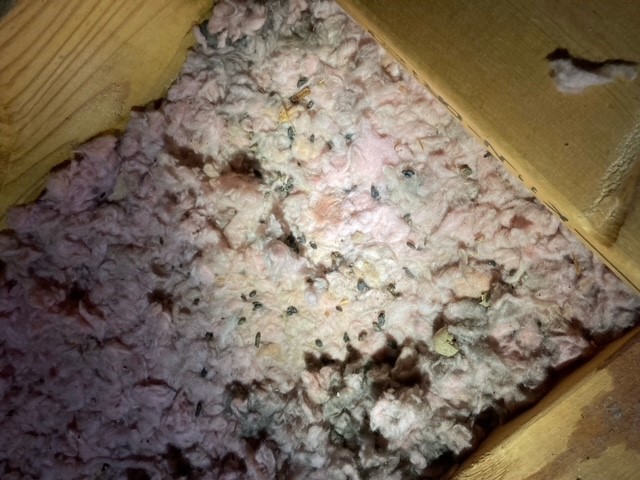
Why Poop There?
Unlike rats and mice, squirrels will poop in piles scattered near their nests. They will usually poop in the same places.
Typical locations:
• Attic corners and insulation
• Roofs, decks, or under porches
Health Risks from Squirrel Poop
Squirrels feces can expose people and pets to serious pathogens:
• Hantavirus: Virus found in urine, droppings, and rodent nests that can become airborne when disturbed.
• Leptospirosis: Spread through squirrel urine; enters through skin or eyes.
• Fleas & Ticks: Droppings can harbor secondary parasites.

Never sweep or vacuum squirrel feces.
This can aerosolize virus, leading to accidental inhalation or ingestion.
Safe Squirrel Poop Clean-Up
Follow a strict safety protocol:
- Wear proper safety equipment – Rubber or plastic gloves and face mask.
- Containment & Removal – Spray droppings with bleach solution or EPA-registered disinfectant.
- Wipe Down – Use paper towels to wipe up droppings and urine.
- Mop or sponge area – Clean all hard surfaces with disinfectant.
- Wash Up – Wash gloved hands and remove and then wash hands with warm water and soap.
Cleaning squirrel droppings addresses the contaminated material, but it does not resolve how squirrels entered the space. Once the squirrels are safely removed, roof gaps, vents, soffits, fascia, and other entry points should be inspected and repaired as needed.
DIY Precautions (If You Must Handle Any Area)
If you need to temporarily isolate an area before professional service:
- Wear disposable gloves, N95 mask, and rubber boots.
- Lightly mist feces with water before handling (reduces dust).
- Double-bag waste and dispose via municipal trash, not compost.
- Wash hands and clothes with hot water + detergent.
Still, professional cleanup is the only entirely safe method.
When to Call Wildlife Control
You find any droppings in your attic.
Pets show interest in a certain attic or yard area
• Odors, ceiling stains, or insulation damage are visible
Wildlife Control technicians are trained to handle wildlife contamination safely,
removing both the squirrels and the risks they leave behind.
Squirrel and rat droppings can look very similar, but there are notable differences. Squirrel droppings are a bit fatter and rounder than rat droppings and also have blunter ends. In your home, squirrel droppings will appear in small groups while rat droppings will appear one at a time along the paths they travel.
Mouse droppings are much smaller and thinner than those of squirrels or rats. Mice continually leave 50 to 75 pellets per day along their routes.
CDC Warning
The CDC identifies one primary risk from squirrels:
Hantavirus
Hantaviruses can cause serious illness that affects your lungs and kidneys. Hantaviruses are spread from rodents to people.
TESTIMONIALS
Why Customers Trust Critter Control
Best Wildlife Removal Company
Posted on Trustindex
 Steven Scalzo2 October 2026
Trustindex verifies that the original source of the review is Trustindex.
Very Efficient and Effective Service Outstanding service performed by Jamie at Critter Control. She was very personable, professional, and knowledgeable on skunk removal. She was able to safely remove the skunk from my property within 30 minutes as well as ensure that other areas of my home were safe from invasion by these critters. I highly recommend Jamie Murphy with Critter Control. Extremely satisfied with the service she provided.Posted on Google
 toney cole1 October 2026
Trustindex verifies that the original source of the review is Google.
It was impressive how the entire team worked with me until my squirrel situation was resolved. Great service, quick response to inquiries along with caring attitudes, knowledgeable and professional. Because of Critter Control..All is well...thank you!Posted on Google Polly Riggenbach1 October 2026Critter Control did a great job evicting bats from our eaves and inside our walls. They were available to get the job started right away and get the two colonies of bats out of our house quickly. They were also kind enough to replace some light bulbs that we didn't have ladders high enough to reach their process.Posted on Google
 Sam Barg1 October 2026The wildlife technician, Hudson, has been very thorough with addressing the removal and prevention of bats. He’s friendly and thoughtful and I would highly recommend him.Posted on Google
 Kerry Milligan1 October 2026Joel does a great job and is super reliable. Always on time for our appointments or let’s me know well in advance if he’s running late. Terrific service.Posted on Google
 Allen Baltimore1 October 2026Jay was awesome and knowledgeable explaining the process.Posted on Google
 Mark Riggenbach1 October 2026Very professional and friendly. and made sure they did the job right.Posted on Google
 Deb Whiteman1 October 2026Jon from Critter Control did a great job explaining in a concise manner what the job entailed and answered all questions in a thorough manner. I would recommend without hesitation.Posted on Google
 Alexa Bearden1 October 2026Awesome experience!! I needed bats to be relocated out of my attic and I was given a clear understanding of what they were going to do and everything was cleaned up and it looks great!Posted on Google
 Sheryl Hauger1 October 2026Great service! And customer service. Thanks
Found strange dark pellets in your attic or roof?
They may look harmless, but squirrel poop can spread hantavirus that is dangerous to humans and pets.
Squirrel Droppings
If you suspect a squirrel infestation, droppings are a common sign. These look like brown or black oblong pellets about one-half inch long, becoming lighter and turning whitish yellow or gray as they dry.
Shape & Size
Pellets, 3/8 inces long, 1/8 inch in diameter.
Color:
Dark brown to black. Older droppings look light brown or reddish.
Appearance:
Pellets with rounded edges, shaped like a coffee bean.
Habitat Cues:
Scattered piles in attics and roofs near entry points and nests.
Hazards:
Squirrel droppings can spread diseases like hantavirus and leptospirosis.
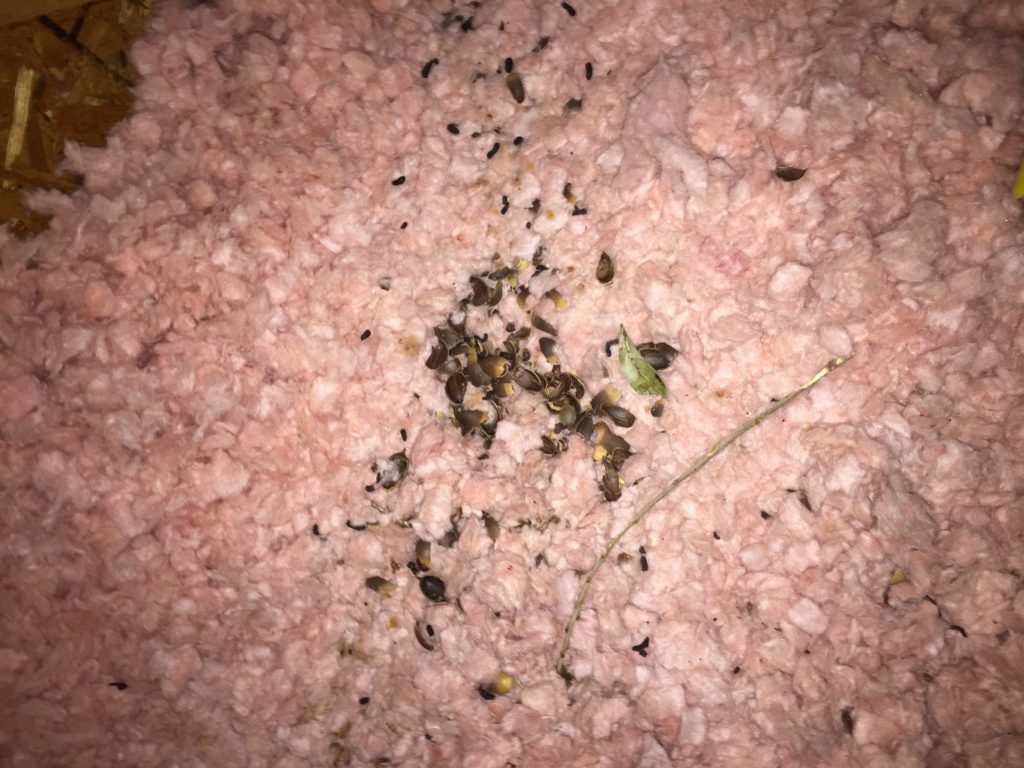
Why Poop There?
Unlike rats and mice, squirrels will poop in piles scattered near their nests. They will usually poop in the same places.
Typical locations:
• Attic corners and insulation
• Roofs, decks, or under porches
Health Risks from Squirrel Poop
Squirrels feces can expose people and pets to serious pathogens:
• Hantavirus: Virus found in urine, droppings, and rodent nests that can become airborne when disturbed.
• Leptospirosis: Spread through squirrel urine; enters through skin or eyes.
• Fleas & Ticks: Droppings can harbor secondary parasites.
Safe Squirrel Poop Clean-Up
Follow a strict safety protocol:
- Wear proper safety equipment – Rubber or plastic gloves and face mask.
- Containment & Removal – Spray droppings with bleach solution or EPA-registered disinfectant.
- Wipe Down – Use paper towels to wipe up droppings and urine.
- Mop or sponge area – Clean all hard surfaces with disinfectant.
- Wash Up – Wash gloved hands and remove and then wash hands with warm water and soap.
DIY Precautions (If You Must Handle Any Area)
If you need to temporarily isolate an area before professional service:
- Wear disposable gloves, N95 mask, and rubber boots.
- Lightly mist feces with water before handling (reduces dust).
- Double-bag waste and dispose via municipal trash, not compost.
- Wash hands and clothes with hot water + detergent.
Still, professional cleanup is the only entirely safe method.
When to Call Wildlife Control
You find any droppings in your attic.
Pets show interest in a certain attic or yard area
• Odors, ceiling stains, or insulation damage are visible
Wildlife Control technicians are trained to handle wildlife contamination safely,
removing both the squirrels and the risks they leave behind.
CDC Warning
The CDC identifies one primary risk from squirrels:
Hantavirus
Hantaviruses can cause serious illness that affects your lungs and kidneys. Hantaviruses are spread from rodents to people.
Find a Critter Control near you
TESTIMONIALS
Why Customers Trust Critter Control
Best Wildlife Removal Company
Posted on TrustindexSteven Scalzo2 October 2026Very Efficient and Effective Service Outstanding service performed by Jamie at Critter Control. She was very personable, professional, and knowledgeable on skunk removal. She was able to safely remove the skunk from my property within 30 minutes as well as ensure that other areas of my home were safe from invasion by these critters. I highly recommend Jamie Murphy with Critter Control. Extremely satisfied with the service she provided.Posted on Googletoney cole1 October 2026It was impressive how the entire team worked with me until my squirrel situation was resolved. Great service, quick response to inquiries along with caring attitudes, knowledgeable and professional. Because of Critter Control..All is well...thank you!Posted on GooglePolly Riggenbach1 October 2026Critter Control did a great job evicting bats from our eaves and inside our walls. They were available to get the job started right away and get the two colonies of bats out of our house quickly. They were also kind enough to replace some light bulbs that we didn't have ladders high enough to reach their process.Posted on GoogleSam Barg1 October 2026The wildlife technician, Hudson, has been very thorough with addressing the removal and prevention of bats. He’s friendly and thoughtful and I would highly recommend him.Posted on GoogleKerry Milligan1 October 2026Joel does a great job and is super reliable. Always on time for our appointments or let’s me know well in advance if he’s running late. Terrific service.Posted on GoogleAllen Baltimore1 October 2026Jay was awesome and knowledgeable explaining the process.Posted on GoogleMark Riggenbach1 October 2026Very professional and friendly. and made sure they did the job right.Posted on GoogleDeb Whiteman1 October 2026Jon from Critter Control did a great job explaining in a concise manner what the job entailed and answered all questions in a thorough manner. I would recommend without hesitation.Posted on GoogleAlexa Bearden1 October 2026Awesome experience!! I needed bats to be relocated out of my attic and I was given a clear understanding of what they were going to do and everything was cleaned up and it looks great!Posted on GoogleSheryl Hauger1 October 2026Great service! And customer service. Thanks
Never sweep or vacuum squirrel feces.
This can aerosolize eggs, leading to accidental inhalation or ingestion.
Get them out.
Keep them out.®
Experiencing a wildlife or pest issue? We can help! Complete this form and your local Critter Control® office will contact you to assist.
Posted on TrustindexSteven Scalzo2 October 2026Very Efficient and Effective Service Outstanding service performed by Jamie at Critter Control. She was very personable, professional, and knowledgeable on skunk removal. She was able to safely remove the skunk from my property within 30 minutes as well as ensure that other areas of my home were safe from invasion by these critters. I highly recommend Jamie Murphy with Critter Control. Extremely satisfied with the service she provided.Posted on Googletoney cole1 October 2026It was impressive how the entire team worked with me until my squirrel situation was resolved. Great service, quick response to inquiries along with caring attitudes, knowledgeable and professional. Because of Critter Control..All is well...thank you!Posted on GooglePolly Riggenbach1 October 2026Critter Control did a great job evicting bats from our eaves and inside our walls. They were available to get the job started right away and get the two colonies of bats out of our house quickly. They were also kind enough to replace some light bulbs that we didn't have ladders high enough to reach their process.Posted on GoogleSam Barg1 October 2026The wildlife technician, Hudson, has been very thorough with addressing the removal and prevention of bats. He’s friendly and thoughtful and I would highly recommend him.Posted on GoogleKerry Milligan1 October 2026Joel does a great job and is super reliable. Always on time for our appointments or let’s me know well in advance if he’s running late. Terrific service.Posted on GoogleAllen Baltimore1 October 2026Jay was awesome and knowledgeable explaining the process.Posted on GoogleMark Riggenbach1 October 2026Very professional and friendly. and made sure they did the job right.Posted on GoogleDeb Whiteman1 October 2026Jon from Critter Control did a great job explaining in a concise manner what the job entailed and answered all questions in a thorough manner. I would recommend without hesitation.Posted on GoogleAlexa Bearden1 October 2026Awesome experience!! I needed bats to be relocated out of my attic and I was given a clear understanding of what they were going to do and everything was cleaned up and it looks great!Posted on GoogleSheryl Hauger1 October 2026Great service! And customer service. Thanks
- How to Get Rid of Squirrels
- Squirrels Entering Homes
- Squirrels in Attics
- Squirrels in Chimneys
- Squirrels on Roofs & in Soffits
- Squirrels in Walls
- Squirrels in Ventilation
- Squirrels in Gutters
- Squirrels in Crawl Spaces
- Squirrels in Yards or Gardens
- Squirrels in Trees
- Squirrels Digging Holes in the Ground
- How to Identify Squirrel Sounds
- Squirrel Tracks
- Squirrel Trapping
- Squirrel Repellents & Deterrents
- Squirrel Appearance & Identification
- Species & Types of Squirrels
- Squirrel Life Cycle
- Baby Squirrels
- Squirrel Nest
- Dead Squirrels
- Squirrel Diet
- Diseases That Squirrels Carry
- Rabid Squirrels
- Do Squirrels Hibernate?
- Gray Squirrels
- Do Squirrels Bite?
- Squirrel Damage to Your House
- Squirrels vs. Rats
- Squirrels vs. Chipmunks