

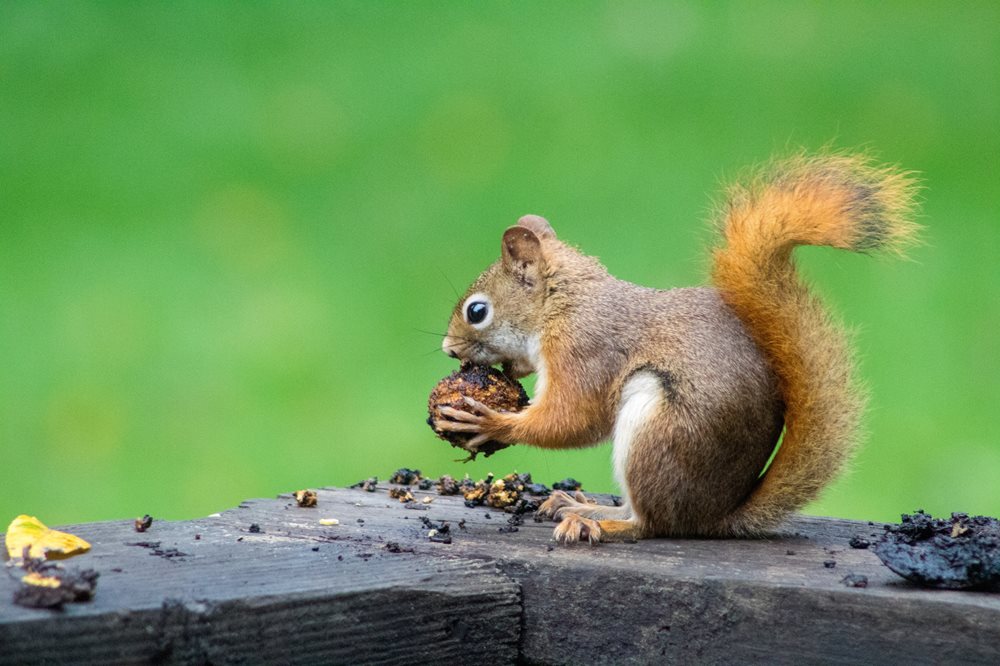
What do squirrels eat?
A squirrel’s diet contains various food items, including leaf buds, wild fruits, nuts, acorns, bird eggs, and tree bark.
Your yard can have easily accessed high caloric food that attracts squirrels, such as:
- Bird seed from feeders
- Pet food
- Fall fruit from fruit trees
- Gardens, both ornamental and vegetable
Unfortunately, this can lead them to seek shelter in and around your home.
Depending on the species, squirrels can have a range as big as 25 acres with several nests and food stores. Squirrels tend to establish a test that is close to food and water, sheltered, and protected from predators.
Having squirrel food available in your yard can increase the risk of a squirrel nest in the attic or chimney. Squirrels in homes can cause extensive property damage and create a health hazard due to the feces and urine they leave behind.
Are you attracting squirrels to your backyard and worried about a squirrel nest on the roof or inside the attic?
Find a Critter Control near you
What Do Squirrels Eat?
Squirrels are opportunistic feeders with varied diets. These little rodents’ diets vary based on the time of year. Many species of tree squirrels store pieces of food for later consumption.
Common Squirrel Food Sources:
- Leaf buds
- Fruits such as apples, cantaloupe, grapes, strawberries, watermelon, blackberries, blueberries, raspberries
- Nuts like acorns, hazelnuts, pecans, peanuts, hickory nuts
- Vegetables like broccoli, carrots, peas, yellow squash, and zucchini
- Bird eggs
- Seeds like pumpkin seeds, sunflower seeds,
- Tree bark
When given the opportunity, squirrels will participate in food theft and snack on human leftovers and garbage.
However, a squirrel eating human food (especially junk food) can be a problem. Foods like dairy, chocolate, salted nuts, and bread can contain high levels of sugar, salt, and other ingredients that can cause various issues for the squirrel, such as weight gain, dental problems, metabolic bone disease, and other health problems.
Where Do Squirrels Look for Food?
Squirrels will forage for their food in a wide variety of places, especially where they can easily find food. Hardwood forests with mature oak, hickory, elm, and maple trees are a favorite spot because of their abundance of foraging opportunities, and the same is true of nut and fruit orchards.
Gardens and farm fields full of fruits, vegetables, seeds, and grain crops are another popular pick, favored by these rodents for their ample, easily accessible food. You might even spot squirrels stealing seeds from your backyard bird feeder, provided they can shimmy their way up to the feeder.
Squirrels also flock to public parks and university campuses where food scraps are plentiful, and garbage cans are readily available for scavenging.
Should You Feed Squirrels in Your Backyard?
You should not feed squirrels.
Feeding squirrels encourages them to become comfortable around your home and dependent on human food sources.
Feeding squirrels in your yard increases the likelihood of damage. Squirrels constantly gnaw to keep their teeth worn down, and they may chew on patio furniture, porch railings, decorations, and many other things. Once squirrels view your property as a reliable food source, they may try to make your attic their home as well.

How Squirrels Store Food
Squirrels are known for their caching behavior, which involves collecting food and hiding it in various locations to ensure they have enough to eat when resources become scarce. This food-storage strategy is vital because squirrels do not store fat for long-term energy as other animals do, so they must rely on the food they gather and hide.
Foraging: Squirrels begin by gathering a wide variety of food items, including nuts, seeds, berries, and fungi. Acorns are a favorite, but they’ll take whatever is available depending on the season. Their sharp teeth allow them to open nuts and seeds, making them a reliable food source.
Hoarding: Squirrels usually hide their food, a practice called hoarding, to eat later. They either hide their nuts in multiple locations (scatter hoarding) or in a single central location (larder hoarding). Typically, squirrels scatter their hoard by burying their nuts in different places. They can hoard more readily when they have a safe place to deposit their collections.
Scatter Hoarding
This type of hoarding involves multiple caches of food stored in various locations. With scatter hoarding, the squirrel relies on its memory and search strategies to find and collect the hidden food before other squirrels do.
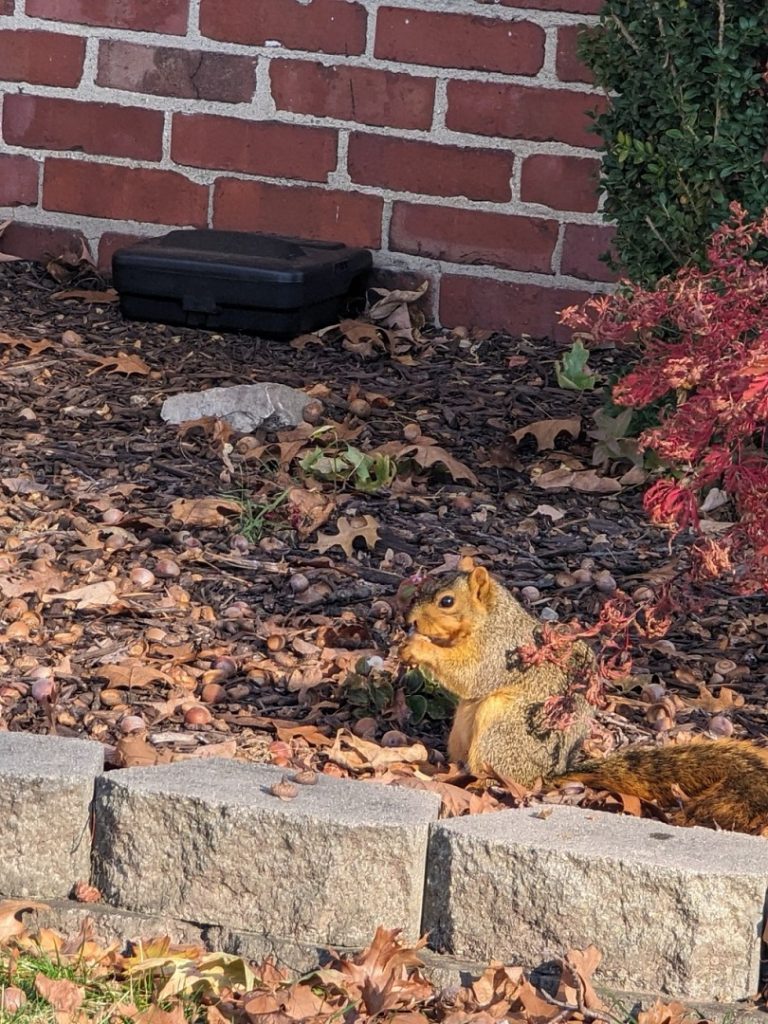
Larder Hoarding
When a squirrel stores all its food in one or a few central locations, it’s called larder hoarding. Often, the squirrel defends these locations, protecting its cache to ensure it has food for later in the season.
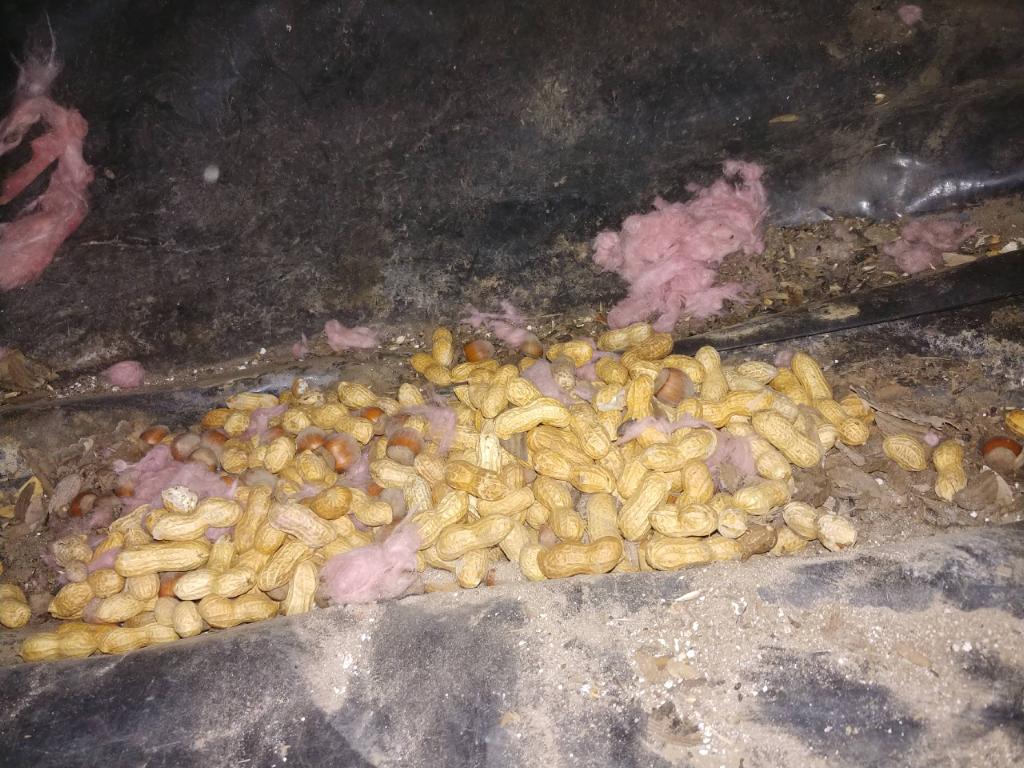
Memory and Smell: Squirrels have a remarkable ability to remember where they’ve hidden their food. Their keen sense of smell helps them track down their caches, even when they are buried under layers of snow or debris. Additionally, squirrels use spatial memory to pinpoint the exact locations of their food, ensuring they can retrieve it later.
Multiple Caching Locations: Rather than relying on a single stash, squirrels spread their food across several locations. This increases their chances that at least some of the caches will remain intact and accessible, even if others are disturbed or eaten by other animals.
Why Squirrels Might Hide Food in Your House
Squirrels may choose your home for food storage because it offers warmth, protection from predators, and hidden spaces. Attics and basements are warmer than the outdoors, making them attractive places to store food. Squirrels also seek secure, high locations to avoid predators, and your home’s nooks and crannies provide ideal spots for hiding food. Small gaps around vents or chimneys give squirrels easy access to these areas, making your property a prime target.
Unfortunately, squirrels in your attic or in your wall are a serious problem, as they can cause significant property damage that is expensive to repair.
What Are the Signs of a Squirrel Infestation?
If you find piles of nuts in and around your home, they’re almost always brought by a squirrel. So, this is one of the primary signs of an infestation, especially if you find those caches in your attic or roof.
Signs of a squirrel infestation include abnormal noises, such as scampering, scratching, or gnawing sounds, droppings in and around your home, scratches or claw marks in and around entry points, and finding acorns or nuts in your attic or roof.
If all signs point toward a squirrel infestation, it’s best not to attempt to DIY the squirrel removal process. Squirrels are wild animals, so if they feel threatened or are protecting their young, they may attack or attempt to escape. Instead, contact a professional wildlife removal service to safely remove the squirrels from your home and property.
How to Prevent a Squirrel Problem – Remove Food Sources
Removing squirrel food goes a long way to prevent a squirrel infestation.
- If you have oak trees in your yard, limiting the number of acorns might not be feasible. But during the fall, cleaning up acorns can help reduce food sources in your yard.
- Protecting your bird feeders with baffles and cleaning up spilled birdseed can help keep squirrels out of your yard.
- Securing garbage cans.
- Feeding pets inside.
- Protecting your fruit and vegetable gardens with bird netting can keep squirrels out.
Reducing accessible food may discourage squirrel activity around the property. If squirrels are already nesting inside the home, prevention also requires finding and sealing the openings they use to reach the attic, walls, roof, or chimney.
Contact Critter Control for Professional Squirrel Removal
If squirrels have taken up residence in your home, Critter Control can help. Our experienced technicians have extensive experience in efficiently and humanely removing squirrels from homes. So, if you’re seeing piles of nuts in your attic or roof and other signs of a squirrel infestation, contact us today for help evicting your unwanted houseguests. Or, find and contact the office nearest you
Learn more about squirrel removal.
Get them out.
Keep them out.®
Experiencing a wildlife or pest issue? We can help! Complete this form and your local Critter Control® office will contact you to assist.


- How to Get Rid of Squirrels
- Squirrels Entering Homes
- Squirrels in Attics
- Squirrels in Chimneys
- Squirrels on Roofs & in Soffits
- Squirrels in Walls
- Squirrels in Ventilation
- Squirrels in Gutters
- Squirrels in Crawl Spaces
- Squirrels in Yards or Gardens
- Squirrels in Trees
- Squirrels Digging Holes in the Ground
- How to Identify Squirrel Sounds
- Squirrel Tracks
- Squirrel Droppings
- Squirrel Trapping
- Squirrel Repellents & Deterrents
- Squirrel Appearance & Identification
- Species & Types of Squirrels
- Squirrel Life Cycle
- Baby Squirrels
- Squirrel Nest
- Dead Squirrels
- Diseases That Squirrels Carry
- Rabid Squirrels
- Do Squirrels Hibernate?
- Gray Squirrels
- Do Squirrels Bite?
- Squirrel Damage to Your House
- Squirrels vs. Rats
- Squirrels vs. Chipmunks