

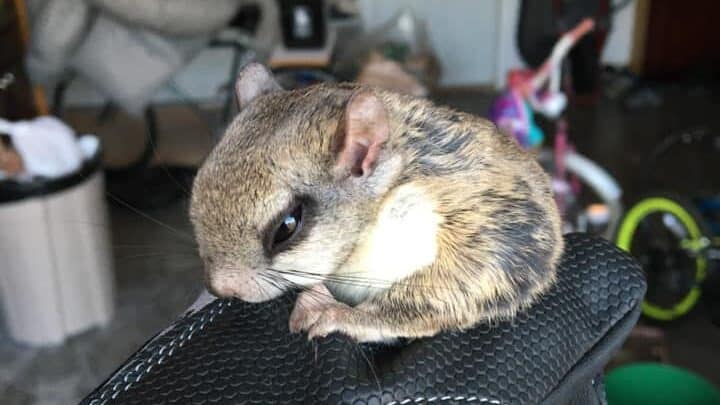
Flying squirrels are more common than most people realize, but you rarely see them. They are nocturnal and spend most of their time high up in the trees.
There are two main species of flying squirrel in the U.S.: The northern flying squirrel and the southern flying squirrel. Despite their name, flying squirrels cannot really fly. They have a special membrane that extends between their wrists and ankles, allowing them to glide from tree to tree. They can glide 50–150 feet in a single jump.
There are three species living throughout the United States:
- Southern flying squirrels are the most common and live throughout the eastern part of the country, from Maine to Florida and as far west as Texas.
- Northern flying squirrels are found in the Northeast, the Appalachian Mountains, and across the Pacific Northwest and northern Rockies.
- Humboldt’s flying squirrels inhabit the West Coast and Pacific Northwest.
Flying squirrels are fascinating in the wild but are unwelcome indoors.
While they play an important role in forest ecosystems, flying squirrels can quickly become a nuisance when they find their way into homes, particularly attics.
How to Identify a Flying Squirrel
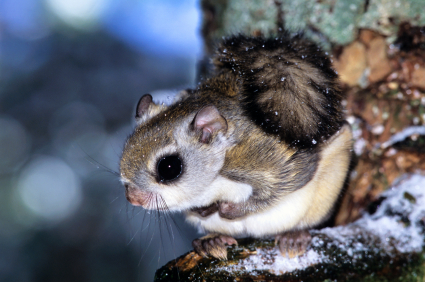
Flying squirrels are sometimes mistaken for other tree-dwelling species because of their small, rounded heads, disproportionally large eyes designed for low light, and prominent ears. Much smaller than regular squirrels, they weigh about five ounces compared to a 16–20-ounce eastern gray squirrel. Flying squirrels also have a flattened, rudder-like tail that helps them steer while gliding. Regular squirrels have a bushier tail used mostly for balancing on branches.
Flying squirrels rarely forage on the ground, as their gliding membrane makes running awkward and leaves them vulnerable to predators. Like their regular squirrel cousins, they eat nuts, seeds, and acorns and are heavy hoarders for winter survival.
Unlike most squirrels that are solitary, flying squirrels are quite social and live in colonies. During winter, flying squirrels enter a period of reduced activity called brumation. During brumation, their heartbeats and breathing will slow down to conserve energy. Flying squirrels will huddle together for their winter brumation, waking up only occasionally to bask in the sun on warmer days or to search for water.
How to Identify a Flying Squirrel in the Yard
It takes patience to correctly identify a flying squirrel, as they are easy to miss. If you are seeing a squirrel at night, it is most likely a flying squirrel. You might notice quick motions high in the trees or catch a glimpse of a white belly as it sails from branch to branch. Or, if you notice that your bird food is disappearing overnight, it was probably a flying squirrel raiding the feeder.
Flying squirrels typically live in natural cavities in tree trunks and choose old woodpecker holes, hollowed-out knots, or under loose bark, and prefer deciduous forests and woods with plenty of oaks and maples because of their source of nuts and acorns.
How to Identify a Flying Squirrel Nesting in the House
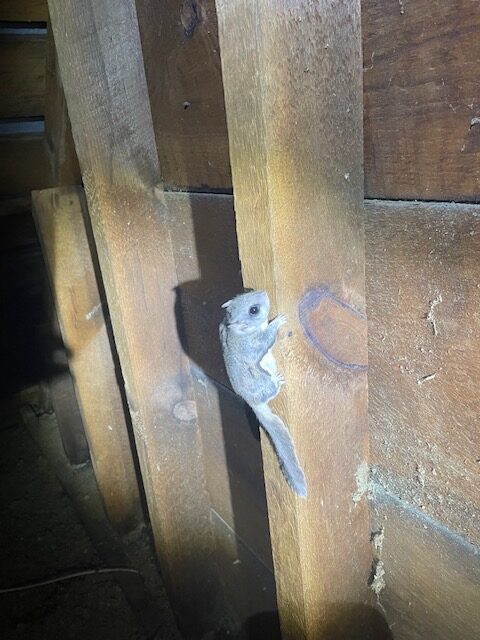
Flying squirrels like attics as nesting places, as they mimic the high-elevation nests of their natural habitat but with added benefits: protection from predators and the weather. They are most likely to enter homes in spring to build a nest for their young, and in fall, when they are looking for a safe, warm place to winter over.
The most likely place for a flying squirrel to nest in your home is the attic or a wall void. They will choose high corners, behind HVAC ducts, or underneath loose insulation. Flying squirrels are so small that they can slip into the space between studs in exterior walls, too.
Signs that you might have a flying squirrel nest or a colony of nests include:
- Nocturnal activity above your head, such as scampering and vocalizing.
- A strong odor emanates from their designated latrine area.
- Torn insulation in the attic, which is used for building their nests.
- Gnaw marks and chewed rafters, drywall, or electrical wires.
- Roofline damage from their entry points.
When to Call a Professional About Flying Squirrels
Because flying squirrels live in colonies and create a lot of damage, the sooner you call a professional, the less damage they will have time to create. Flying squirrels must be trapped and removed one at a time, and special care and knowledge are required if kits are present.
Critter Control’s professionals are fully trained in the safe and humane eradication of flying squirrels according to local ordinances. We do not recommend doing it yourself. Flying squirrels can become aggressive when cornered, especially if young ones are present. And the risk of contracting a disease or coming into contact with parasites is too great.
Critter Control will not only eliminate these pests but also seal all potential entry points and clean and sanitize where they were living. Contact Critter Control as soon as you suspect you’re living with flying squirrels in the attic.
Flying Squirrel Pictures
Get them out.
Keep them out.®
Experiencing a wildlife or pest issue? We can help! Complete this form and your local Critter Control® office will contact you to assist.
- Flying Squirrels in the Attic
- Flying Squirrels in the House
- Flying Squirrels in the Walls
- Flying Squirrel Sounds
- Flying Squirrel Droppings
- Flying Squirrel Traps & Deterrents
- Flying Squirrel Nests
- Do Flying Squirrels Carry Diseases?
- Do Flying Squirrels Fly?
- Do Flying Squirrels Hibernate?
- Flying Squirrels on the Roof
- Where Do Flying Squirrels Nest?