

Hours of Operation
Monday-Friday 7:00 a.m. – 6:00 p.m.
Saturday 8:00 a.m. – 4:00 p.m.
Sunday Closed
Tallahassee Wildlife Removal Company:
By County: Dallas County, Kaufman County, Rockwall County
- Crawfordville, FL
- Madison, FL
- Marianna, FL
- Panama City, FL
- Perry, FL
- Port St. Joe, FL
- Southwood, FL
- Tallahassee, FL
- Vernon, FL
Best Pest Control in Tallahassee


Get a Free Quote
Call Today

Ask about in-house financing options.

One-Year Warranties on Exclusions
Too Busy To Call
Too busy to call?
Request a callback from us!
"*" indicates required fields
Roof rats are the most common rats rooting around your Tallahassee home for food and shelter, but Norway rats are a problem in North Florida too. Your home offers the perfect hiding spot for unwanted rats to come and intrude. These rodents seek shelter from either the harsh elements outside, predators, or possibly even a place to give birth to their young. Because they have such a need to find lodging, they will stop at nothing to get in, which could prove disastrous for you.
Do I Have a Rat Infestation?
Early identification of a rat infestation is not merely a matter of convenience; it is essential for protecting your health, property, and peace of mind. Rats are prolific breeders, meaning a small problem can quickly escalate into a widespread infestation.
If you think you might have a rat infestation in your home, look for these tell-tale signs:
1. Rat Droppings
Rat droppings are one of the most definitive indicators of an infestation. These fecal pellets are typically dark, moist, and cylindrical, tapering to a point at both ends. They are larger than mouse droppings, usually measuring between ½ to ¾ inch in length. Fresh droppings are soft and shiny, while older droppings are hard and brittle. You will often find droppings concentrated in areas where rats feed, nest, or travel, such as along walls, in cupboards, or near food sources. The quantity of droppings can indicate the severity and duration of the infestation.
2. Gnaw Marks
Rats have continuously growing incisors, so they gnaw constantly to keep their teeth filed down. These gnaw marks are distinctive and can be found on a wide range of materials, including wood, plastic, electrical cables, pipes, and even concrete. Rat gnaw marks are usually larger and deeper than those left by mice, appearing as rough, parallel grooves. Look for these marks on the edges of doors, furniture, skirting boards, utility lines, and food packaging. Do you notice unexplained damage to structural elements or stored items?
3. Rub Marks (Smear Marks)
Rats tend to follow established routes, particularly along walls, pipes, and other surfaces, where they feel protected. As they travel, the natural oils and dirt from their fur leave greasy, dark marks, known as rub marks or smear marks. These streaks are most noticeable in well-traveled areas, especially in dusty or lightly colored environments. Rub marks often appear as continuous smudges along the lower sections of walls or around holes through which rats pass. The presence of these marks indicates frequent activity and established pathways.
4. Rat Nests
Rats construct nests in secluded, undisturbed locations using shredded materials such as paper, fabric, insulation, and cardboard. Common nesting sites include attics, basements, crawl spaces, wall voids, beneath appliances, and behind stored items. Nests provide shelter and a breeding ground. Discovering a nest confirms active habitation and often signifies a larger infestation. Inspect dark, quiet areas of your home for accumulations of soft, shredded materials.
5. Scratching and Scurrying Noises
Rats are primarily nocturnal, so their activity is most noticeable at night. Listen for scratching, gnawing, or scurrying sounds coming from your walls, ceilings, attics, or crawl spaces after dark. These noises indicate rats moving, feeding, or building nests. Young rats sometimes squeak. Do you hear sounds of movement in quiet hours? These auditory cues are strong indicators of rodent presence.
What Kind of Damage Do Rats Cause?


For such a small animal, rats can cause significant damage to a home. In addition to spreading diseases and threatening the health of everyone who lives in the house, rats can…
- Cause structural damage to wood, drywall, insulation, and other building materials
- Gnaw through electrical wires and increase fire and electrocution risk.
- Ruin furniture by burrowing into cushions and ripping out batting
- Destroy books, papers, and clothes
While no rat damage is good, large rat populations can quickly cause expensive damage in the home.
Who Should I Call to Get Rid of Rats in Tallahassee
Exterminators are state-licensed technicians trained to kill insects and pests using chemical products, baits, and traps. They apply solutions to interior and exterior spaces of homes, offices, restaurants, warehouses, and other structures.
Exterminators must know the biology, habits, and habitats of insects and rodents to stop pests from causing damage or ease the fears of property owners. They create a plan of action that typically involves repeated chemical applications to treat areas where pests are active.
Exterminators use various methods to get rid of rodents, with rodentcides and rat traps typically being the first line of treatment. Each pest may require a different type of pesticide.
Wildlife control operators understand wildlife, especially species that become a nuisance to property owners. They are certified and trained in methods to prevent, remove, and exclude wildlife and rodents. Wildlife control operators avoid using chemicals and toxic products that kill animals, as they are unethical, inhumane, and rarely provide long-term solutions.
Instead, wildlife removal experts focus on a process that consists of inspection, removal, repairs, and exclusions. They follow all local, state, and federal laws regarding threatened and endangered species.
Wildlife control operators use various methods to eliminate and prevent pest activity. “Control” refers to how they manage each pest species using long-term solutions. The primary treatments are safe and humane traps, one-way valves, and exclusions. Wildlife control operators determine why pests are in your home.
Rat Control and Exclusions
Exterminating the current rat population in your house leaves you vulnerable to future rats. Rats are incredibly flexible, and most of them can easily enter through a hole the size of a quarter.
Exclusions are methods to change your environment to make it less likely that wildlife will choose your property for food, water, or shelter. Exclusions are where you get the most value because they get to the root of the problem. Experts figure out why pests are there, then eliminate those reasons so they do not return.
Exclusions include sealing all entry points, at any size, to your home or office. Wildlife like to use roof ridges, chimneys, vents, soffits, and eaves to access your attic or another warm spot inside your property. Most wildlife will find a small hole and make it bigger, even if that means breaking pieces of your home.
Why Aren’t My Rat Traps Working
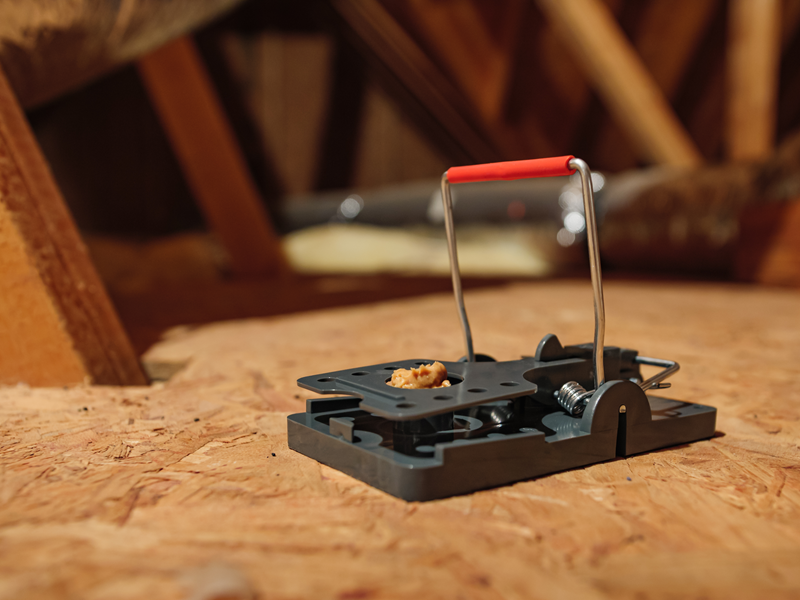
Most of our customers have tried some sort of DIY solution before they commit to professional rodent control.
The problem with DIY rat control is it generally does not provide a long-term solution. Most homeowners do not have the experience and skill to set rat traps appropriately. Rodent repellents like over-the-counter poison, sonic emitters, mint oil, radios, lights, wolf pee, and ammonia-soaked rags are not effective. Finally, attempting to control rodents on your own can expose you to risks such as hantavirus.
When to Call a Professional for Rat Control
While initial steps can mitigate immediate issues, rat infestations are rarely a DIY project. Professional pest control experts possess the knowledge, tools, and experience to:
- Accurately identify the species and extent of the infestation.
- Develop a comprehensive eradication plan.
- Implement safe and effective trapping and baiting strategies.
- Identify and seal entry points.
- Provide advice on preventing future infestations.
Do not hesitate to contact a professional pest control service as soon as you confirm or strongly suspect rats. Prompt professional intervention saves time and money and helps prevent health risks.
Critter Control Rat Removal
At Critter Control, we provide total solutions to your rat problems. We look for droppings, gnawed wires and wood, torn insulation, and smudge marks along their pathways. Our main approach for rat control is to set rat traps. Depending on the severity of the infestation, the process takes approximately seven to ten days. Once the rat infestation is under control, we install exclusion devices to protect your home. Holes that leave your premises vulnerable are sealed, wires and insulation are fixed, and a process of cleaning and sanitation takes place.