



STEP 1
Pest Control Inspection
We inspect your property thoroughly to identify species, entry points, and nesting sites, ensuring accurate and humane removal plans.
Monday-Friday 7:30 a.m. – 6:00 p.m.
Saturday 8:00 a.m. – 5:00 p.m.
Sunday Closed
Gloucester, Isle of Wight, James City, Mathews, Southampton, York Counties
When you need wildlife removal in Chesapeake, Critter Control offers trusted, local services to get animals out and keep them out. We specialize in humane wildlife control for squirrels, raccoons, rats, mice, and any other critters causing problems in your attic, walls, or property.
These are the primary reasons Chesapeake residents report wildlife as a nuisance on their properties or homes. Virginia defines nuisance wildlife as any non-domesticated animal that poses a threat to you or the public, causes annoyances that make you uncomfortable, or destroys or threatens to destroy property.
It’s crucial to note that the Department of Wildlife Resources recommends you not try to get rid of nuisance wildlife on your own. They suggest hiring a wildlife control operator with expertise and tools for removing animals.
We inspect your property thoroughly to identify species, entry points, and nesting sites, ensuring accurate and humane removal plans.
Using safe, species-specific methods, our wildlife removal team humanely excludes or traps unwanted critters like squirrels, raccoons, rats, or opossums.
After animal removal, our wildlife exclusion services seal entry points using gnaw-resistant materials, preventing future infestations.
The final step is to make your house safe. We clean up attic nesting sites, remove feces, apply sanitization agents, and treat for ectoparasites. In certain situations, we provide a full attic restoration. Replacing old, contaminated insulation with pest-resistant insulation provides a more efficient home and ongoing pest control.
Raccoons destroy property by breaking vents or creating holes that lead into your attic. Once inside, they shred insulation, break beams and structural components, scratch floors, and chew wires. Outside they dig holes in yards, raid gardens, swim in ponds and swimming pools, and defecate everywhere they go. They tip over trash cans, raid birdfeeders, kill chickens, and steal animal feed. Raccoons are annoying, making chirping, hissing, growling, screeching, and purring sounds.

During the inspection, we determine the severity of the raccoon pest infestation. We look for physical evidence like footprints in or around the home, stains from raccoon feces and urine. On the exterior of the house, we look for damage like scratches on boards, broken vents and screens, ripped apart shingles, destroyed soffits, and every possible entry point.

Live trapping is one of the most efficient ways to get rid of a raccoon. Depending on the situation, a one-way door or excluder valve can be installed. An excluder valve works by allowing the raccoon to leave but blocks its reentry. The choice of device is largely dependent on the season and location of the raccoons on your property. Direct capture is not commonly used because raccoons are a rabies vector species. If we must trap, we place traps strategically to safely catch the raccoons and we check traps frequently, based on state laws.

After raccoon removal, we install long term raccoon pest control with exclusions. We can repair raccoon damage like broken screens on vents and chimneys and broken boards on decks and porches.
We provide a wide range of repair and restoration services. It is essential to apply disinfecting agents and ectoparasite treatments on areas inhabited by raccoons.
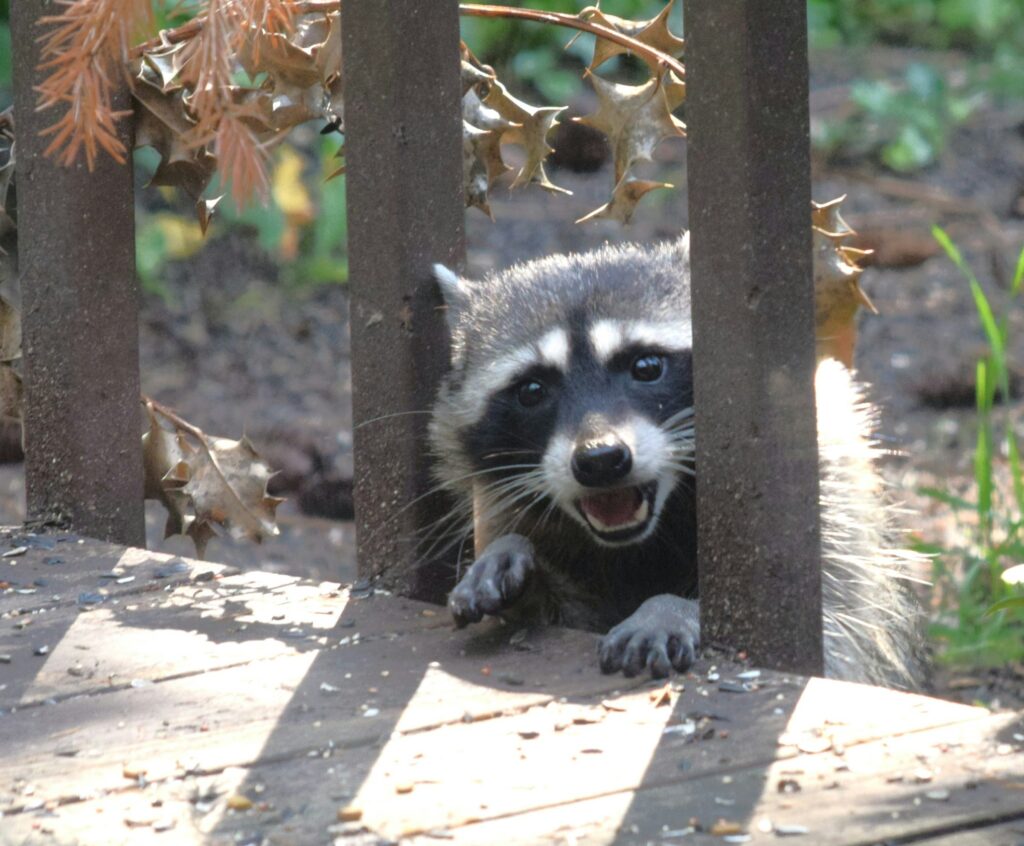
They pose a threat to you and the public because they are known to carry diseases. Last year, a raccoon found in a resident’s backyard in the Chesapeake neighborhood of Woodard’s Mills tested positive for rabies. Recently, on August 19, 2022, a raccoon found in the backyard of a Chesapeake Valley Stream homeowner tested positive for rabies. You must have the correct permits and licenses when getting rid of raccoons and other small game fur-bearers in Virginia.
Rodents multiply often, and one pair of rats or mice can lead to close to 300 rodents in a year since female rats and mice can have six or more litters each year, giving birth to six or more babies with each delivery.
Infestations can occur rapidly if not dealt with right away. Rodents destroy property by chewing electrical wires and plugging vents, creating fire hazards. They also chew wood, drywall, plastic, mesh screens, carpets, furniture, and other materials they cross in their paths. They typically travel less than 100 feet from their food supply, which makes it easier to locate their nests when you find feces and urine trails in your home.
During a rodent inspection, we thoroughly inspect your attic and provide a complete exterior home inspection. The most common signs of rodent activity are gnaw marks, feces, rub marks, nesting material, runs in insulation material, and small entry points.
A Critter Control wildlife specialist will create a strategic trapping plan to remove the rodents found in your home. Critter Control specialists may use snap traps and live traps to capture and remove mice and rats. Rodent trapping can usually takes between five to fourteen days.
The best way to reduce the possibility of letting unwanted rats and mice into homes is to seal possible entrances. Exclusion methods include caulking cracks in foundations, capping chimneys, and installing mesh covers over vents and crawl space entrances. We also strongly recommend a maintenance service. Rodents have front teeth that continuously grow, which means they can gnaw a new way back into your home.
Signs of squirrel activity inside your home include frayed wires, wood, drywall, pipes, and personal items. They constantly chew on things to keep their teeth filed. Because their teeth continuously grow, it can be painful if they grow too big. If a squirrel builds a nest in your home, babies are likely in it, especially in the spring or fall seasons. Outdoors squirrels raid birdfeeders and gardens and strip bark from trees. They break shingles, gutters, soffits, and screens.
Squirrels are collectors that hoard their treasures. If they can find a way into your attic or basement, that space will become a storage locker. This can cause fire hazards when squirrels choose air vents and ducts for storage space. Squirrels are known to clog gutters and drainage pipes, creating the perfect scenario for water damage to your home.
Wildlife specialists look for signs such as chewing on, in, or around your home, small openings leading to the attic or the crawl space, droppings, and debris like nuts or nesting material. Beams, wires, pipes, and insulation may all show signs of damage from squirrels.
Live trapping or one-way doors are the most effective and humane ways to get rid of squirrels. One-way doors should never be used during birthing seasons (Spring & Fall), so our specialists will decide which is the best tool for the job. If we have to trap, we place traps strategically to safely catch the squirrels and check those according to state laws.
The best squirrel best control is squirrel exclusions. After trapping and removal, we seal all entry points to keep squirrels out. We then restore your home or business to its original condition. We can also clean-up the nesting sites and remove any debris, food, feces and soiled insulation.
Out of the seventeen bat species in Virginia, three are federally protected, three are state protected, and the rest are listed as threatened species. These classifications mean you cannot hunt, trap, kill, or even try to remove a bat from your property, especially during the maternity season, which can last from late spring to early fall. Bats are essential for our ecosystem, consuming thousands of insects every night.
Because diseases like the white-nose syndrome are killing many, they must be protected. Bats become nuisances because they carry diseases, and their bat guano can permanently stain walls, floors, and ceilings. Bats can become aggressive when they feel threatened, so you should never try to remove it alone.
Many bats roost in colonies, putting you in more danger if you try to remove them yourself. Bats don’t usually carry rabies, but they can. In December 2021, a bat found in the 2400 block of Smith Avenue in the neighborhood of Valley Stream tested positive for rabies, just days after a raccoon tested positive in the same area. Not only do you want to prevent being bitten by a bat, but also your pets.
Don’t try to clean bat guano yourself, either. It grows fungi that, if you inhale the spores, can lead to histoplasmosis and other respiratory problems.
We perform a full interior and exterior inspection and search for signs such as rub marks, guano, a strong scent of ammonia, and small openings. The most common sign is the accumulation of guano (feces).
The most effective and humane way to remove bats is by utilizing a bat valve in conjunction with a full home exclusion. A bat valve allows for bats to exit your home but not re-enter. We follow all local ordinances for humane bat removal. We will never abandon flightless pups in your attic.
After removing the bat valves, we seal the entrance hole(s) so bats can no longer enter your home. If there is substantial guano in your attic, you should consider taking advantage of our attic remediation services to remove the soiled insulation and replace it.
Like raccoons and skunks, opossums will eat most anything they can catch, including insects nuts, grains, fruits, vegetables, small rodents, reptiles, and amphibians.
Opossums don’t usually stay in one place too long unless you have an excellent resource for food. Backyard ponds and outdoor night lights attract insects. Also, unfenced gardens, birdseed, free-range chickens and unprotected eggs, open trash cans, and accessible pet or livestock feed.
Opossums do not hibernate, so you may find them creating a den under your porch, deck, or in your basement or crawlspace throughout the year. They can carry diseases that can be transmitted to you or your pets.
Opossums can be found inside attics and basements or outside under decks and sheds. Common signs include unique paw prints and feces. Opossums are docile and usually easy to spot.
Opossums can be lured into cages for live capture. If it is maternity season, we follow all guidelines for removing mother and newborn opossums. We will seal entryways into the building to prevent opossums from reentering in the future. Opossums can be kept from getting under sheds and decks by installing fencing around the bottom edges and burying the fence underground.
Broken screens on chimney and roof vents are replaced with sturdier materials, and we properly seal all entry points, including crawlspaces. We clean and deodorize areas of opossum activity. Exclusion may include eliminating sources that attract bugs, like nighttime lighting, stagnant water, and livestock poop.
Both spotted and striped skunks are found in the state of Virginia. While the less common eastern spotted skunk is found in the western part of the state, the striped skunk is commonly found in the eastern part of the state and is the species Virginia Beach homeowners could encounter. These adaptable, nocturnal creatures known for their pungent spray can wreak havoc if one too many discover a consistent food source on your property. If you smell a skunk on your property, please do not attempt to remove it yourself, as these animals can become aggressive and spray when threatened.
In addition to noting any pungent odors that signal the presence of a skunk, we will inspect the condition of your landscaping, as skunks are known for tearing-up lawns and shredding grass while hunting for grubs and insects. We will also inspect the perimeter of your building’s foundations and under decks, to locate burrows.
Never try to remove a skunk from your property yourself. Getting sprayed is a very unpleasant experience. Furthermore, these animals may carry diseases that can spread to humans and pets, such as rabies. Our specialists will use live traps to capture and remove skunks for you, or they’ll use a one-way exclusion device to evict skunks from their harborage areas. The most effective ways to control a skunk problem is exclusion and habitat modification.
The most effective ways to control a skunk problem is exclusion and habitat modification. Methods like sealing foundation gaps, replacing and screening broken foundation vents and installing hardware cloth (rat walls) around unprotected sheds and decks are the most effective and permanent ways to keep skunks out.
We recommend keeping pet food inside and securing any trash bins.
Like bats, the mere thought of having a snake in your home or property makes many people fearful. Snakes and bats are, for the most part, harmless and essential for the balance of the ecosystem. They will only become aggressive when they feel threatened. However, no one should have to live in fear on their property.
Calling an expert to remove a snake is a good idea, especially if you do not know the difference between non-venomous and the three types of Virginia venomous snakes. Another reason is that if you have snakes near your house, you likely also have a rat and mouse problem, the preferred food of snakes. Wildlife experts have tools to corral and store a captured snake, like snake poles and traps. They can also locate the food sources attracting snakes to your home, including small rodents such as rats, mice, voles, and moles. They can simultaneously eliminate multiple nuisance wildlife issues.
We look for signs of snakes like shed skin and droppings. Snakes most often enter homes hunting for food. So during our whole home inspection, we identify any sign of rodent activity.
Snake specific traps and exclusions to get the reptile safely out of your house and property.
The most effective way to keep snakes out of your house and off of your property is to ensure nothing is attracting them. Rodent control and exclusion protects your home from snakes, rats, and mice.
Birds are an important part of our natural environment in the area.
Birds may be beneficial, neutral, or harmful to man’s interests, depending upon time, location and activity, and certain birds (sparrows, woodpeckers, waterfowl, pigeons and black birds) are more likely to become pests and require bird-proofing and bird control. Pest bird situations that require bird control and bird proofing include:
We thoroughly inspect the area for things that attract birds, like harborage and loafing areas, as well as food and water sources. Also, we look for where birds may be entering your home or business. We also inspect for damage caused by birds, whether it’s by nesting, or by droppings.
After identifying the bird species, we may start by physically removing the species in question. In rescue situations, such as chimneys or basements, birds can be released on-site if the entrance has been secured properly. Occasionally, live traps will be used, especially if flocks of birds are involved. For persistent birds and larger flocks, several advanced techniques may be applied simultaneously including netting, spikes, ledge products, scare tactics, misting and more. The most effective method of bird control is prevention and exclusion.
We can repair the damage that is allowing birds entry to your home, like broken siding, weakened gutters, rotted soffits and fascia. We can also install protective screens on chimneys and vents. We can also remove nesting materials and accumulated droppings, then clean surface stains. We can use netting over fruit and vegetable crops and water basins. Netting can also be used in car ports, building overhangs and food courts. We also install a large number of different types of roof ledge barriers too.
According to news reports, living in the Hampton Roads area can mean seeing a lot of Canadian Geese droppings on the sidewalks, streets, driveways, and rooftops of homes. Geese can release a pound of dropping every day. If you have 20 geese in your area, that’s 20 pounds of waste daily. Where are residents supposed to put all this waste, and how do they keep up with getting rid of it?
Unlike some other animal feces, goose excrement is not a good fertilizer. It can contaminate water sources. Geese can spread diseases and parasites, destroy landscaping, and deter people from visiting an area overrun with them.
Currently, there are 180,000 Canadian geese in Virginia. They exist in four populations: the Atlantic Flyway Resident, North Atlantic, Southern James Bay, and the Atlantic.
Virginia adopted depredation orders, like hunting seasons, the Nest and Egg, or the Agricultural orders, but only if you register with the U.S. Fish and Wildlife Services. For many, these actions seem cruel and unnecessary. Other options include hiring a wildlife control services expert to teach you how to exclude Canadian geese from your property.
Rats and squirrels will chew into attics and destroy insulation, electrical wires, and ductwork. Raccoons will pull down soffit and gable vents in order to access attic spaces and nest in insulation. Bats will access gable vents, construction gaps, open rake boards and fascia boards, and often find their way inside the living space. Bat droppings will accumulate beneath roosting sites and are hazardous to our health when breathed in. Lastly, birds will access microwave and dryer exhaust vents and build nests inside them. This will completely block exhaust flow and become a fire hazard.
Spring and summer are the busiest times of the year for animal activity. This is the most common time for wildlife to reproduce which ultimately leads to even more pest problems for homeowners. Most pests are active, and as a result, we deal with squirrels, rats, snakes, raccoons, birds, moles/voles, ground hogs, opossums, skunks, otters, muskrats, and bugs.
During the fall and winter, there is less activity due to the colder weather, and therefore we deal with fewer pests. However, because of the colder weather, more pests push into homes for warmth. This is the most common time of the year for squirrels and rats to chew into attics and seek harborage in insulation.
We also deal with raccoons causing damage to the home, seeking warmth in attics, soffit lines, and dormer voids.
Common signs of nuisance wildlife activity are hearing chewing and scratching in the walls, ceiling, and attic. If you hear squirrels regularly running on the roof, it’s only a matter of time before they “explore” their way into your attic.
Be proactive and call Critter Control before they chew their way inside, causing damage to your home. Other signs are visual. You may see chew holes on the exterior of your home along the roof line or on gable vents. You may also see droppings in the attic or gable vents when you are putting Christmas decorations away. Call Critter Control at the first sign of any type of pest problem.
It’s best to be proactive and have your home undergo a full home exclusion before the issues arise. This is a cheaper alternative to dealing with the damages that pests cause. We offer free home inspections for this service.
Call Critter Control at the first sign of any pest problems. If you hear or see something unusual, call right away.
There are a number of factors that determine pricing: location of the animal (i.e. – chimney, attic, crawl, wall void, living area), condition of the animal (i.e. – sick, aggressive, dead), location and condition of the property, and time of year (i.e. – weather condition, offspring present?). Generally speaking, pricing will vary by location and species for just the animal removal, and that pricing usually does not include the entry repair.