

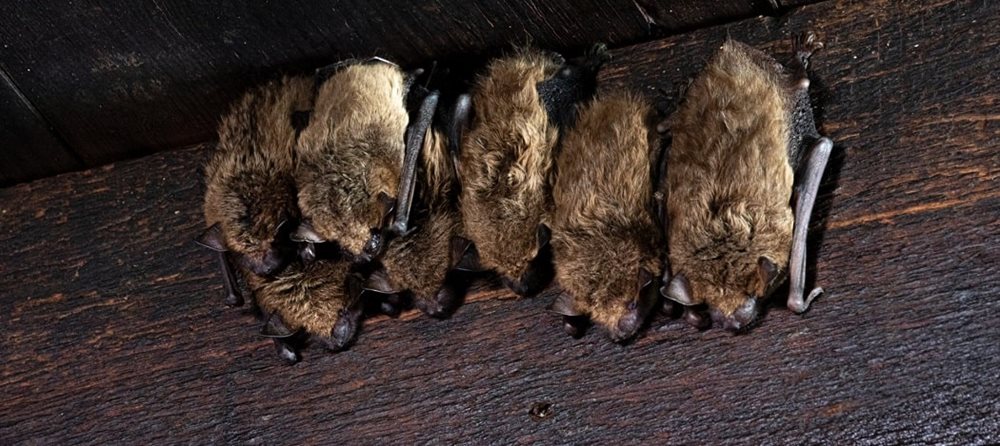
Estimated reading time: 9 minutes
Key Takeaways
- Bats typically stay in attics, chimneys, or walls in the house.
- While rare, bats can get into the living areas of your house, like living rooms, bedrooms, and kitchens.
- If a bat is in a bedroom overnight with a person, seek medical help immediately.
- Given the opportunity, bats will fly out of your house on their own. They do not want to be inside.
- Signs of bat presence include guano (droppings), urine stains, noises, and visible bats flying in/out
- Bats should not be handled directly due to disease risks like rabies
- Proper exclusion and removal methods are essential to safely address bat infestations
- Homeowners should contact wildlife experts for assistance with bat removal and prevention
- Bats are a protected species in many areas, so removal must follow local laws and regulations
Finding a bat in your kitchen, living room, or bedroom is grounds for concern. Although it’s rare to find a bat in the house and even rarer that the bat carries rabies, it could mean a colony is living in your attic or chimney, especially in spring and summer when bats roost.
Knowing what to do if you wake up to a bat in your room is essential. Calling wildlife specialists such as Critter Control is an important part of the solution.
Safe and Legal DIY Steps to Rid a Bat from Your Home
The federal Endangered Species Act protects bats. It is illegal to harass or kill bats because of their important role in the health of our planet as pollinators, pest controllers, and seed distributors. And, for your own safety, you should never handle a bat directly.
How to Get a Bat Out of the House Safely
Time needed: 2 hours
Finding a bat flying inside your home can be alarming, especially if it’s in a living space like your living room, bedroom, or kitchen. While bats are beneficial wildlife, they should never be handled directly due to potential health risks. Follow these step-by-step instructions to stay safe and resolve the situation properly.
- Stay Calm and Avoid Direct Contact
Do not attempt to catch or handle the bat with your bare hands. Bats can carry rabies, and even a small bite or scratch may go unnoticed.
Keep a safe distance
Do not swat at the bat
Avoid using towels or your hands to grab it - Isolate the Bat in One Room
If possible, confine the bat to a single room to prevent it from moving throughout the house.
Close all interior doors
Block gaps under doors with towels
Keep pets and children out of the area - Turn Off Lights and Open an Exit
Bats navigate using echolocation and prefer dark, quiet spaces. Creating an easy exit can encourage the bat to leave on its own.
Turn off indoor lights
Open a window or exterior door in the room
Remove window screens if possible
Step out and give the bat time (30–60 minutes) - Do NOT Release the Bat If There Was Possible Human Contact
This is critical.
If any of the following apply, do NOT let the bat escape:
Someone was sleeping in the room
A child, elderly person, or impaired individual was present
The bat made contact with a person or pet
In these cases, the bat should be safely captured and tested for rabies. Contact your local health department and a wildlife professional immediately. - If the Bat Lands, Contain It Safely
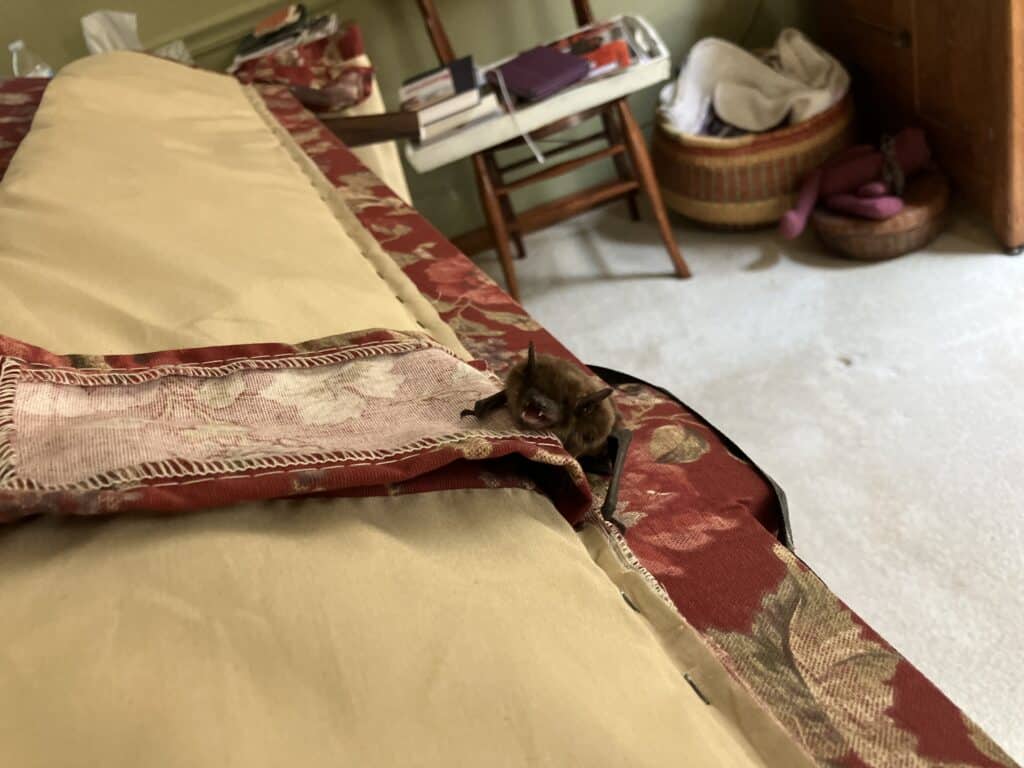
If the bat lands on a wall, curtain, or furniture:
Wear thick gloves (leather preferred)
Place a container (box, coffee can, etc.) over the bat
Slide a piece of cardboard underneath to trap it
Secure the container
Do not attempt this if you are unsure or uncomfortable. - Contact a Professional Wildlife Removal Service
Even if the bat leaves, there may be more in your home.
A professional wildlife control company can:
Inspect your attic and home for a colony
Identify entry points
Perform humane bat exclusion (never trapping)
Ensure compliance with state wildlife laws - Schedule a Home Inspection
A single bat in your living area often indicates a larger issue, such as:
A bat colony in the attic
Gaps in roofing, vents, or soffits
Seasonal movement (especially in summer or fall)
Early inspection helps prevent repeat incidents. - Clean and Sanitize if Necessary
If the bat was in your home for an extended period:
Avoid sweeping or vacuuming droppings (guano)
Use protective gear if cleaning is necessary
Consider professional attic cleanup if contamination is suspected
When There is a Bat in My Bedroom
If a bat went unnoticed for some time in a room with people, it is important not to let it fly away. Bats are usually not aggressive, but bat bites can be tiny and go unnoticed. Once a bat has been noticed in any room where there was a child, pet, or adult:
- Isolate the bat by closing the room’s doors. Do not open the windows to let the bat out.
- Seal the gap beneath the door with a rolled-up towel to prevent it from entering the rest of the house.
- Immediately call the health department, as the bat should be tested for rabies if it came into contact with a sleeping or resting person or pet.
- Wait until the bat settles on a flat surface or wall. Wear thick gloves. Wait for it to land, then place a box or container over it and slide cardboard underneath to trap it. Seal the box and punch tiny air holes in it. Do not chase the bat. Never touch a bat bare-handed.
- You should assume exposure to the bat and seek medical assistance immediately.
How Did a Bat Get into My Living Area?
The most likely ways a bat got into your living quarters:
- Accidentally through an open door or window at night. A bright light outside on your porch or indoors can attract the insects bats hunt, drawing them to the opening.
- The bat might be part of a colony already living in your attic or chimney. It could have fallen down the chimney, entered through the fireplace, or slipped through a gap in floorboards, electrical outlets, or plumbing pipes. Bats can fit through a tiny three-eighths-inch opening.
- Sometimes a lost juvenile takes a wrong turn and enters your living quarters instead of heading outside.
How Does a Bat Get into the House?
Unlike many animals that like to seek shelter in homes, bats are fairly helpless and unable to gnaw or claw their way in. They take advantage of existing gaps and openings, such as:
- Gaps in your soffits or fascia
- Loose and warped siding
- Openings in vents and chimneys
They would prefer to stay in the chimney or attic, where it is dark and vacant. Here they can raise their young in safety. If one finds its way into your home’s living area, it is likely coming from the attic. Bats can get into the living areas of your home through openings in plumbing or gas pipes, electrical wiring, or heating and air conditioning units found in utility closets, cabinets, behind appliances, and under sinks.
Why Bats Enter Homes
Your home offers bats a good substitute for their natural habitats: dark tree cavities, caves, and bark crevices. Your attic and chimney replicate the dark, quiet, and secluded shelter they need in which to raise their young. As people expand their neighborhoods into areas that were once ideal for wildlife, more bats may be seeking sanctuary in our homes.
Critter Control Plays a Vital Role
Whether the bat is still in your home or it flew out on its own, you will want to have Critter Control on your team. When you call us to say, “I have a bat in my living room,” our first action is to conduct a thorough inspection of your home and property to see if a colony is present. If a colony is living in your home, Critter Control will conduct bat removal using legal and humane methods.
A Critter Control specialist will install a vat valve or one-way door through which the bats can exit but not return. The bat valve will remain in place for several days to a week to ensure that all the bats have left. Then, Critter Control will seal all gaps so bats cannot re-enter your home. Critter Control will also clean and sanitize the roosting place, as their guano or excrement poses a health risk.
If you have a bat in your home or suspect bats are living in your attic or chimney, contact Critter Control today for your free inspection.
If you discover a bat flying in your living room, stay calm. Close off the room to prevent it from entering other areas, turn off lights and ceiling fans, and open exterior doors or windows to give the bat a clear exit. Avoid chasing or handling the bat. Then call Critter Control for professional assistance and a full home inspection.
If you wake up with a bat in your bedroom, do not let it escape. Close the door, seal the gap under it, and contact your local health department immediately. Because bat bites can go unnoticed, the bat may need to be tested for rabies. You should also seek medical advice. Critter Control can safely remove the bat and inspect your home.
While bats are not aggressive, they can carry diseases like rabies. The risk is low, but any potential contact—especially while sleeping—should be taken seriously. Never handle a bat with your bare hands. Calling Critter Control ensures safe removal and helps determine if additional risks are present.
Bats cannot create a gap to get inside your house. They enter through existing openings such as gaps in soffits, loose siding, rooflines, vents, or chimneys. In some cases, they may accidentally fly in through an open door or window at night while chasing insects.
A bat inside your home is usually there by accident. It may have entered through an open window or slipped in from an attic or chimney colony. Bats prefer dark, quiet spaces, so your living area is not their intended destination—they are often disoriented and trying to escape.
You can take limited, safe steps—like isolating the room and opening exits—but you should never attempt to catch or handle a bat directly. Bats are protected under federal law, and improper handling can be dangerous. Critter Control uses humane, legal methods to remove bats safely.
Possibly. While a single bat could be an isolated incident, it may also indicate a colony in your attic or chimney—especially during spring and summer. Critter Control performs thorough inspections to determine if additional bats are present and provides exclusion services if needed.
Critter Control starts with a full inspection to locate entry points and determine if a colony exists. We use humane exclusion techniques, such as installing one-way bat valves that allow bats to exit but not return. After removal, we seal all entry points and clean contaminated areas to protect your home and health.
Get them out.
Keep them out.®
Experiencing a wildlife or pest issue? We can help! Complete this form and your local Critter Control® office will contact you to assist.


- Baby Bats
- Bat Bites
- Bat Facts & Myths
- How to Identify Bat Guano and Remove It Safely
- Bat Deterrents
- Bat Diet & Feeding Schedule
- Bat Maternity Season
- Bats & Rabies
- Bats in Attic Removal
- Bats in Chimneys
- How to Identify & Remove Bats in Trees
- Bats in Walls
- How to Get Rid of Bats in Attic
- Watch How Bat Removal Works
- Do Bats Hibernate?
- Types of Bats
- What Sounds Do Bats Make?
- What Does a Bat Look Like?
- Bat Habitats and Infestations
- Bat Blindness & Echolocation