

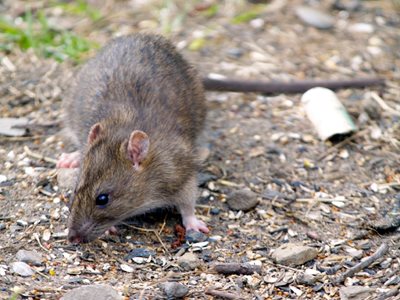
Many homeowners don’t realize they have Norway rats until they spot burrow openings near the foundation, hear scratching beneath the floor, or find droppings in a basement or crawlspace. By that point, the rats may have been active for quite some time. Unlike roof rats, which prefer attics and other elevated areas, Norway rats are burrowers that spend most of their time at ground level.
These rodents often establish nests beneath homes, where crawlspaces, foundations, decks, and porches provide shelter and protection. Because much of their activity happens out of sight, infestations can go unnoticed for weeks or months, making early identification important.
How to Identify Norway Rat Holes
For many homeowners, burrows are the first visible sign of Norway rats. These rodents dig tunnel systems that connect nesting areas with food and water sources.
Rat holes under a house or along a foundation are usually 2–4 inches in diameter, with smooth, well-used openings. Fresh soil nearby often indicates recent digging.
You’re most likely to find rat burrows:
- Along foundations
- Under decks and porches
- Near crawlspace entrances
- Around utility lines and pipes
- Beneath sheds and other outdoor structures
Several burrows in the same area often indicate an established infestation. If you find rat holes next to your house or foundation, look for droppings, gnaw marks, or runways nearby.
How to Identify Norway Rat Damage
Norway rats spend much of their time hidden from view, but they rarely go unnoticed forever. As they burrow, travel, and chew, they leave behind evidence that points to where the infestation is centered.
Norway Rats in Crawlspaces
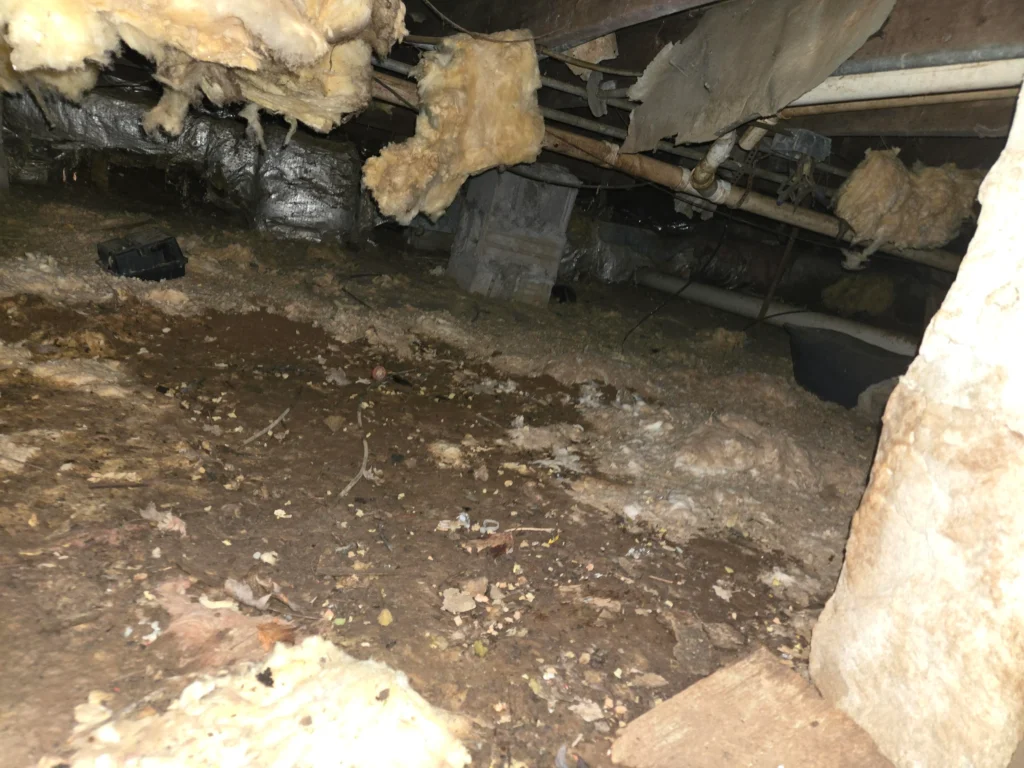
Few areas are more attractive to Norway rats than a crawlspace. These spaces are dark, quiet, and rarely disturbed, making them ideal locations for nesting and travel.
Signs of Norway rats in crawlspaces may include:
- Chewed wood framing
- Damaged or displaced insulation
- Gnawed electrical wiring
- Nesting materials such as shredded paper, fabric, or insulation
- Droppings along travel routes and support structures
Because these areas are rarely inspected, rat damage in a crawlspace may go unnoticed. You may first notice the problem when you find damaged insulation, detect unusual odors, or experience electrical issues caused by gnawed wiring.
Norway Rats in Basements
Basements offer many of the same advantages as crawlspaces, especially when storage boxes, utility equipment, or clutter provide additional cover.
Common signs of Norway rats in the basement include:
- Gnawed cardboard boxes and stored belongings
- Droppings along walls and behind stored items
- Scratching or movement sounds at night
- Greasy rub marks on frequently used routes
- Damage to wiring, pipes, or insulation
When rats are active in a basement, there’s often a larger nesting or burrowing area somewhere nearby, either beneath the home or along the exterior foundation.
Under Decks and Porches
The protected space beneath a deck or porch is an appealing nesting area for Norway rats.
Watch for:
- Burrow openings near support posts
- Freshly disturbed soil
- Nesting materials beneath the structure
- Droppings near access points
- Tunnels around the perimeter
Along Foundations
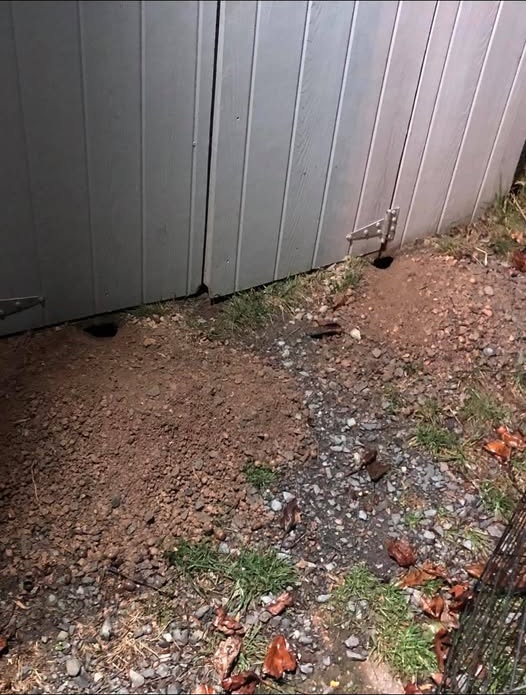
Many Norway rats naturally follow foundation walls as they move around a property. These surfaces provide cover, and nearby openings can eventually become entry points into the structure.
You might notice:
- Rat holes next to the house
- Burrows near utility penetrations
- Gnaw marks around vents and openings
- Well-worn runways through mulch or vegetation
- Droppings near foundation walls
Other Signs of a Norway Rat Infestation
Burrows aren’t the only clue that Norway rats are present. Even when nesting areas remain hidden, rats often leave behind evidence of their daily movements.
Other signs of an infestation include:
- Capsule-shaped droppings
- Scratching or scurrying sounds in walls, floors, or crawlspaces
- Greasy rub marks along walls, pipes, and structural surfaces
- Tracks or tail marks in dusty areas
- Strong musky odors
- Rat sightings during evening or nighttime hours
The more signs you find, the more likely it is that rats have been active on the property for some time.
Problems Associated With Norway Rats
A Norway rat infestation often extends beyond the immediate nesting area. As rats move through a property, they can damage building materials, contaminate hidden spaces, and create problems that worsen over time.
Structural Damage
Norway rats constantly gnaw to wear down their teeth. Unfortunately, many household materials become targets.
Common forms of damage include:
- Chewed electrical wiring
- Damaged insulation
- Gnawed wood framing
- Damaged plastic pipes
- Destruction of stored belongings
Chewed wiring is especially concerning because it can increase the risk of electrical shorts and fires.
Health Hazards
Rats can also create sanitation concerns in and around the home.
Droppings, urine, and nesting materials often accumulate in crawlspaces, basements, and other secluded areas. As contamination builds, odors may become more noticeable, and indoor air quality can be affected. Norway rats may also introduce parasites such as fleas and mites into areas used by people and pets.
Why DIY Rat Control Often Fails
Many homeowners start with traps or bait, but these methods often address only part of the problem.
Common mistakes include:
- Using too few traps
- Placing traps away from rat travel routes
- Improper bait placement or maintenance
- Missing entry points and burrow systems
Even when rats are removed, infestations can continue if crawlspace openings, utility gaps, foundation penetrations, or burrows remain accessible. Long-term control usually requires both removal and exclusion.
When to Call a Professional for Norway Rat Control
If burrows keep appearing around the foundation, you’re hearing activity beneath the floor, or signs of rats continue showing up in a crawlspace or basement, it may be time for a professional inspection.
A complete approach typically includes:
- Comprehensive inspections
- Identification of nesting and burrowing areas
- Strategic trapping and removal
- Exclusion services
- Habitat modification
- Assessment of rodent-related damage
Norway rats often remain hidden beneath homes, and infestations may go unnoticed. Recognizing burrows, droppings, gnaw marks, and other signs early can help limit the impact on your property. If you suspect Norway rats beneath your home, professional wildlife control services can help identify the source of the infestation and implement exclusion measures designed to help keep rats from returning.