

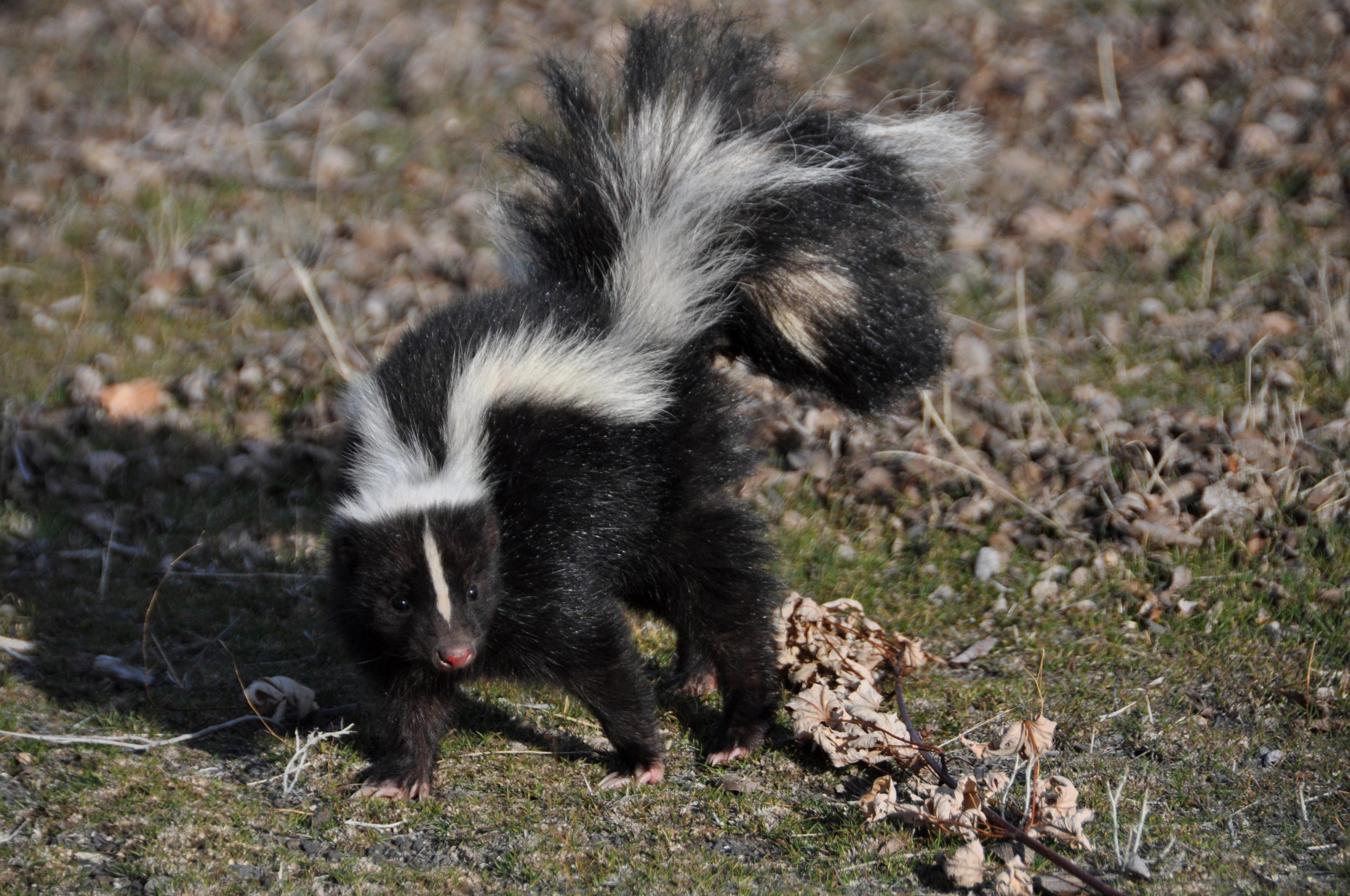
For nocturnal critters like skunks, raccoons, opossums, and coyotes, you usually don’t spot the animal. But if you have one living on your property, you will find evidence. Animal scat can be one of the clearest signs of a nuisance wild animal problem for homeowners, but correctly identifying skunks vs raccoons can be tricky. Both are active at night and can be active in similar parts of your yard. And at first glance, their droppings can resemble ordinary dog poop.
Skunk vs Raccoon Poop
Often, homeowners discover the evidence of an animal before they see that actual critter. This is especially true with skunks and raccoons, which are both nocturnal. Thankfully, concerned individuals can use animal droppings to help identify infestations in and around homes.
What Does Skunk Poop Look Like?

Skunk droppings look similar to those of a cat and are typically found in lawns and gardens. The waste is tubular, has blunt ends, and usually measures about a quarter to half an inch in diameter and one to two inches long. Skunk poop generally contains bits of undigested insect exoskeletons, berry seeds, fur, or feathers.
Shape
Skunk droppings are typically:
- Tube-shaped or cylindrical
- Slightly curved
- Similar in appearance to small dog or cat feces
- Often have blunt or tapered ends
Because skunks eat a wide variety of foods, you may notice visible insect parts, seeds, berries, or fur mixed into the droppings.
Size
Skunk feces generally measures:
- 1/2 to 3/4 inch in diameter
- 2 to 4 inches long
Individual droppings may be broken into segments rather than one continuous piece.
Color
The color depends on the skunk’s diet but is commonly:
- Dark brown
- Black
- Grayish-black when older and dried out
Droppings containing a large amount of berries or fruit may appear slightly reddish or purple.
Raccoon Poop

Raccoon droppings are also blunt-ended and tubular but are typically a bit larger than skunk poop. On average, raccoon poop is about two to three inches in length and half an inch in diameter. Additionally, their scat is darker.

Where Did I Find the Droppings?
Where you find the droppings can provide a clear answer in identifying raccoon vs. skunk droppings.
Raccoon defecate in shared locations, known as latrines. Common sites include tree stumps, woodpiles, large rocks, decks, and patios. During a raccoon infestation, you will find latrine sites in your attic, on the roof, or in a garage.
Skunks often leave droppings near areas where they forage, travel, or den. Common locations include:
Around the Yard
- Near shallow holes dug in lawns while searching for grubs and insects
- Along fence lines
- Around landscape beds and gardens
- Near compost piles
Around the Home
- Under decks and porches
- Beneath sheds
- Along the foundation
- Near crawl space entrances
- Around outdoor pet feeding areas
Near Den Sites
If a skunk has established a den under a structure, droppings may accumulate:
- Near the den entrance
- Along pathways leading to and from the den
- In sheltered areas protected from rain
Skunks cannot climb. So if you found droppings on the roof or inside the attic, you have a raccoon. Skunks usually live under porches, decks, sheds, or in burrows near rock, wood, or brush piles.
Raccoons defecate in shared locations, known as latrines. Common sites include tree stumps, woodpiles, large rocks, decks, and patios. During a raccoon infestation, you will find latrine sites in your attic, on the roof, or in a garage.
When Did I Find the Animal Droppings?
Both critters are active year-round, but certain times of year see their activity increase around houses.
Skunks are most active early in the year, from February to March during their mating season, after the babies are born in summer, and then in September as they prepare for winter weather.
Similarly, raccoons generally break into homes to give birth (March) or to get shelter during the winter (October to February).
Health Concerns with Animal Droppings Around House
Skunk Feces Hazards
Though it’s less common, skunks can also spread roundworms through their feces. However, they are more likely to transmit listeriosis and leptospirosis to humans. Pets may pick up canine hepatitis, canine distemper, and feline Panleukopenia from skunk feces.
Raccoon Feces Hazards
Raccoon feces may contain roundworm eggs, which are extremely harmful to humans and pets. Young children are most susceptible to contracting roundworm because they may come into contact with excrement while playing and tend to put unclean hands near or into their mouths. Symptoms include blindness, paralysis, and damage to livers and lungs. Raccoon roundworms can even cause death.
Though it’s less common, skunks can also spread roundworms through their feces. However, they are more likely to transmit listeriosis and leptospirosis to humans. Pets may pick up canine hepatitis, canine distemper, and feline Panleukopenia from skunk feces.
Droppings in an attic, garage, crawlspace, or other enclosed area may indicate that wildlife has found a way into the structure. Identifying and cleaning up the droppings does not close that
opening. The animal should be identified and removed before any necessary entry-point repairs are completed.
Outdoor droppings alone do not necessarily indicate the need for structural exclusions.
When Is It A Problem?

A skunk’s normal range in a single night is 0.5 to 2 miles. During breeding season (early spring), males will travel up to 4 to 5 miles. Finding skunk droppings once is not a cause for concern.
If you’re finding skunk droppings repeatedly in the same area, especially near your home’s foundation, deck, or shed, it may indicate that a skunk is denning on your property.
Other Signs the Skunks Are Denning On Your Property
Skunk droppings are often accompanied by other evidence, including:
- Small cone-shaped holes in the lawn from nighttime foraging
- A strong skunk odor around the property
- Tracks showing five toes on each foot
- Disturbed mulch or landscaping
- Sightings of skunks at dusk or during the night
Safe Animal Removal and Feces Clean Up
Animal droppings around your house present serious health risks to you, your family, and your pets. Dogs can get sick if they ingest animal droppings. You need to safely dispose of the feces, whether through professional help or DIY cleanup, whether it is in your yard or in the attic.
REMEMBER: wild animal feces and bat guano can harbor airborne pathogens. Wear a respirator if removing animal feces from the attic.
Animal poop is one sign of an animal problem that may require professional skunk removal or wildlife control. Other signs of nuisance wildlife problems include strange sounds or noises at night, animal damage to your house, and musky smells inside or around the house.
Call Critter Control for expert wildlife control and removal services, and get a free inspection to ensure your house is animal-free. Our services include safe and humane animal trapping, exclusions for long-term animal control, and remediation, including animal-droppings cleanup.


