

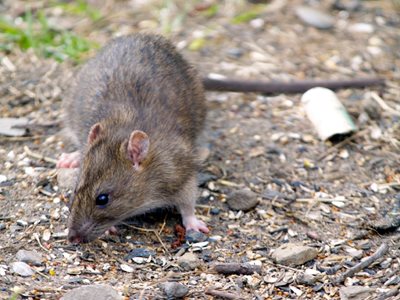
Norway rats, also called brown rats or sewer rats, are one of the most common rat species. While a European naturalist thought they came from Norway, they most likely originated in China or Mongolia and spread throughout the world by ship. Living in urban, suburban, and rural regions, they’ve become one of the most pernicious pests plaguing homeowners.
Attics are a favorite location for rodents as they provide warmth, a secluded and safe place to build a nest and reproduce, protection against predators, and access to nearby food and water. Norway rats get inside through roof vents, gaps in eaves and soffits, and spaces around cable and utility lines, often jumping onto roofs from overhanging trees. All they need to squeeze into an attic is a hole the size of a quarter.
Norway rats in your attic are a threat to your home and health as they create costly damage and spread disease. It’s imperative to call a wildlife removal service, such as Critter Control, as soon as you suspect an infestation, as these pests reproduce rapidly.
Below, learn more about the Norway rat species and how to get rid of these pests, such as:
- How to identify the roof rat vs. the Norway rat.
- How they can damage your home and health.
- Why a professional service is the best way to get rid of Norway rats.
Norway Rats vs. Roof Rats
Norway rats vs. roof rats share some similarities that make it difficult for homeowners to identify which rat is living in their attic. Both are common home dwellers that have lived amongst humans for thousands of years. They are both nocturnal, and they both breed quickly, which leads to infestations that grow quickly.
Many of their differences are physical. Roof rats are smaller and slimmer than the Norway rat size. Roof rats are black; Norway rats are brown. Roof rats also have larger ears and a longer tail than Norway rats. They behave a bit differently. Norway rats are more territorial. Roof rats are more cautious and are wary of traps.
How Do Norway Rats Get in the Attic?
While Norway rats in the yard are not as proficient at climbing as roof rats, they will jump onto a roof from an overhanging tree or fence. They can climb up the side of a home, especially on stucco or brick structures where there is texture for them to latch onto.
Even more likely, though, is that they gained entry to your basement or crawlspace and then climbed to the attic through wall voids, ductwork, or water pipes. They also enter homes easily through broken or missing vent screens, chimneys, gaps between windows and doors, and cracks between the floors.
Signs of Norway Rats in the Attic
Norway rats vs. roof rats show many similar signs in your attic or walls. Without seeing a rat, it might be hard to know for sure if what’s living in your attic is a Norway rat or a roof rat. A Critter Control professional will be able to best identify Norway rat traits.
Noises at Night
Norway rats, like most rodents, are nocturnal. If you have an infestation, you’ll hear scurrying and scratching noises, thumps, gnawing, and chattering as they communicate with one another.
Droppings
Droppings are a sign most homeowners recognize. Norway rat droppings are dark brown, capsule-shaped, have blunt ends, and are about an inch long. You’ll find them on counters, in the pantry, and along baseboards.
Nesting Materials
While Norway rats prefer basements, they also like wall voids and attics because of warmth, safety, and access to food and water. Their nesting materials include soft items such as insulation, fabric, cardboard, and furniture stuffing.
Gnaw Marks
Homeowners will find gnaw marks near baseboards, along the bottoms of walls, on cabinets or pantry doors, on food packaging, and on wood furniture as rats try to get to the stuffing.
Strong Odors
As urine and feces accumulate, you’ll notice an ammonia-like smell similar to a dirty litter box. If a rat dies in your attic or wall, there will be a strong rotting stench for several weeks.
Unusual Pet Behavior
Pets can hear the activity of Norway rats in the attic or walls, and can smell them too. It’s not unusual to see pets stand and stare at walls where activity is taking place.
Problems Caused by Norway Rats in the Attic
A Norway rat infestation can cause costly damage to your home and health.
Structural Damage
Norway rats like to burrow. In your attic, they will tear insulation as they dig and take insulation for nesting. Over time, this will reduce your energy efficiency, causing higher bills.
They are also constantly gnawing to maintain their teeth, so rafters, joists, and beams are their likely targets. This can lead to a weakened structure over time.
The accumulation of their urine and feces will also stain and rot wood and contaminate insulation and drywall.
Electrical Hazards
Norway rats, like all rodents, have incisor teeth that grow continuously throughout their lives. They chew on wood and wires to keep their teeth at a manageable length. These pests will chew on wires simply because they are in the way of their travel routes and blocking their access.
Also, the rubber coating on wires has a chewable texture, and some eco-friendly coatings may even smell like food to Norway rats because of the vegetable or soy compounds used. Rats gnawing on wires can cause short circuits, an electrical fire, or a power outage.
Health Risks
The feces and urine left behind in an attic can spread harmful Norway rat diseases. These include Hantavirus Pulmonary Syndrome, leptospirosis, hemorrhagic fever with renal syndrome, and rat bite fever. Since the attic is a confined space, it is dangerously easy to inhale infected particles of waste when dusting or cleaning.
Norway rats in the house can also cause or worsen allergies, especially in those prone to allergies and in children, and people who have asthma.
Why DIY Rat Control Doesn’t Work in Attics
- Hidden nesting sites make it nearly impossible to be certain you’ve caught all the Norway rats. Leaving even a few behind means the infestation will continue to grow again.
- Norway rats do not hibernate, and their year-round fast reproduction rates further complicate your ability to remove the total infestation.
- The ineffectiveness of store-bought repellents means your ability to remove all the rats is limited. These pests are also quite adaptive and will become accustomed to and ignore repellents such as sprays, ultrasonic devices, and essential oils.
- Safety risks are the most important reason to leave a Norway rat infestation to the professionals.
Professional Rat Control Prevention
Norway rat infestations are more prevalent than most homeowners think. The National Pest Management Association reports that approximately 21 million U.S. homes annually have a rodent problem. The incident rate is higher in urban and suburban neighborhoods than in rural areas.
Using exclusion methods is an effective long-term prevention method that will greatly lessen the chance of rats coming back into the attic:
- Repair screens in air vents and damaged ventilation.
- Cover the crawl space with a door that fits tightly.
- Block gaps in the roof, cap chimneys, and seal entry points for pipes and electrical lines.
- Close all other access points larger than one-fourth of an inch.
- Use caulking, wire mesh, heavy cloth, copper screening, and other materials as appropriate.
Benefits of Professional Control vs. DIY
For Norway rat infestation, hiring a professional will provide you with tremendous peace of mind, as you will be assured that the infestation is completely gone.
The highly trained professionals at Critter Control know exactly where and how to place traps or baits. And, they will safely remove dead rats, urine, and feces from your attic, disinfecting the entire area completely.
Your family members won’t have to handle toxic over-the-counter products and get sick from the diseases Norway rats carry, such as leptospirosis or hantavirus.
Call Critter Control for Rat Control Solutions
Critter Control is a leader in humane and effective rodent control, and with offices throughout the country, there is always one near you. Best of all, Critter Control’s services come with a customer satisfaction guarantee. Call Critter Control today at 800-274-3387.