

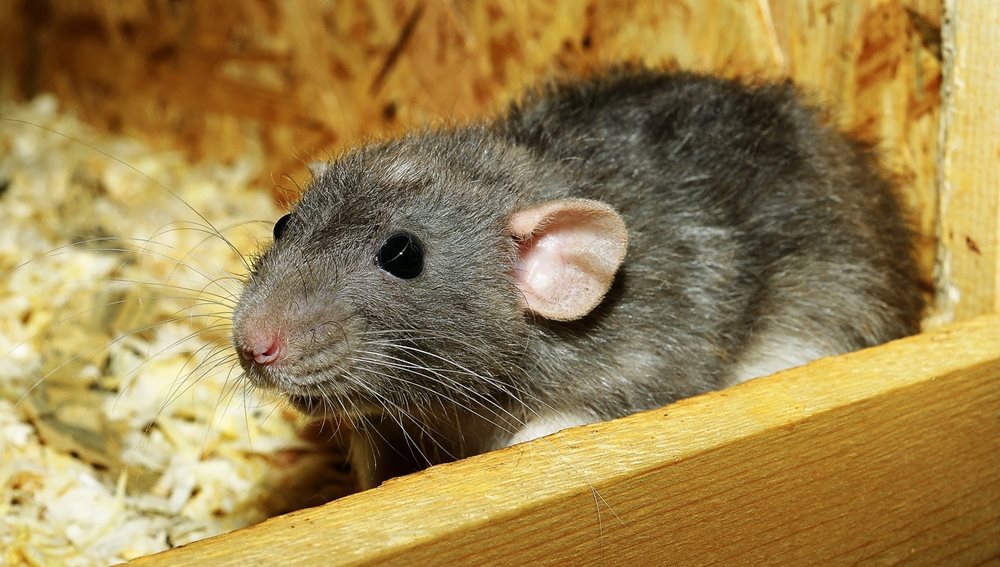
Key Takeaways
- Rats can damage property, contaminate food, and spread disease.
- Infestations usually begin in out-of-sight areas like attics, basements, ceilings, crawl spaces, and wall voids.
- Acting fast helps reduce risks to your home and your family.
- Our expert staff at Critter Control provides proven, long-term rat removal and prevention.
Tiny teeth marks in a wooden couch leg. Pellet-shaped droppings along the baseboards. Scratching in the walls after the lights go out. These are the not-so-pleasant signs that often indicate the presence of rats in the house. Beyond the mess, they bring property damage, food contamination, and health risks that no family should ignore. At Critter Control, we’ve spent decades helping homeowners recognize these signs, learn how to safely remove rats from their homes, and protect their properties from lasting damage.
Signs of Rats in Your Home
Rats are masters at staying hidden. More often than not, homeowners notice the evidence before ever laying eyes on one scurrying about. We often hear from families who first realized they had a problem when small but consistent signs started showing up in different areas of the home. The most common signs of rats in the house include:
Noises
Unusual, unexplainable sounds at night are often the earliest sign of a rat infestation. You might hear scratching or scurrying sounds from walls, ceilings, or attics when rats are most active. If you notice persistent rat noises, chances are that they’ve already moved in.
Droppings
Rat droppings are dark, oval-shaped, and larger than a mouse’s (about the size of a large raisin). You may spot them in your pantry, cupboards, or along baseboards, where rats often search for food. If you spot droppings from rats, you’ve got an active infestation.
Gnaw Marks
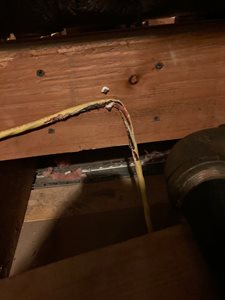
Rats have to gnaw constantly to keep their teeth sharp. In your home, that translates to conspicuous marks on wood, wires, and even plastic. These chew marks are large and ragged (much more so than those caused by mice). If you spot new chomps out of your home’s contents, it could point to rats in the walls or other hidden spaces.
Odors
Lots of rats mean lots of urine, and that means a strong, ammonia-like odor. It’s often most concentrated in closed-off areas, such as basements, attics, or crawl spaces. If this smell never seems to go away, you probably have a major rat problem that needs immediate attention.
Unusual Pet Behavior
Pets typically spot the problem before people do. Your furry companions may start pawing at walls, barking, growling, or appearing unusually fixated on certain areas of your home. If you’ve noticed this shift in behavior, there might be rats nearby.
Rat Nests
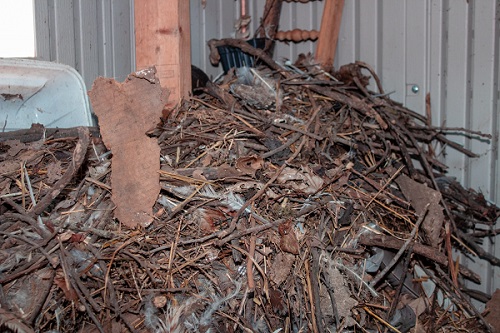
Rats make nests out of shredded paper, insulation, and fabric scraps. They often tuck them into quiet, hidden places like attics, crawl spaces, or behind walls. If you find rat nests in your home, you’re likely dealing with an active infestation.
Problems Caused by Rats in Your Home
Rats typically view basements, attics, ceilings, crawl spaces, and walls as prime real estate. Once in there, they’ll chew wires, dig through insulation, and contaminate food in your pantries and cupboards. If provoked, they may even bite, which makes them a risk to both people and pets. These issues add up fast and fall into three main categories: property damage, health concerns, and safety risks.
Property Damage
Rats can cause major structural problems inside your home. Their teeth-whittling habits can leave holes and tunnels inside wood, drywall, and insulation, which can weaken the building. If they nibble on electrical wires, they could increase the risk of a house fire.
Health Concerns
Rats spread all sorts of harmful pathogens through their droppings, urine, and saliva. Diseases from rats, such as Hantavirus, leptospirosis, and salmonella, can put your family at risk when any surface or food becomes contaminated. Even a small infestation of a few rats can create unsafe conditions for anyone living in your home.
Safety Risks
While rats usually stay out of sight, they can be a safety risk when spotted. Cornered rats may bite when threatened, and rat bites can lead to injury and infection. Infestations also attract other pests, such as insects, that feed on spilled food or droppings. It all adds up to a big safety problem for both you and your pets.
Why DIY Rat Control Doesn’t Work
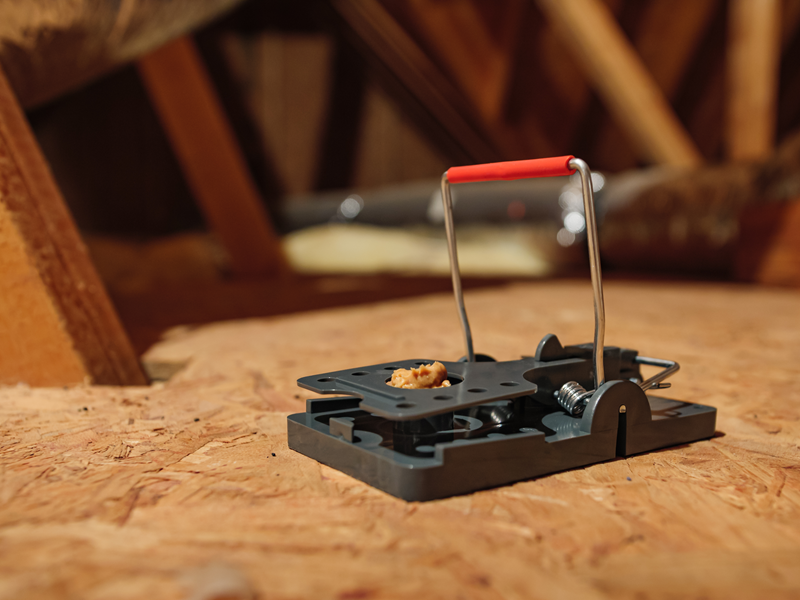
That trap on the hardware store shelf that promises to get rid of rats might seem like a good option. It might seem like the perfect way to kick rats to the curb by yourself.
Unfortunately, DIY methods rarely work for long. Homeowners searching for how to get rid of rats in the house often find that rat traps and baits only catch a few, while the larger infestation remains hidden in walls, ceilings, and other out-of-sight spots. Once the rats catch on to your plan, sensing danger, they’ll avoid those traps. Even if a few are removed, the rest of the rats often continue breeding, and the cycle repeats.
Effective rat control is more than getting rid of the rats you can see or scaring them away with a short-lasting deterrent. You need to find and seal entry points, destroy food sources, and start long-term prevention strategies. Otherwise, you will be back to square one eventually.
Attempting to do it yourself can be frustrating and dangerous, especially since rats can carry disease and bite when cornered. Professional services like Critter Control combine experience, safety procedures, and proven techniques to thoroughly eliminate infestations and protect homes from further problems.
How Professional Rat Removal Works
Wondering “How do you get rid of rats in your home once they’ve settled in?” Removing rats takes more than setting a few traps, and they typically won’t leave on their own. At Critter Control, we follow a proven process that addresses both the immediate infestation and the conditions that allow rats to return.
Inspection
We start by doing a complete walk-through of your home. We look for signs of travel, monitor points of entry, and locate hidden nests: data that gives us a distinct picture of how the rats are moving around your house.
Trapping and Removal
Our humane and efficient targeted trapping and removal methods are designed to eliminate the infestation quickly with little disruption to your house.
Exclusion
Next, we keep rats out for good. Focusing on holes, cracks, and other openings, we seal up points of entry they use to overrun your house.
Sanitation and Clean up
The last step is making sure the problem doesn’t return. We put long-term prevention strategies in place—from small habitat changes to ongoing monitoring—so your home stays protected well after we leave.
Rat Control and Prevention
The last step is making sure the problem doesn’t return. We put long-term prevention strategies in place—from small habitat changes to ongoing monitoring—so your home stays protected well after we leave.
Why You Should Choose Critter Control
The experts at Critter Control specialize in rat removal techniques for rats in houses that include sanitation and the elimination of rat hiding places. Rat repellants and rat trapping are often used to get rid of rats in your home, and lethal methods are only used when they are deemed to be the most efficient and effective way to get rid of rats in the house.
If you suspect a rat problem or rat damage in your home, contact the experts at Critter Control today at 1-(800) 274-8837 to ensure that they don’t harm you, your family, or your home.
Get them out.
Keep them out.®
Experiencing a wildlife or pest issue? We can help! Complete this form and your local Critter Control® office will contact you to assist.


- Baby Rats
- Do Rat Repellents Work?
- Do Rats Hibernate in Winter?
- Dead Rat
- Rat Droppings
- Diseases from Rats
- Rat Bites
- Rat Life Cycle
- Identify Rat Noises Inside Your Home
- Rat Tracks
- Rat Traps & Baits
- Rat Tunnels in Attic
- Rats in Cars
- Rats in Crawl Space
- Rats in Walls
- Types of Rats
- What Can Rats Chew Through
- What Do Rats Eat?
- What Does a Rat Look Like?
- Where Do Rats Nest?