

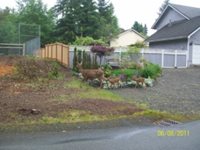
Deer are abundant in forested areas and populated neighborhoods across the United States. Deer frequently venture into yards to eat vegetation. They consume the bark on trees, as well as nearly 500 different types of flowering and ornamental plants. Deer in backyards destroy gardens and landscaping, which can result in significant monetary losses.
Deer Damage to Trees
Newly planted trees are a great source of easily accessible nutrients for deer. They stay low to the ground, making them easy for deer to reach. They also have new leaf growth, with leaves that are more tender and easier for deer to chew. This is why newly planted trees often need to be protected in the early stages of their lives, as they are prime targets for hungry deer.
Signs of Deer Damage to Trees
- Ragged or torn ends on twigs and stems (deer lack upper incisors and tear vegetation rather than making clean cuts).
- Missing buds and leaves up to 6 feet high.
- Vertical bark scars or stripped bark from antler rubbing.
- Deer tracks, droppings, or trails near damaged trees.
Prevention & Removal
Each young tree should be individually protected by a tight, tall cyllinder of fencing that keeps deer from eating away at them. Deer are capable of jumping quite high, so you have to closely wrap each tree, rather than enclosing several of them in one fenced-off area, as the deer will be able to jump over the fence and eat away at the trees within. Tight, tall, cyllindrical fencing is among the most effective ways to keep young trees safe from deer.
Typically, store-bought and DIY deer repellents to do not keep deer away from young trees. In order to maintain a modicum of efficacy, they need to be reapplied frequently, which can be costly; they also degrade in the sunlight and the rain. If they are committed enough, even if you do keep reapplying the repellents, eventually the deer will continue to eat away at the young tree, despite the repellents that are in place.


