
Bat Removal in Nashville
Get a Free Quote on Bat Removal Near You
Get a Free Quote on Bat Removal Near You
Monday-Friday 7:00 a.m. – 5:00 p.m.
Saturday 8:00 a.m. – 5:00 p.m.
Sunday Closed

Did you find piles of droppings? Are bats flying out of your attic nightly?
There are sixteen species of bats in Tennessee, with the Little Brown Bat being the most common. Bat guano—the droppings left behind by bats—is a strong sign of an infestation and a serious health concern. Accumulated guano can damage your home and promote the growth of harmful fungi that cause Histoplasmosis and Cryptococcosis, two respiratory diseases that may lead to flu-like symptoms or chronic lung issues, especially in vulnerable individuals.
From May 1st to August 1st, you cannot remove a colony with flightless pups. Bat extermination is illegal.
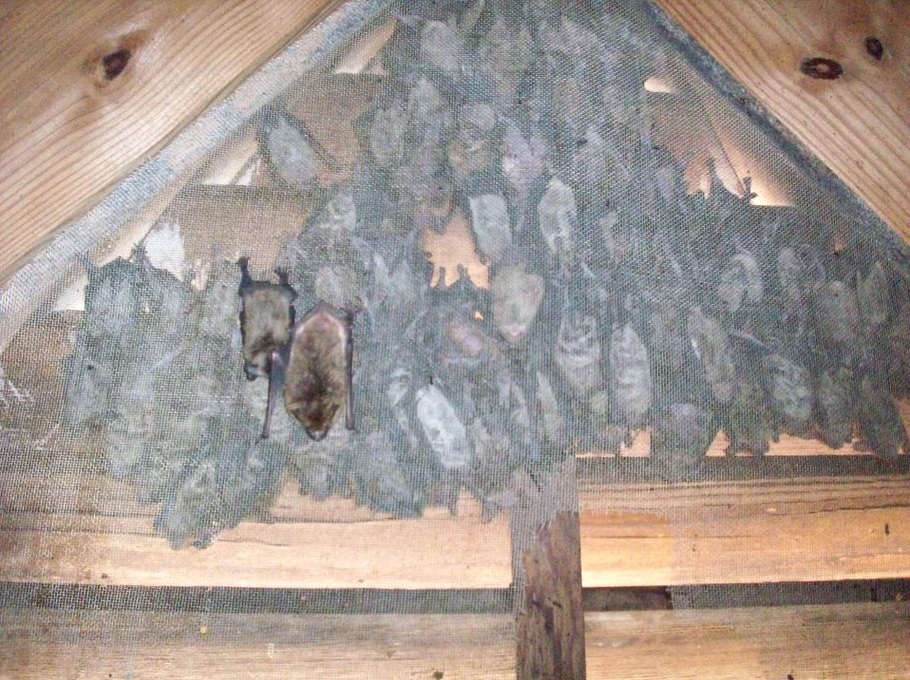
One of the biggest bat problems is the collection of bat droppings, also called guano. Bat guano can introduce health risks to you and your family and damage your attic.
Guano provides a hospitable environment for the fungal spores that cause Histoplasmosis, a respiratory ailment, to grow. When droppings accumulate, the spores become airborne and can be breathed in by residents. During bat removal, the Critter Control experts wear respirators to protect themselves.
Bat guano collects under the roost location. The longer an infestation, the larger the pile of bat droppings. They can contaminate your insulation and weaken your ceiling.
In rare cases, a bat can find itself in the living space of your home. It is exceedingly rare for bats to bite you, but it can be difficult to find a bat bite spot. Additionally, bats are known carriers of rabies. If someone has been in the same room with a bat, it is prudent to seek medical attention or contact the local health department.
In addition to creating noise, a bat in house walls may become stuck. This is especially common for young bats, which have not yet mastered flying. If left alone, trapped bats often starve and die in wall voids, attracting rodents, cockroaches, and other pests with the smell of decay.
Do Not Smoke Out Bats in the Chimney!
“Smoking out” a bat infestation is also a bad idea. The suggestion to keep the damper closed and set a fire is not humane. After birth, bat pups cannot fly. If you set a fire with bat pups in your chimney, it will be cruel.
Bats enter chimneys to hibernate or to give birth. Homeowners with a maternity colony of bats in the chimney may have a long-lasting problem on their hands. The animals have strong homing instincts and usually return to the same roosts. A bat can live for over six years, and females produce a pup every season.
If you do have bats in the chimney, keep the flue shut! Not only is exclusion the most effective way to deter bats from roosting in your chimney, but it is also the most humane and ethical bat control strategy.

Inspection & Identification
We find the roosting spots, entry points, and signs of bat activity.
Bat Removal Near You
The only humane bat removal process involves a bat valve which allows bats to evict themselves harmlessly.
Bat Exclusion & Prevention
Once all the bats have removed themselves, we remove the bat valve and seal all entry points.
Bat Exclusion & Prevention
Once all the bats have removed themselves, we remove the bat valve and seal all entry points.
Not only is bat exclusion the most effective way to get rid of bats from roosting in your attic, but it is also the most humane and ethical bat control near you.
After bat removal, our team seals all entrance points to prevent future infestations. If there is a significant buildup of guano in your attic, it’s critical to take the next step: professional attic remediation. Our specialists will safely remove contaminated insulation, sanitize the space, and install fresh insulation to restore your home’s cleanliness and safety. Leaving guano untreated can pose serious health risks—let Critter Control handle the cleanup thoroughly and responsibly.
Critter Control offers professional bat removal across the country. Where you live will determine when bat removal is possible. In colder climates, you cannot remove or disturb bats during hibernation. During the summer, you can evict bats once the pups can fly on their own.