

Are there mounds of dirt in your grass? Did animal holes show up overnight in your yard? Is something chewing up your garden?
Burrowing animals can wreak all kinds of havoc around your home and yard.
What Animals Dig Holes in the Yard in New Jersey
The most common animals that dig up your lawn and destroy your yard in New Jersey are groundhogs, moles, and voles. These underground critters are rarely seen, but we can identify the pests by the holes and tunnels they dig. You’ll most likely notice damage from these animals in the spring and through the fall. They become less active during the cold weather associated with New Jersey winters.
If you find small holes in your yard, those might be from skunks. Skunk holes differ from skunk burrows. Skunk holes are shallower than burrows and have loosened dirt. Skunks will dig holes in your yard in search of food. Skunks are omnivores. They eat insects, mice, shrews, ground squirrels, young rabbits, eggs, and various plants. Occasionally, raccoons will destroy grass or roll up sod in search of grubs.
Groundhogs in New Jersey
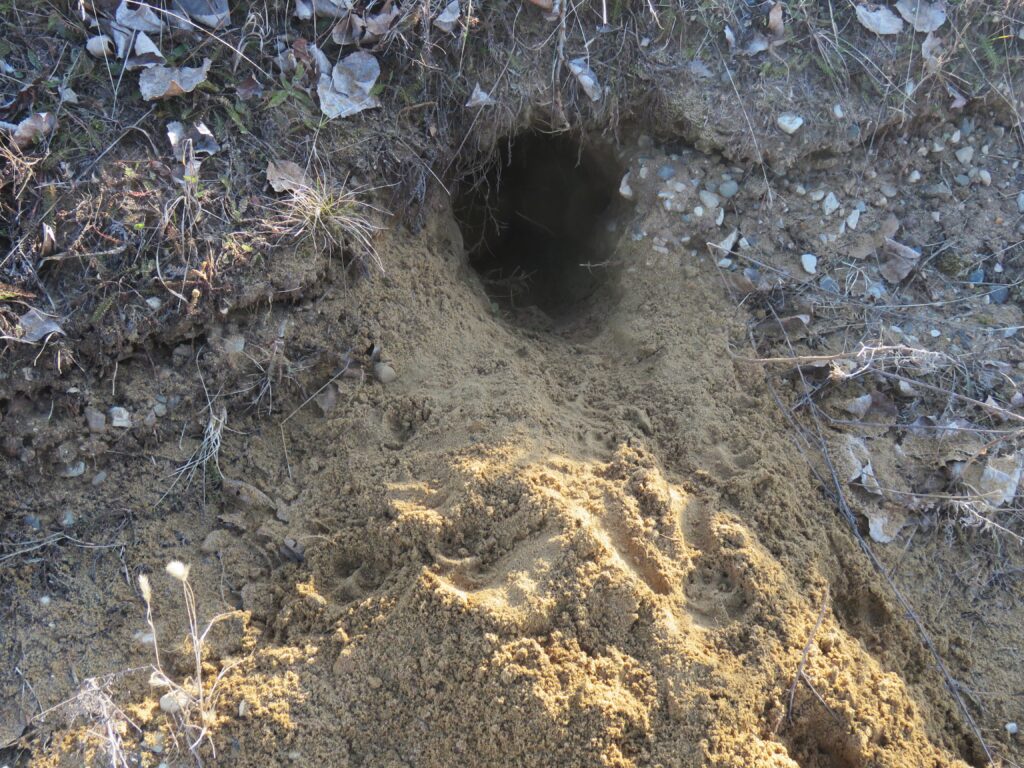
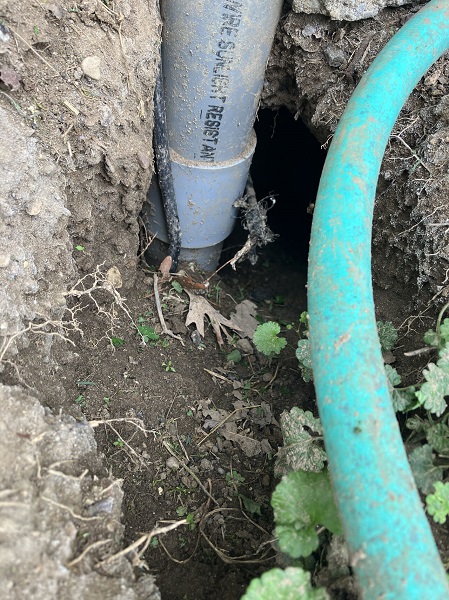
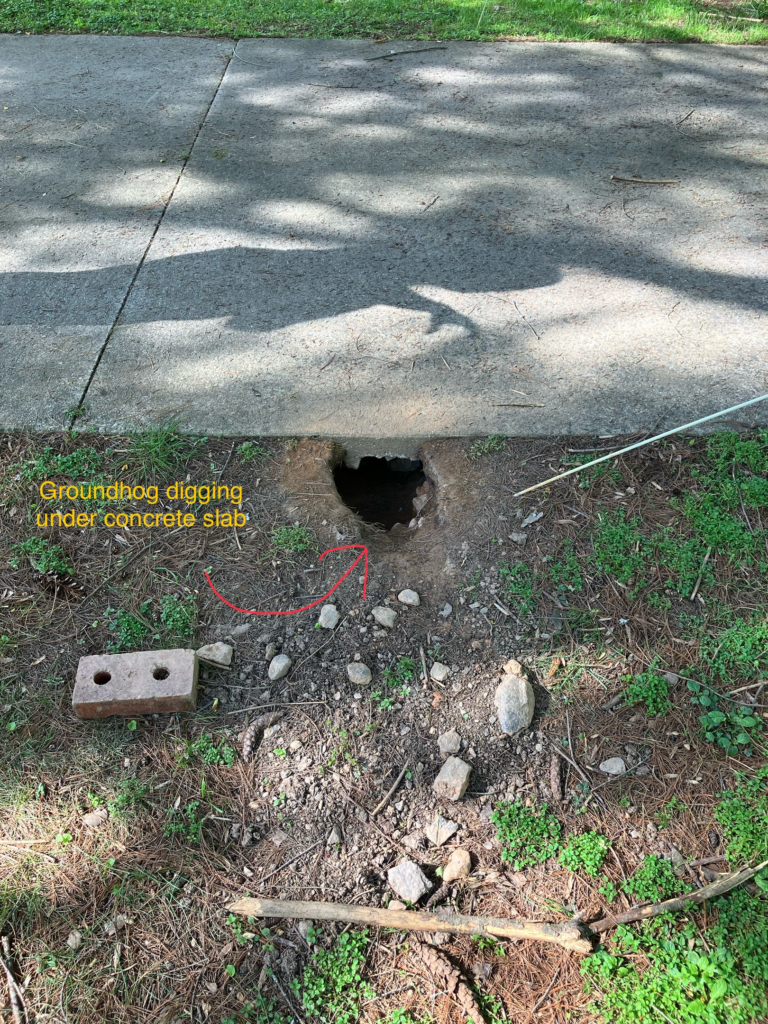
Groundhogs (or woodchucks) can cause serious problems for New Jersey homeowners. These animals dig large burrows that can stretch under lawns, patios, sheds, and even foundations. Their tunneling can damage underground sprinkler lines, utility wiring, and create hidden soft spots that could cause a twisted ankle or other injuries while you’re out in the yard.
Above ground, woodchucks won’t hesitate to raid your garden. They’ll devour vegetables, fruits, and even ornamental plants as they fatten up for winter, leaving New Jersey gardens and landscaping looking chewed up and uneven.
Photos of Groundhog Damage
Moles and Molehills in the Yard
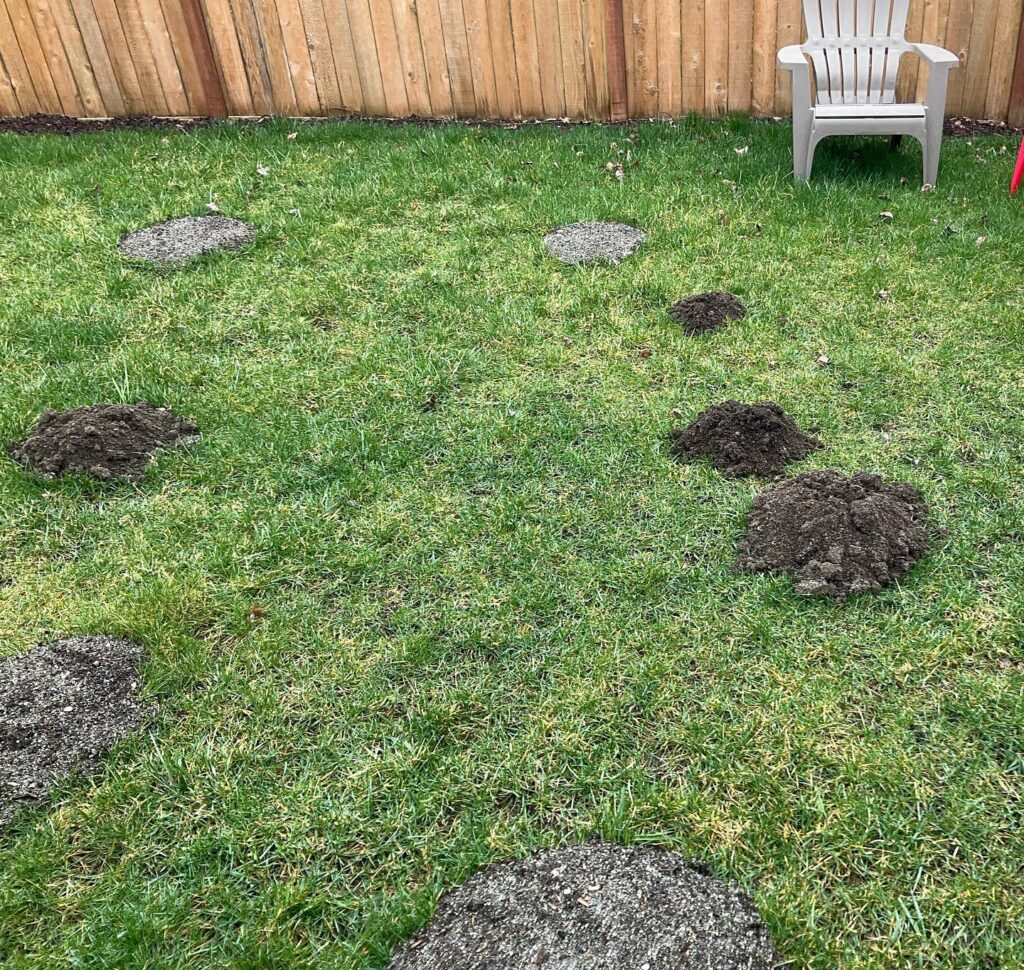
You may not see the mole responsible for the mess, but you will notice mounds of earth and tunnels.Moles build extensive tunnel systems in an effort to find insects and earthworms to eat. Although the critters primarily eat bugs, they may enjoy a meal from your garden or landscape if available. Molehills are identified by their circular and conical mounds. These mounds of soil are typically a foot wide and up to 2 inches tall. In addition to these hills, you may also spot raised tunnel tracks across your lawn.
Voles
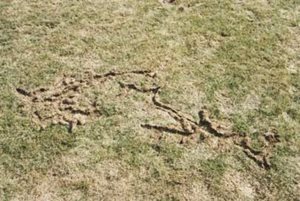
Voles are small rodents that are hamster-like in appearance, but with a blunt nose and stouter body. They are 3-9 inches long, depending on the species. Voles survive primarily on small plants, but can live off almost any fruit or nut. Voles are active day and night, all year round.
Vole tunnels in the yard look like shallow, snake-like runways through the grass, often accompanied by small entrance holes about 1-2 inches in diameter. These runways are typically well-worn paths where the grass has been nibbled down to the soil.
Norway Rats
Also called the brown rat, this is the most notorious rodent in New Jersey. They are large, growing to around 16 inches long (tail included—their bodies are around 9.5 inches), with males typically weighing around 1.25 pounds. Norway rats only require about an ounce of food and water each day to survive.
Norway rats usually construct nests in below-ground burrows or at ground level. In the yard, they typically dig shallow burrow systems under sheds, decks, woodpiles, retaining walls, and thick vegetation. Burrow holes are about 2–4 inches wide near structures, woodpiles, dense shrubs, or along fence lines.
Problems from Moles, Groundhogs, and Voles
The damage from burrowing and digging generally outweighs immediate hazards, such as getting bit or diseases they may carry. They often uproot grass, and create mounds, ridges, and tunnels in yards, flowerbeds, and gardens. Other rodents will use the tunnels and usually eat the exposed roots of plants in a garden or flowerbed.
When these tunnels go under parts of your house, it becomes a big issue. The burrows can undermine foundations, sidewalks or driveways, and sheds or porches which can lead to significant structural damage.
How to Stop Animals from Digging Up Your Yard
For the home DIYer, Moles, groundhogs, and voles are difficult to remove. Repellents don’t really work, and their tunnels are designed to avoid detection. It’s easy to target abandoned tunnels, wasting time, energy, and money. The experts at Critter Control have the training to remove the critter in your yard and the experience in New Jersey to do it quickly.
- Inspection & Identification
We identify the main runways and molehills. - Animal Trapping & Removal
Safe, effective, and compliant with wildlife laws. - Exclusions & Prevention
Protecting your garden beds and landscaping. - Maintenance for Control
Because these animals are territorial, you need maintenance to stop future infestations.
Why Choose Critter Control?
40+ Years of Wildlife Control Expertise
☑Licenses & Insured Wildlife Removal Professionals
☑Safe, Humane, & Environmentally Responsible Methods
☑100% Customer Satisfaction Guarantee
Testimonials
Get them out.
Keep them out.®
Contact Form
Experience wildlife or pest issue? We can help! Complete this form and your local Critter Control® office will contact you to assist.