

This is all true as long as they stay out of your home. When squirrels find their way into your house, you’re susceptible to disease and expensive damage. In order to prevent an infestation, here are a few things you should know about squirrels.
The professionals at Critter Control can safely and humanely remove the squirrels and install solutions to prevent future squirrel problems.
Where Do Squirrels Live in Gainesville?
Squirrels may sneak into your home for safety from the outside. Poor weather conditions or dangerous predators can lead them to seek refuge in your home. If a female squirrel is pregnant, they will enter a dire search for a safe place to give birth to her young, and your attic can be just that.
Signs of Squirrels
- Sounds. There’s a good chance you’ll hear a squirrel before you see any visual evidence. The sounds squirrels make are often described as scurrying, scampering noises. You might also hear chewing or gnawing sounds. Squirrels like building their nests in attics, so sounds will often emanate from there. Squirrel sounds are often mistaken for rat sounds, but there’s one key difference: squirrels are diurnal, so you’ll hear them during the day, whereas rats are nocturnal and will make more sounds at night.
- Nests in Your Attic. Squirrels are well known for nesting in attics, as they provide a safe hideaway for squirrels to raise their young. The inside of an attic is also full of things for them to nibble and sharpen their ever-growing teeth on, like wood and insulation. When a squirrel chews the insulation on electrical wiring, the possibility of a house fire arises. Squirrels enter attics through crevices, gaps, and cracks in soffits, fascia boards, and eaves, or open vents or broken shingles in the roof. Once squirrels reach the attic, they have free reign of the house.
- Damaged Roofing Materials. Another popular nesting site for squirrels is in the roof. Typically, they build these nests with roofing insulation. Take some time to carefully analyze your home’s exterior. Squirrels commonly damage roofs by:
- Damaged Gardens. If you walk out to your garden to find it full of bite marks, a squirrel is one of the more likely culprits. Squirrels eat a variety of popular garden vegetables, including spinach, kale, corn, fruit, and nuts. Squirrels are equally drawn to fruiting trees like citrus, fig, apple, plum, and peach trees. Protecting your garden from squirrels can be as simple as installing a wire mesh cage around your garden and installing a metal collar around 6-8 feet up the trunks of vulnerable trees.
- Squirrel Droppings Inside Your Home. Squirrel droppings are often confused for rat droppings, and vice versa. While rat and squirrel droppings do look similar—dark brown to black in color with blunted ends, around 3/8 of an inch long—they are found in different places around the home. Squirrel droppings are often found in attics or around tree trunks, while rat droppings are more common along baseboards, in cupboards, and behind large appliances like washing machines.
How Do Squirrels Get into My Gainesville House?
Even if you think your home is sealed off from the outside, you may be missing some of the weak points your home naturally has. Here are a few locations around your property that squirrels can use to sneak into your home:
- Vent pipes are large, hollow, and round, which makes them very similar to the inside of a tree; an ideal hiding spot for squirrels
- Squirrels can climb open chimneys made of brick and easily get into your home.
- Flimsy roof vents can be easily gnawed through because the material is so weak.
- Roof edges are easier for squirrels to chew through because of the angle.
- Your home’s soffits are prone to small holes, and if squirrels can find them and gnaw through them to make a bigger hole, they can fit through.
Where Squirrels Cause Problems
Squirrels can nest in many areas of your home:
- Attics→ Squirrels in attics
- Walls→ Squirrels in walls
- Chimneys→ Squirrels in chimneys
- Gutters→ Squirrels in gutters
- Roofs→ Squirrels on the roof
Why Are Squirrels Dangerous?
Squirrels create serious risks:
- Gnawing on electrical wires → Fire hazard
- Contaminating insulation → Health risks
- Damaging wood, vents, and siding → Structural damage
- Blocking chimneys and vents → Carbon monoxide dangers
How Critter Control of Gainesville Gets Rid of Squirrels
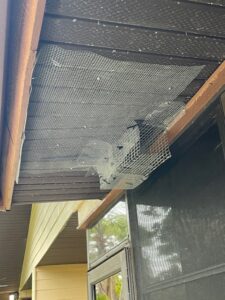
Critter Control specializes in squirrel removal. In order to remove a squirrel or family of squirrels on your property, our wildlife specialist will perform a thorough inspection to determine the severity of the problem. After the inspection, they will build a custom solution to trap, remove, and seal all entry points. They will also provide warranty options and an estimate for preventive services.
Gainesville Squirrel Removal Services
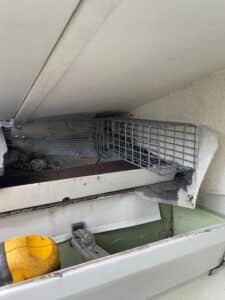
Depending on the severity of your squirrel problem, different types of traps may be used. These traps include:
- Inspection – First, we conduct a thorough inspection of your home to determine where the squirrels are entering, so we can create a removal plan that suits your specific situation.
- Removal – Next, we remove the offending squirrels using the most effective methods available to ensure that every last one is gone for good.
- Repair – Once the squirrels are gone, our technicians can clean up and repair any damage they may have caused to your home.
- Exclusion – Our final step involves sealing any entry points around your home so that squirrels cannot re-enter.
Squirrel Exclusion & Prevention
Home exclusion is the most effective method for preventing squirrels and other nuisance wildlife from entering your home. It is essential to seal all current and potential entry points to prevent future squirrel infestations. After the squirrels have been removed, it is essential to prevent future squirrel problems. Whole home exclusions identify any potential entry point such as gaps around siding, vents, chimneys, and windows, to keep squirrels out of homes. We close the holes with materials squirrels cannot gnaw through.
In addition, we strongly recommend a maintenance service. Like other rodents, squirrels have front teeth that continuously grow, which means they can gnaw a new way back into your home.
Precautions such as removing trees or tree branches on or near your roof can help prevent squirrel problems in your home. We also urge you to refrain from using bird feeders, as they are a huge attractant for squirrels and additional wildlife. After squirrel removal, we advise all our customers to remove food sources, such as accessible birdseed and acorns, if present, to maintain a squirrel-free home.
Testimonials


Get them out.
Keep them out.®
Experience wildlife or pest issues? We can help! Complete this form, and your local Critter Control® office will contact you to assist.