

Schedule a Free Inspection
Hours of Operation
Monday-Friday 7:00 a.m. – 5:00 p.m.
Saturday 8:00 a.m. – 5:00 p.m.
Sunday Closed
Wildlife Control Near You

Best Wildlife Control in Seattle
Online Bill Pay
Your critter is gone, but what about the droppings left in your attic or crawlspace? Damage to your insulation can lead to foul odors and mold. Not only is this unpleasant, but it can also become a health hazard if it is not properly taken care of.
Soiled insulation can sit against support beams or drywall and cause rot and degradation to the structural integrity of your home. Soiled insulation can also be a health hazard as it holds dangerous materials left over from animals. Animal droppings leave behind chemicals that are dangerous when breathed or touched.
Benefits of Replacing Insulation
Replacing your insulation can keep your home safe, improve your air quality, and improve your home’s energy efficiency. Replacing the insulation will also rid the space of any odors or mold trapped in the insulation.
We have the proper equipment necessary for attic insulation removal.
Our specialists can prepare a quote for most major insurance companies to get your attic back into shape in no time. A properly insulated attic or crawlspace will pay for itself in energy savings.
Restoration Services after Wildlife Removal
Odor Control/Remediation in Seattle
Unpleasant odors in your home can come from many sources, but if you can’t quite find the culprit, there could be an animal in your home. The smell could be caused by a wild animal directly (dead or alive) or indirectly (urine, feces, nesting material, etc.). Animals can leave odors long after they are gone.
When we come to your home, we will identify the source of the odor and proceed to eliminate it. We will clean the surfaces and eliminate the odor for good with our special deodorizers, disinfectants, neutralizers, and air purifiers.
The easiest way to find the cause of wildlife animals in your Seattle home is to follow your nose. Common places for deceased animals include your walls, vents, and attic.
It is important to act quickly with animal odors because animal waste can seep into the surrounding structure and stay for long periods of time. Insulation and drywall are the most commonly affected materials, and they even have to be replaced in some cases.
Animal Latrine Removal
Animals such as raccoons and opossums will continuously come back and defecate and urinate in the same area or areas. Over time this waste builds up and can be a host to many dangerous toxins and diseases.
Results of Latrines
In addition to the disease transmission, droppings and urine can harbor moisture which can cause structural damage. Mold can also start to grow in the area which is a health hazard.
Location of Latrines
Latrines can be established anywhere the animals are, whether it is in the crawlspace, attic, or outside by a tree. Racoons prefer flat areas that are raised off the ground.
Cleaning Latrines
Cleaning latrines can be dangerous. They may contain roundworm which can cause roundworm disease. To protect yourself while cleaning latrines, wear gloves, disposable booties, and an N-95 mask. Be sure to wash your clothes when you’re complete. Never use a vacuum or leaf blower to clean latrines.
Dead Animal Carcass Removal and Remediation
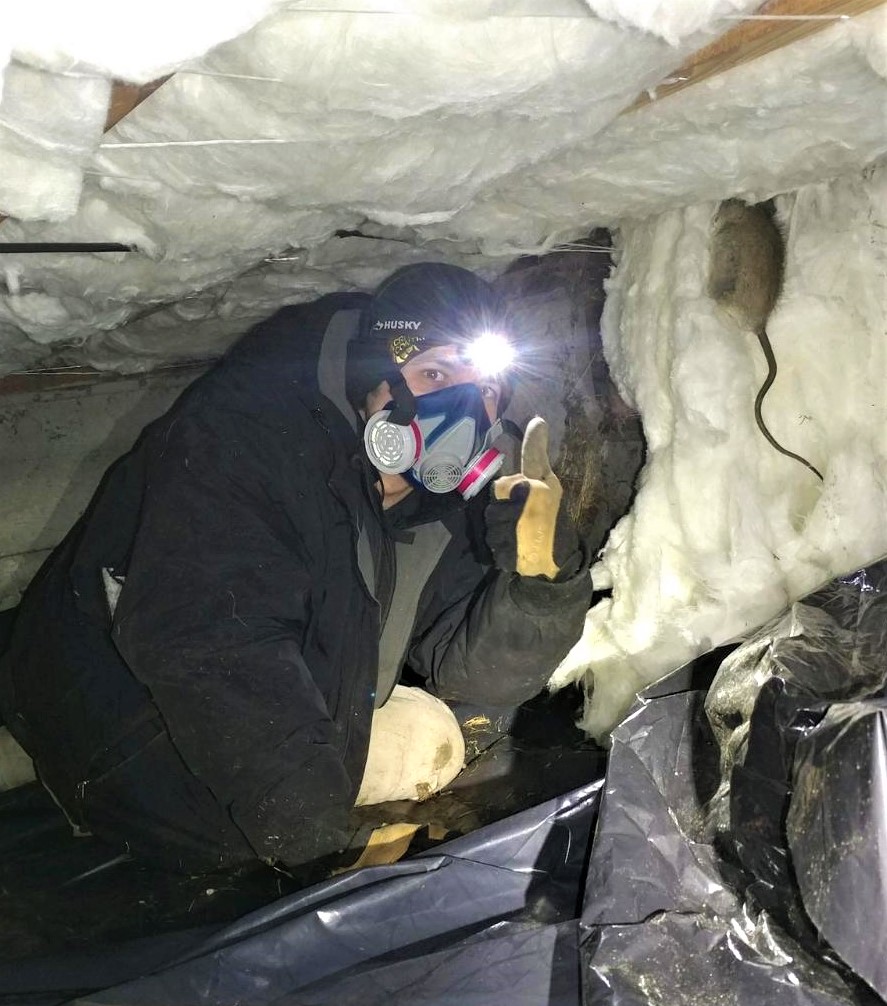
If an animal dies in your attic or vents, they are usually easy to remove. However, if an animal dies in your walls, you may not know where to begin to get it out. The experts at Critter Control in Seattle know how to cut open your drywall to remove the deceased animal while making as little damage as possible. We will then repair any holes we had to make to remove the animal and disinfect the space with our commercial-grade disinfectants and odor removers.
Dead animals leave a horrendous smell in your Seattle home, property, or business. The carcass of the dead animal can lead to health hazards, insect infestation, stains, and lingering odors. In addition, the secretions from the dead animal as it decomposes can cause damage to the surrounding material in the structure if inside. This can cause rot and degradation to drywall, support beams, and insulation. The animal’s size also affects how long it takes to decompose. After removing the animal(s), we have special deodorizers, disinfectants, neutralizers, and air purifiers to make that horrible smell go away.