

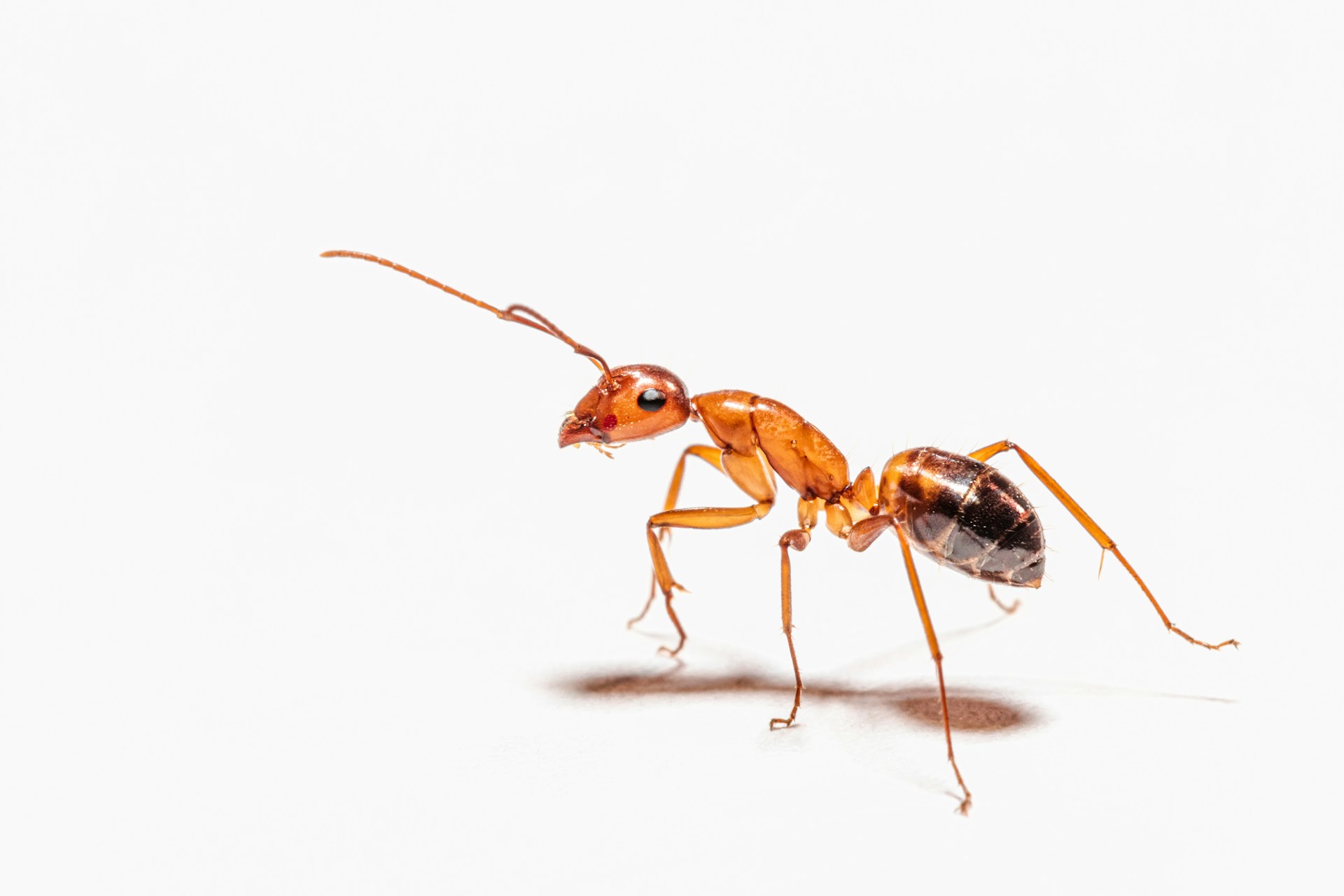
Ants are among the most persistent and frustrating household pests. While most species of ants aren’t harmful, some can contaminate food, damage structures, or even bite! Identifying the type of ant is key to effective pest management.
How to Identify Most Common Ants in the U.S.
- Odorous House Ants
Small, dark brown or black ants are known for the rotten coconut smell they release when crushed. Often found in kitchens and around sinks or sugary food. - Carpenter Ants
Large black or reddish-black ants that tunnel through wood to build nests. While they don’t eat wood, they can cause serious structural damage. - Pavement Ants
Brown to black ants that nest in cracks in sidewalks, driveways, and building foundations. Common indoors near heat sources or food. - Pharaoh Ants
Tiny, light yellow or reddish ants with dark abdomens. Known for spreading quickly indoors, especially in warm, humid environments like kitchens and bathrooms. - Argentine Ants
Small, light to dark brown ants that form massive colonies. They are known for aggressive foraging. - Fire Ants
Reddish ants with a painful sting. They build large mounded ant nests. - Crazy Ants
Named for their erratic movement, these ants are reddish-brown and invade electronics and appliances.
How to Spot Ants
Whether they’re marching across your kitchen counter or building ant mounds in your yard, ants can be a real nuisance. See what are the common signs of their activity, so you can take control of your ant problem.
Signs of Ants:
- Visible trails of ants – Steady lines of worker ants moving along walls, baseboards, or countertops, usually heading toward food or water.
- Ants around food – Ants gathering near crumbs, spills, pet food, or open containers in kitchens and pantries.
- Piles of dirt or small mounds – Small dirt ant hills near foundations, sidewalks, or driveways that may indicate nesting activity.
- Discarded wings – Shed wings near windowsills, vents, or baseboards.
Where Do Ants Cause Problems?
Ants are social insects that live in cooperative ant colonies, ranging in size from dozens to millions of members. Around homes, ants tend to hang out in areas with easy access to food and moisture. Common spots include kitchens, pantries, bathrooms, basements, and even wall voids or behind appliances. Outdoors, they’re often found near foundations, under sidewalks, in mulch beds, or beneath rocks and logs.
1. Kitchen
-
Attracted to crumbs, sugar, grease, and pet food
-
Common around countertops, sinks, pantries, cabinets, and trash cans
-
Ant trails often lead from wall voids or baseboards directly to food sources
2. Bathrooms
-
Moisture-loving ants (like odorous house ants) gather near sinks, tubs, and toilets
-
Leaky plumbing and condensation create ideal conditions
-
Ants may nest in wall voids behind showers or under vanities
3. Inside Walls & Structural Voids
-
Ants frequently nest inside wall voids, behind insulation, or under flooring
-
Carpenter ants are especially problematic here, as they excavate wood weakened by moisture
-
Activity is often noticed by rustling sounds or ants emerging from outlets and trim
4. Foundation & Entry Points
-
Cracks in foundations, gaps around doors/windows, and utility penetrations allow ants inside
-
Ants commonly travel along baseboards once indoors
5. Attics & Crawl Spaces
-
Moisture, insulation, and limited disturbance make these ideal nesting areas
-
Carpenter ants often originate here before spreading into living spaces
6. Bedrooms & Living Areas
-
Ants follow food sources like snacks, drinks, or pet treats
-
Nightstands, couches, and baseboards are common trail locations
7. Outdoor-to-Indoor Transition Zones
-
Around doors, patios, garages, and laundry rooms
-
Ants often nest just outside and enter when conditions change (heat, rain, drought
How Critter Control Gets Rid of Ants
- Inspection & Identification
We identify the species of ant and find nests, foraging trails, and entry points. - Ant Treatment and Extermination
Treatment is tailored to the any species and your situation. - Exclusions & Sanitation
Long-term ant control protection. - Repairs & Remediation
On-going treatments keep your house free from ants.
Find Service in your Area:
Get them out.
Keep them out.®
Experiencing a wildlife or pest issue? We can help! Complete this form and your local Critter Control® office will contact you to assist.
Though color and size vary by species, all ants have three distinct body sections: abdomen, thorax, and head. These insects have six legs and two pinchers that they use to carry food and construct nests.
Ants differ in size from less than a millimeter to a quarter inch in length. The pests are usually yellow, brown, red, or black.
Residents may find ant colonies in a variety of places in a house. Homeowners easily spot the outdoor nests of some kinds of ants by the mounds of dirt or sand at the entrance.
Ants indoors may nest in wood, under appliances, or near a food source.
Are ants known to enter homes or yards?
These small insects enter a home in many ways, often using small cracks around doors, windows, utility lines, or home foundations. They are likely to come inside a house with plenty of accessible food. Spilled drinks, crumbs, and trash attract the pests.
Do ants harm people or property?
Most ants are simply a nuisance, crawling in pantry goods and creating an unsightly spectacle as they travel across floors and sidewalks. Many species will defend themselves if harassed, but only a few ant varieties have painful bites and stings.
Some types may create property damage by burrowing in wood, nesting in electronics, or building nests in lawns.
Ants are persistent pests. There are many types of baits, traps, and pesticides on the market, so the first step to choosing a remedy is to determine the type of ant infestation. Certain species require different control methods.
Keeping a home clean, free of spills, and moisture-controlled is the easiest deterrent for these pests. For professional assistance in ant removal, contact a local, qualified pest management agent.
This type of pest control is not available in all markets. Please contact your nearest Critter Control location to see if traditional pest control service is available in your area.