

Here at Critter Control, we have noticed several patterns in wildlife in the Pacific Northwest. Contrary to popular belief, it’s not just breeding/baby season when animals are active. Hover over a month to see common critters during that season. Click on a critter to learn more detailed information.
Wildlife Activity in Spring
Spring is the time when leaves turn green; daffodils, tulips, and lilacs bloom; grass starts growing, and love is in the air for those pesky critters. With urban sprawl all around us, critters such as birds, squirrels, and raccoons have adapted to co-exist with humans by nesting in attics or crawlspaces, chimneys, in or under woodsheds or wood piles, in treehouses or under hot tubs or decks.
Any harborage area that is dark, quiet, and tight-fitting is ideal for nesting female critters. The time of day the noises are heard often indicates the species of critter you may be dealing with
Beaver mating season in Seattle begins in early spring (February through April) and kits are born at the end of spring, or early summer. Beaver litters are typically between two and five kits. The kits aren’t always the only baby beavers in the colony, though—young beavers often stay with their parents for up to two years. In some cases, while the parents are having a new litter, there may still be four to eight other siblings from the last two years’ litters. Beavers live in a colony, called a lodge, that contains many family members. They all look out for each other and will sound an alarm by smacking their tails onto the water.
During the spring, mice who live outdoors (and indoors) may be breeding. Litters are born with 5-6 hairless babies. They have a rapid growth rate and at about 2 weeks of age the babies will have fur and their eyes will be open. At about 3 weeks of age the baby mice will begin taking short trips away from the nest to find food. A female mouse is actively breeding year round and could have as many as 10 litters per year.
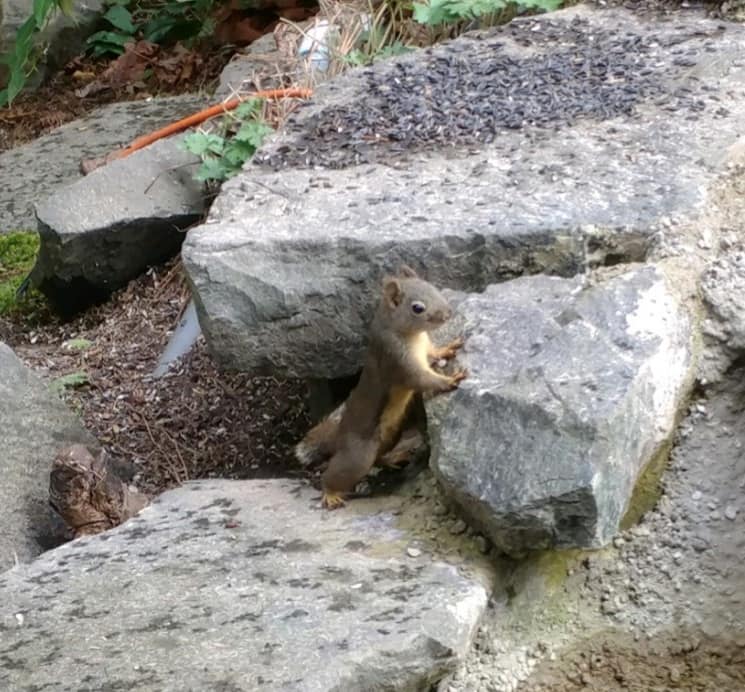
Douglas squirrels usually breed once a year, between February and April. The female Douglas squirrel will gather twigs, bark, moss, and other nesting materials to make her nest. The female will give birth about one month after mating to about 4-6 kits. The Douglas squirrel kits may stay with the mother for the first winter and will disperse the following spring to discover and claim their own territory. The squirrel kits will be self-sufficient once they reach three months old. The most notable feature of the Douglas squirrel is their dark gray coat with a bright orange belly.
Young are usually born in the early spring. They are raised by the female alone, due to her running off the male after reproducing. The female can have between 2-6 young per litter, and spring time is not the only season in which they breed. Eastern gray squirrels mate again in the early summer to have another litter in the autumn. Due to this breeding cycle, the eastern gray squirrel produce twice as many offspring as native squirrels in the area. Eastern grays thrive in urban areas due to the readily available food sources (bird feeders, garbage, friendly people who feed them in parks), access to shelter, less competition from other squirrels, and hardly any natural predators. The females will be out and about during the spring time with her young, teaching them all they need to know about being a squirrel.
Spring time means lots of changes for the long tailed weasel. As the weather begins to warm, the weasels will shed their white winter coat and replace it with their darker brown coat. This will help them stay in style, and also blend in with their surroundings. It’s around this time of year when the females will impregnate themselves, taking advantage of their ability to delay the fertilization process. The females will look for the perfect burrow, or nesting sight to raise her kits. Even if this means killing the animal(s) that made the burrow. They will be on the hunt for rotting trees, burrows made by rabbits, squirrel nests, or areas under tree roots or old stumps that are hollowed out. As territorial as the already are, the females will become even more so to defend her burrow and her soon to be family. Once born, a litter can consist of anywhere between 3-8 kits, and will take about 5-8 weeks to fully wean them. Although they are born blind and mostly hairless, their growth is rapid. By 4-5 weeks their eyes will be open and they will begin exploring the world with their mother.
Mountain beavers are commonly found in dense moist forests, or damp ravines in urban areas. in western Washington. They can also be found at steep sloped areas with fern vegitation. In the early spring, new kits are developing their incisors which will help facilitate their gathering of food, and nesting materials. Mountain beavers are rodents that constantly have to gnaw on hard objects, such as bark of trees or tough vegetation in order to grind down their teeth. Not only must they grind their teeth down on a daily basis, but they also have to consume a minimum of 1/3 of their body weight in water. Mountain beavers have primitive kidneys, and
Typically dark brown in color, muskrats have dense coats that are practically waterproof and covered in coarse guard hairs. They grow up to 24 inches in length and weigh around 4 pounds. As muskrats reproduce quickly and become aggressive when cornered, trapping and removing them without professional assistance can be both dangerous and time-consuming.
Baby northern flying squirrels are born in the early to late spring, depending on when the female mated. Northern flying squirrels have between two to five young. The mother is the only one that rears the young. The males are driven away and the female defends the nest from other squirrels. The young ones will then learn from their mother what to eat, how to store their food, and how to glide. Northern flying squirrels actually do not fly, the glide. Sometimes up to 100ft, from tree to tree to find food or get to their nest. It may take up to eight weeks of age for the young squirrel to muster up confidence to take its first flight. The membrane that allows the squirrel to glide is really awkward for the squirrels when walking. Thus, it makes them susceptible to predation if on the ground and not in a hiding place or in the trees.
During the spring time, you can find rats in any typical area you normally would. These little rodents will scurry around anywhere they find shelter and food sources. During the spring time, rats are known to begin to p ick up their breeding pace, however spring is not the only season in which rats reproduce. Rats reproduce at a very rapid pace, with a gestation of only 21 days litters are born almost every month year-round. During spring, rats will forage as usual, obtaining nutrients that may have been lost if the previous winter was harsh.
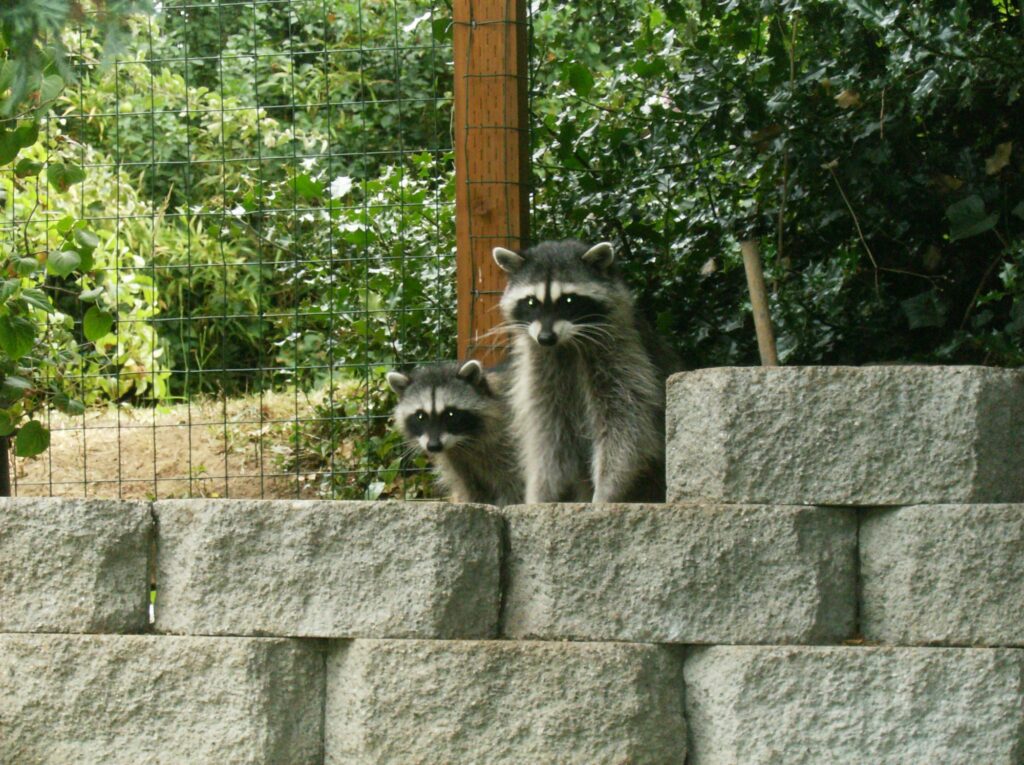
When the weather begins to warm, raccoons will begin looking for a mate. Their mating season falls between January and April, but some will breed late. The male and female raccoons do not raise their young together, and the male will leave to its own territory as soon as the reproduction process has finished. During their gestation of about 65 days, the female will look for a cozy and quiet place to build her nest. Depending on how cold the winter was, their thick winter coat will begin to shed, and females will use this to line their spring nests. Between late March and July, the female raccoons will have a litter of 2-6 completely helpless, hairless kits. During spring, female raccoons are typically focusing on raising their kits, and the males are establishing their own territories and foraging for food.
During this time of year, Washington’s river otters can be found playing long the banks, or in the water. Typically, female otters will be preparing to give birth to 2-4 pups. Mating the year before, they’ll be looking for suitable spots to make their dens. River otters, unlike their much larger cousins the sea otter, give birth in a den on dry land. This is to keep the pups in a safe and secluded place, and to shelter them from the unpredictable weather. Male otters’ will be defending their territory, and pretty much ignoring any females or pups that find themselves in his territory. In March-May is when females will give birth to small blind, toothless, and pretty much immobile pup’s. Their mother will raise them alone, and teach them how to be a successful otter. Almost immediately after giving birth, female otters will mate again, but not give birth again until the next spring through a process called delated fertilization.
During the spring time, rats are known to begin to p ick up their breeding pace, however spring is not the only season in which rats reproduce. Rats reproduce at a very rapid pace, with a gestation of only 21 days litters are born almost every month year-round. During spring, rats will forage as usual, obtaining nutrients that may have been lost if the previous winter was harsh.
When weather begins to warm in the spring, female striped skunks will begin looking for the perfect burrow, if they are unable to find one they will dig their own. When they create their own burrow, female skunks will typically dig out a funnel, about five feet long, and line the chamber with soft grasses and leaves. This is because they are preparing for the birth of 2-10 helpless kits. If for any reason this litter is lost, female skunks may breed more than once in one breeding season. Striped skunks breed between February and April, and with a gestation of 59-77 days their kits will be born between April and June. Baby skunks are born alive; however, they are hairless, sightless, and defenseless. Mother skunks are extremely protective, even more so than some other mothers. This is because they have numerous predators, and a helpless kit would be an easy snack. With coyotes, weasels, and bobcats, the mother also has to worry about male skunks. Male skunks do not assist in raising their young; in fact, if a male skunk were to come across a den with kits he would kill and eat them. However, he must maneuver around and avoid the mother or be blinded by her spray. As spring nears its end, the kits will begin to follow their mother around, and learn how to survive on their own.
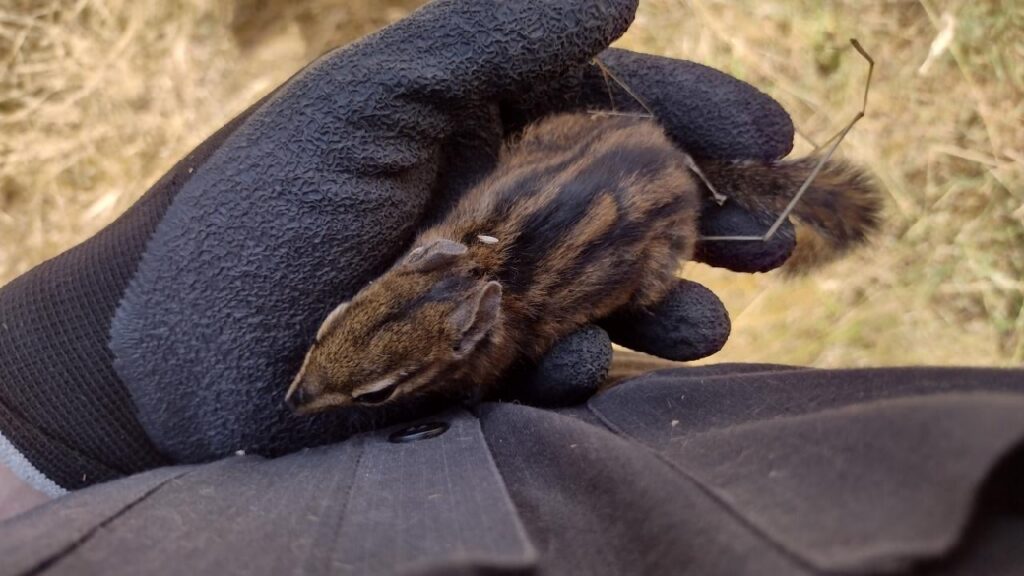
During the spring time, you can find townsend chipmunks beginning to stir from their hibernation. They will be a little thin, due to sleeping away the winter. This is a very brief time for reproducing, only about 2 weeks after waking up from hibernation will they mate. After this process, they will begin foraging for much needed nutrients. Females will begin preparing their burrows for their litter that will be born in about 28 days. Born hairless, blind, and defenseless, her litter of 3-6 kits will be completely dependent on her. Males will be out re-establishing their territories.
During the springtime, vole signs may appear; you may find runway paths the voles created in the grass after the winter snow melts away. You may find some damage done to your spring plants. Voles love to eat bulbs, grasses, flowers, vegetables, fruits, and roots of plants. They primarily live in tunnels, and you may see signs of tunnels under the lawn surface.
Summer
The summer months in Critter Control in Seattle are when the adult beavers enjoy the benefits of parenthood. Once beaver kits are born, it takes no time for them to become curious about their surroundings—kits can swim within 24 hours of being born. They start venturing out of the lodge within weeks. Once the beavers start exploring outside the lodge, the parents are able to teach the kits beaver behavior. Some beaver kits are more instinctual than others. Summer provides many natural food sources for the vegetarian critters, including leaves, plants, water flowers, cattails, and more. Late summer and early fall mark major construction seasons for beavers, as they begin to construct their burrows.
During the summer months you may hear, or see mice around. Depending on the weather, they may be out in the open fields, and hiding in the tall grasses. However they are so small they can easily be hiding out under your home or in your walls. You may hear scratching, or find piles of stored food in your closets or pantry. They can, and will, almost always cause damage.
During summer, Douglas squirrels are busy finding food to eat and store up for the winter. Female squirrels with offspring are out and about showing their kits how to survive. Douglas squirrels will be defending their territory from other squirrels with loud vocal calls. For the most part, they are solitary and have a territory of about 2–3 acres. The Douglas squirrel has to compete with the non-native Eastern gray squirrel in Seattle for territory and food. During this time, their diet may include eggs, nesting birds, baby mice, invertebrates, and other fruits and nuts.
With summer, us wildlife operators have to be careful with bat situations. This is the peak time when bats have had the majority of their pups and colonize together. These are called nurseries. Young pups are completely reliant on their mothers until they are able to fly. That sometimes will not be until September. We as professionals are limited to do secondary exclusion work to seal off other areas, while leaving the main entry open for the adults to come and go. Once the pups are old enough to fly on their own, that is when we put a device to allow the bats to leavbe without being able to get back inside the structure. That is the most humane way of resolving bat issues in a structure. Usually the bats will then find a more natural are to move off to.
Between June and July is when the second breeding season for eastern gray squirrels will happen. The female will again raise another litter as she did in the spring. By that time, her first litter may have left the nest to find their on territory. The male has no part in the raising of the young. During this time of year, eastern gray squirrels are starting to put on a layer of fat to prepare for the winter. They will start collecting nuts, seeds, and other items to store for the winter while it is more redially available.
Oddly enough, summer time is when long tailed weasels will breed. Typically between July and August is when this will take place. It is not un-common for females to mate again while they are already rearing their litter from the previous year. In summer, with their litter born from the previous year, the kits will be learning day to day how to grow and support themselves. They will be opening their eyes during this time, and exploring the world with their mother. With a gestation that lasts about 10 months; the kits who are conceived during this summer, will not be born until the following spring. This is because the female will hold the males ingredient until it is needed for reproduction. This process is called delayed fertilization. Male long tailed weasel will be scavenging and looking for a suitable mate. During the summer, the diet of the long tailed weasels consists of small prey such as mice, rats, baby birds, eggs, and voles. However this is only their day to day meals. Sometimes, when a weasel gets a little bit more confident they will go after prey larger than them such as rabbits, birds, larger fish, and reptiles.
During the summer months you can find signs of mountain beavers in the plats and shrubs, although they are rarely seen. Mountain beavers eat most ferns along with deciduoud trees leaves and then they will eat the bark and seedlings of conifers and deciduous trees. Seedlings are their primary target and the damage sign is the base of the tree is cut at a 45 degree angle. The mountain beaver will also strip the bark from the base of the tree. They love rhododendron which we have plenty of here in Washington. During the summer, most of the burrowing occurs. They construct tunnels 5-7 inches in diameter, each burrow has five below ground chambers. The chambers have different purposes including nesting, feeding, refuse (debris or decayed food), toilet, and earth (excess earth and stones). With this intricate tunnel system, they can also have 10-30 entry and exit holes.
Typically dark brown in color, muskrats have dense coats that are practically waterproof and covered in coarse guard hairs. They grow up to 24 inches in length and weigh around 4 pounds. As muskrats reproduce quickly and become aggressive when cornered, trapping and removing them without professional assistance can be both dangerous and time-consuming.
During the summer time, northern flying squirrels will begin their hunt for winter reserves.The reason why northern flying squirrels are so elusive is because they are nocturnal and found in densely forested areas. They hunt for their food in the night, which they have perfect eye sight for. Unfortunately, there are many predators that hunt in the night as well. The prominent threats are birds of prey, such as owls, hawks and eagles in the air. On the ground, there are coyotes, bobcats, foxes, weasels, and martins. They must keep constant watch over everything around them, including females that have young with them. In some pockets in Western Washington, the areas that are not too developed and have old grown forest around them, there can be chance encounters with Northern flying squirrels.
Summer is another season in which you can find rats reproducing, or scurrying around to find new burrows, or areas where they can move to. Infant rats are weaned at about 4 weeks old, and reach sexual maturity at 5 weeks old. Growing families means they need more room to house themselves.
Summers for baby raccoons means outings with their mother, learning how to forage and climb, and becoming more independent. As they establish themselves, the young males will begin to wander further, and further from their mother. Eventually they will wander and never come back. Young females however, are a little bit different. They will spend their first winter with their mother, and eventually leave her during the next breeding season. Raccoons are nocturnal, which means they are most active at night. So during the summer months, you may be able to see them wandering around or foraging while you are relaxing on your patio at sunset.
During the summer, female otters will be continuing to raise their pups. By this time the pup’s eyes will be open, and they’ll be bouncing about. Otters are very playful creatures, and will typically be friendly with each other. Except for males protecting their territory; they’re pretty peaceful animals. As young pups grow and learn, you can find them playing in the water with their mother and siblings. By the time late summer arrives, the pups will be confident swimmers and diving to retrieve their own food.
Summer is another season in which you can find rats reproducing, or scurrying around to find new burrows, or areas where they can move to. Infant rats are weaned at about 4 weeks old, and reach sexual maturity at 5 weeks old. Growing families means they need more room to house themselves.
Summer time is the most active season for striped skunks. When the young begin to grow, and their mother can’t tolerate their energy being restricted to the nest, they will begin to venture. Following their mothers in a single file line, they will begin to forage and play. At this time the kits and mother have little to fear due to their developed anal glands. By one month of age, the young skunks can (and will if there is a need) spray. The spray that is released out of two anal glands is potent enough that it deters bobcats, coyotes, cougars, and humans. When a skunk is eaten by one of these predators it is as a last resort. The biggest threat to the young skunks are great horned owls. These birds of prey have a very undeveloped sense of smell, and are nocturnal. This means a skunk in the night is no match for this bird of prey. During summer, male skunks will wander about in search of their next meal. Male and female skunks stick to a relatively small area, and do not defend their territories much like other animals. Because striped skunks are primarily nocturnal, the best time to see one is at dawn or dusk, when they are waking up or getting ready to tuck into their den.
Summer is the time of year where garter snakes are most active. You can easialy find them basking in the sun, or stalking their next meal. Garter snakes are primarily diurnal, meaning they are active during the day. However, they may have some nocturnal tendencies. Snakes will feed all day long, but on extremely hot days they will most likely feed in the early mornings, or evenings when the temperature is not so extreme. Throughout the summer, the female snakes are preparing to gibe birth to 10-70 young between July and early October. Their offspring is born alive, and are completely independent as soon as they emerge from the womb.
During the summer, female townsend chipmunks will be raising their babies and teaching them how to go about life. Depending on when they were conceived, the kits will emerge from their burrows for the first time in early or late July; when the weather is warm, and food is bountiful. Male townsend chipmunks will be defending their territory and gorging themselves on berries, nuts, and grains.
Autumn
When fall and autumn set in, the mouse may have another litter of babies as they did in the spring. They may also begin preparing for winter and seek out shelter and warmth. Many times they will find this in barns, sheds, or even your home. During this time you may hear gnawing, because if they don’t their teeth can over grow. Because of their physical capabilities, they are able to gain entry into structures by gnawing, climbing, jumping, and swimming. Mice constantly explore and learn about their environment. They are great about memorizing locations and pathways, obstacles and food, water and shelter, and other elements in their domain.
Watch your step! Sometimes in the autumn months, the Douglas squirrel may toss the remainder of its food from the tree it’s been eating from. You may also hear warning “barks” as you are passing through their territory in your Seattle yard. Douglas squirrels become quite territorial in the autumn time to ward off any other squirrels from getting their food source or find their food reserves. Douglas squirrels will then collect their harvest and store it in a number of hiding spots, such as old woodpecker holes, hollow trees or logs, or under forest debris that the squirrel piles together. You may be able to see where a Douglas squirrel has been because you will see middens (trash heaps of cone/seed materials) piling on the ground. The favored trees of the Douglas squirrel are coniferous due to the cones the trees produce that have seeds for them to eat.
The eastern gray squirrel is really in full swing of consuming lots of fatty foods. Oil rich nuts, for example are a popular food for squirrels to consume because of the extra fat. The will also stash nuts, seeds, and other food sources in hiding places to go back to during the winter time. The litter from summer may or may not stay with the mother through the winter. Sometimes the mother will push out the males and keep her female offspring in the nest with her. The eastern gray squirrel will also shed its spring/summer coat, and start growing a coat made more for winter. They will shed their winter coat in the spring when it is warmer and they do not need a thick coat anymore.
During this time of year, the long tailed weasel is beginning to prepare for the winter ahead. Typically in the northern areas they will shed their summer coat of brown and tan, and grow a new pure white coat, except for the black tip of their tail which is present all year round. They may fatten themselves up a bit for the winter, but will continue to scavenge throughout the winter. At this time, many of the females will have successfully weaned their litters, and the kits will be off to find their own territories. This however, does pose a threat to the young weasels. If found by another rival weasel, a bloody battle will commence. Long tailed weasels are extremely aggressive, and tend to be over confident when threatening other much larger predators.
The mountain beavers typically live in wooded forests and meadows. They are usually found on hill sides with partly wooded vegetation near the holes. In the autumn, the mountain beaver will pile vegetation near the burrow until it becomes wilted or dries out. By stacking and allowing the vegetation to dry some, it will help lower the moisture content before bringing it into the nest, this also helps prevent mold from growing in the burrow and helps regulate the temperature inside. The mountain beaver needs to live underground to help regulate their body temperature. Once they move the vegetation inside it will be eaten or used as nest lining. They are active throughout the night and day but are rarely found far from their burrows.
Autumn is when things slow down a little, and the preservation of their food supplies ramps up. With trees that still have their cones or nuts, the northern flying squirrel will continue collecting for its winter stash. Sometimes, the nuts and seeds will never be recovered. So, squirrels hiding seeds and nuts helps the forest replant itself. The squirrels will also molt (shed) its fur coat in preparation for winter, which will come in thicker for the winter weather. They will use the shed fur to line its nest. Their coloration is a cinnamon to gray-brown for the body, and a cream colored belly, which helps at night to disguise itself with the darker colors in the forests they reside in.
Autumn is the time of year when their reproduction habits may slow, but not stop completely. They will be preparing for the winter, gathering food for their colony, and extending their burrows. Rats forage year-round and do not hibernate, but if they are expecting a significantly harsh winter thy will begin to fatten up.
As the leaves begin to change once again, a raccoons food intake will raise. This is because they need to fatten up for the oncoming winter and scarce food supply. During this time, they are also looking for a suitable den to sleep through the winter. Due to daylight savings, you may see raccoons earlier than sunset because of the time change.
Autumn is the time of year where their reproduction habits may slow, but not stop completely. They will be preparing for the winter, gathering food for their colony, and extending their burrows. Rats forage year-round and do not hibernate, but if they are expecting a significantly harsh winter thy will begin to fatten up.
Autumn is the time of year where their reproduction habits may slow, but not stop completely. They will be preparing for the winter, gathering food for their colony, and extending their burrows. Rats forage year-round and do not hibernate, but if they are expecting a significantly harsh winter thy will begin to fatten up.
Voles are typically solitary rodents, once autumn sets in, they change to social critters and have a communal nesting site. The vole does not have a specific breeding season and can breed continuously throughout the year. They can have 1-5 litters per year, with each producing 3-6 young.
Winter
With the onset of our region’s rainy weather, we at Critter Control have noticed that, especially at this time of year, critters are seeking warm places to stay as temperatures drop.
This is a great time to conduct a comprehensive preventive inspection of the home. This includes looking for weakened foundation, soffit, and louver screens, compromised fan vent covers, or fresh evidence such as droppings, rub marks, or chewing marks in attics or crawlspaces.
During the winter, mice do not hibernate and remain active. When they venture out, they will, however, stay even closer to the nest. Female mice may continue to have litters, but life will continue as normal for these little rodents. In the wintertime, it is more common to find mice inside man-made structures. Although mice do prefer to make their homes in quiet places and away from human activity, there is still a great possibility that they will find their way inside a home.
Douglas squirrels do not hibernate through the winter. Instead, Douglas squirrels live off the food reserves they collected during the summer/autumn season and possibly foraging on the left over cones. Sometimes, the stored seeds and nuts are not recovered. That leads to little seedlings sprouting the next year or so. Thus, the douglas squirrel inadvertently helps maintain the health of the forest. They will hunker down at their nest site, either mother and babies or individually. If the weather is good enough, sometimes the mating season may start as soon as February.
For the eastern gray squirrel, mating can begin in December or January. The males will fight to determine dominance, and the winner will have a better chance to reproduce. The winner persues the female through the trees until they are stimulated enough to majority of litters are born in March, which the female squirrels are already preparing for now. The eastern gray squirrel does not hibernate in Washington; however, their activity will slow a bit. There are usually several dens that are occupied throughout the year as well as several nests built high in the tree canopy. This would be the best scenario with the eastern gray squirrel. Unfortunately, it is more common to find these squirrels in homes or commercial buildings. Eastern gray squirrels are notorious for getting into man made structures, so much so that they are most commonly found in urban areas as opposed to the other native squirrels in Western Washington. Manmade structures, such as our nice, cozy homes, have become the new norm in terms of where they will co-habitate. Squirrels have been known to store their food cache in attics during the winter, where normally the cache would be stored underground, in tree hollows, or rotting trees.
With the acceptance of their shiny new white coat of fur, there is no dramatic change in the weasels’ behavior during the wintertime. They will hunker down in their burrows, which they have stolen from other animals. Because their prey remains readily available, they can continue living as usual through the snowy months. Feasting on rats, mice, voles, chipmunks, or squirrels; the long-tailed weasel will use the element of surprise when hunting. Their new white coat helps them blend in with the snow around them, which helps when hunting for prey. But it also helps them avoid being preyed upon by their own predators, such as coyotes, owls, bobcats, or foxes.
During the winter months, mountain beavers are typically not seen often. They do not hibernate and will make burrows through the snow to travel. Mountain beavers typically mate during the winter, and their gestation is about 30 days.
Autumn is when things slow down a little, and the preservation of their food supplies ramps up. With trees that still have their cones or nuts, the northern flying squirrel will continue collecting for its winter stash. Sometimes, the nuts and seeds will never be recovered. So, squirrels hiding seeds and nuts helps the forest replant itself. The squirrels will also molt (shed) its fur coat in preparation for winter, which will come in thicker for the winter weather. They will use the shed fur to line its nest. Their coloration is a cinnamon to gray-brown for the body, and a cream colored belly, which helps at night to disguise itself with the darker colors in the forests they reside in.
Although rats do not hibernate, their daily activities will decrease during the colder months of winter. However, during especially harsh winters, it is not uncommon to find them tucked away in their burrows for multiple days. Reproduction habits slow, mainly due to the climate change and the limited resources; however, it does not stop.
Raccoons in the winter will typically seek out dens, or protected areas where they can live out the cold months. Unfortunately, these little critters will find their way into residential homes or industrial sites on occasion. Their coat will thicken, but will be in proportion to the severity of the winter they are experiencing. A raccoon’s tail will also fatten up, and they will wrap it around themselves much like a blanket. Although food may be scarce, a raccoon is very good at adapting to its circumstances.
Raccoons enter a state called torpor, which is much like hibernation; however, it is not precisely the same. This state lowers the mammals’ metabolism, blood sugar, and body temperature. As the amount of energy they need for survival drops significantly, they are able to sleep through most of winter. Torpor allows the raccoons to sleep in their dens for weeks on end, because they are not hibernating, on warmer days they will emerge from their dens and forage for food. This is helpful for the raccoons because they will remain alert to predators and potential prey.
Otters do not hibernate, meaning they are active all year round even in the cold months of winter. Their thick coat will thicken even more, allowing them to preserve their body heat in the frigid water. Otter life will continue as normal during the winter, males will be defending their territories, and females will be getting prepared for the birth of their next litter.
Although rats do not hibernate, their daily activities will decrease during the colder months of winter. However, during especially harsh winters, it is not uncommon to find them tucked away in their burrows for multiple days. Reproduction habits slow, mainly due to the climate change and the limited resources; however, it does not stop.
During the winter months voles do not hibernate; they will make tunnels through and under the snow. They will nibble on shrubs and tree bark for nutrition. Voles will cut runway paths through grasses and small plants, feeding on vegetation as they move under the snow. You may not notice this until the snow melts away.