

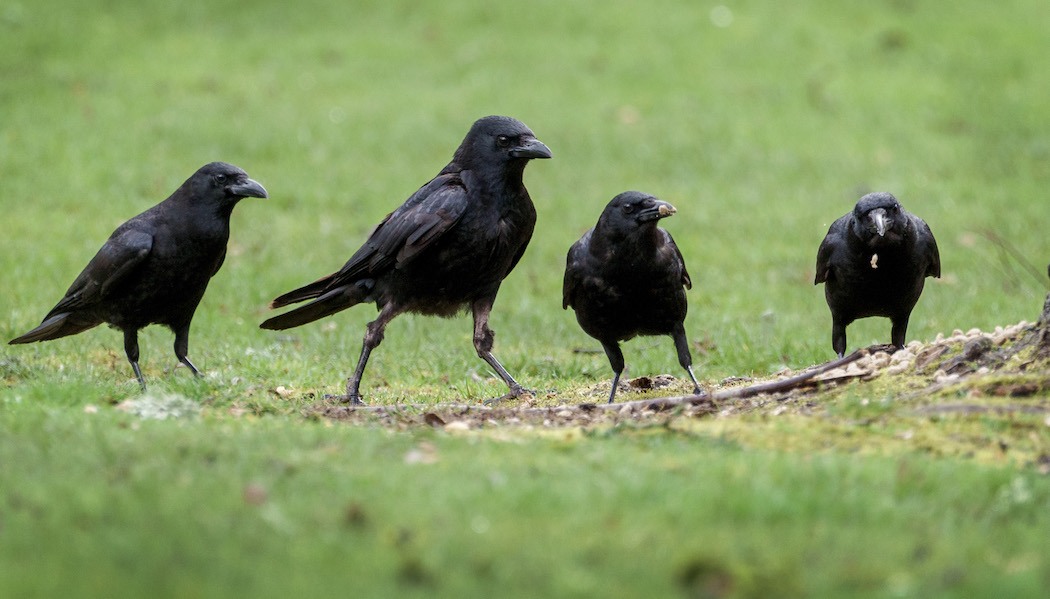
Crows are highly intelligent animals capable of making tools and manipulating the world around them to solve problems. Social birds, crows roost together in large flocks through the fall and winter months. They are opportunistic omnivores and will eat almost anything, including fruit, seeds, worms, eggs, and trash. Just seeing a crow on the roof doesn’t mean you need bird control. When you see the bird roosting with other birds
Signs You Need Bird Control for Crows
- Loud, persistent cawing, especially at dawn and dusk
- Large roosts causing ongoing noise near offices, apartment buildings, or retail spaces
- Sleep disruption for residents and disturbance for customers or employees
Find Service in your Area
Where Do Crows Live?
American crows typically reside in areas with ample open field space for foraging and plenty of nearby trees for roosting. Because of this, crows are usually found in open areas like parks, cemeteries, farmlands, and orchards.
- They occasionally demonstrate migratory tendencies by flying south seasonally and then returning for the breeding season.
- During the colder months of winter, crows are notorious for gathering together in large groups to roost, often in the same area each year.
- Due to their unique process of cooperative breeding, American crows remain with their parents for years to help raise additional offspring.
Where Do Crows Cause a Problem?
Large crow roosts (known as a ‘murder of crows’) can create significant noise, sanitation, and property concerns.
- Roof and siding damage from pecking at shingles, flashing, insulation, or soffits
- Blocked gutters and drains due to nesting materials (sticks, wire, debris)
- Damage to solar panels or rooftop equipment from pecking or droppings
- Stained buildings, vehicles, and walkways from corrosive droppings
- Destroyed lawns, gardens, and planters from digging and foraging
- Crop damage for farms, orchards, vineyards, and community gardens
Health and Safety Concerns from Crows
- Dive-bombing or mobbing people during nesting season
- Territorial aggression near entrances, parking areas, or outdoor seating
- Disease risks associated with droppings (e.g., fungal spores, bacteria)
- Slippery surfaces from accumulated droppings on sidewalks or stairs
- Increased pest attraction (rats, flies) due to food scraps and waste
How We Get Rid of Crows
Because crows gather and roost in such large numbers populations, they are difficult to remove especially for untrained homeowners. In fact, DIY crow removal can actually make the problem worse by encouraging the birds to move to a location that may be even more inconvenient for you.
In order to effectively control crow populations, you must act quickly. Crows can be hard to get rid of once they’re established in the area.
- Productive crow control usually will consist of a combination of scare tactics, netting, and habitat modification to keep birds away from potential roosting sites.
- Consider preventative measures like keeping trees trimmed before crows arrive and bird spikes to prevent them from landing on your roof.
Find Service in your Area:
Get them out.
Keep them out.®
Experiencing a wildlife or bird issue? We can help! Complete this form and your local Critter Control® office will contact you to assist.
These large birds have coal-black coloring on their beaks, feathers, legs, and feet. Their powerful talons are useful for grasping food, branches, or tools, and a pointed beak allows crows to peck open nuts and the tough outer shells of prey such as insects and crabs. Though closely related to the common raven, crows are a bit smaller and have rounded tail feathers as opposed to pointed.
Crows adapt to almost any environment where there are plentiful food sources and tall trees to roost in. They prefer areas of low elevation and abundant water sources such as farms, ponds, and coastlines. Urban environments also provide crows with agreeable habitats, such as city parks, garbage dumps, residential neighborhoods, and parking lots.
During the winter months, crows weather the cold by gathering in large congregations that sometimes total upwards of a thousand birds. Their winter roosts, which take place in tall trees or the rooftops of buildings, act as social gathering places and often occur in the same location year after year. In the spring, smaller family groups of crows return to their nesting territories. Nests are made of twigs and branches, and the interior is lined with soft materials, including feathers, moss, grass, and fur.
Are crows known to enter homes or yards?
Crows do not typically enter homes, but may nest or roost near human habitations on farms or in urban areas. When large groups of crows gather to roost, they can be extremely loud, especially during the early morning hours just before dawn. The noisy presence of crows is compounded by the fact that their droppings can spur the growth of histoplasmosis fungus, which causes respiratory disease in humans.
Do crows harm people or property?
Crow damage mainly occurs to farms and gardens, where the birds find easy meals of seeds, grain, corn, fruit, or vegetables. The noise caused by large roosts in towns and cities may disturb residents, and the birds may cause damage to trees or rooftops. Crows may also cause health hazards for humans and livestock by spreading diseases and parasites.
Since crows are protected under the Migratory Bird Treaty Act, residents may only take steps to control the birds if they pose a threat to property or health. To prevent large numbers of crows from roosting nearby, property owners can thin the branches of large, dense trees. Crows also respond to frightening tactics, such as hanging effigies of dead crows and playing recorded distress calls over loudspeakers. In agricultural areas, wires and fishing line strung over the tops of crops in a grid often prove effective in repelling the birds.
As crows are intelligent and adaptable animals, traps are largely ineffective. The best method of crow removal is contacting Critter Control. Our trained professionals are well versed in crow behavior and can efficiently remove large populations. Equipped with the necessary resources and knowledge, wildlife control specialists offer safe and legal removal of crow infestations.