

Key Takeaways
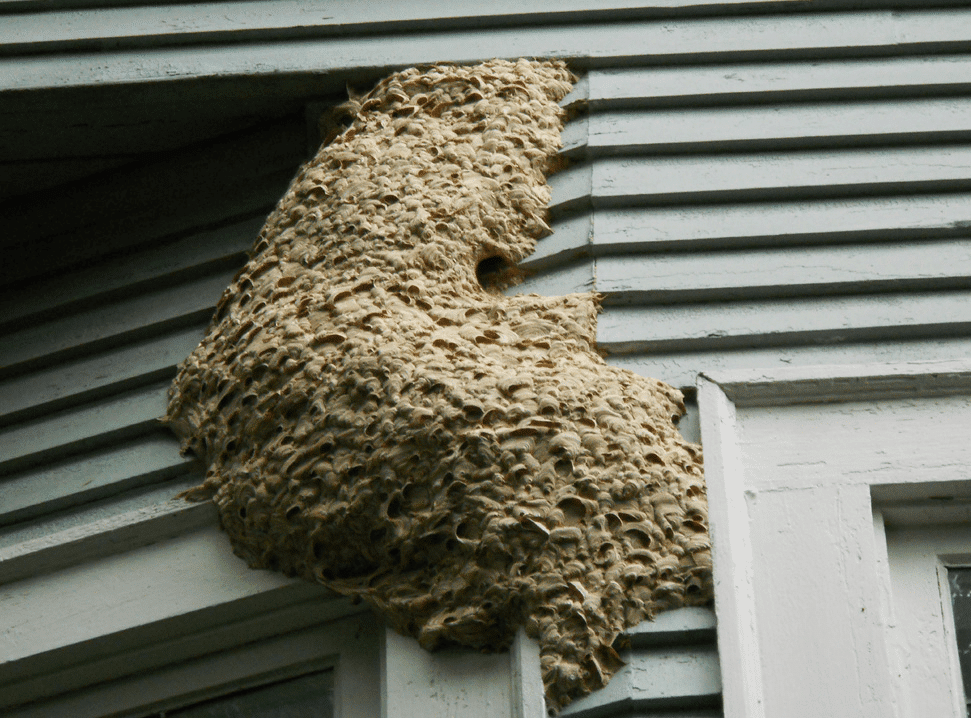
- Finding a wasp nest near your home can be stressful, especially if it’s close to frequently used areas.
- Social wasps, like yellow jackets and bald-faced hornets, build nests that can become dangerous.
- Solitary wasps, such as mud daubers and cicada killers, are generally less aggressive and build individual nests.
- Consider safety when attempting DIY removal, as wasps can react quickly and hidden nests may be complicated to access.
- Call a professional for removal if you have allergies, feel uncomfortable, or if the nest is inside your home.
Finding a wasp nest around your home can be stressful, especially when it appears near a front door, deck, or another frequently used area. Some wasps are relatively solitary, while others aggressively defend their nests when disturbed.
Knowing what type of wasp nest you are dealing with can help you assess the risk and decide on the next steps. Here are some of the most common wasp nests homeowners encounter and where they are typically found around your home.
Social Wasp Nests
Social wasps live in colonies that can contain hundreds or even thousands of individuals. Their nests grow throughout the spring and summer and are responsible for most wasp-related stinging incidents around homes.
Yellow Jacket Nests
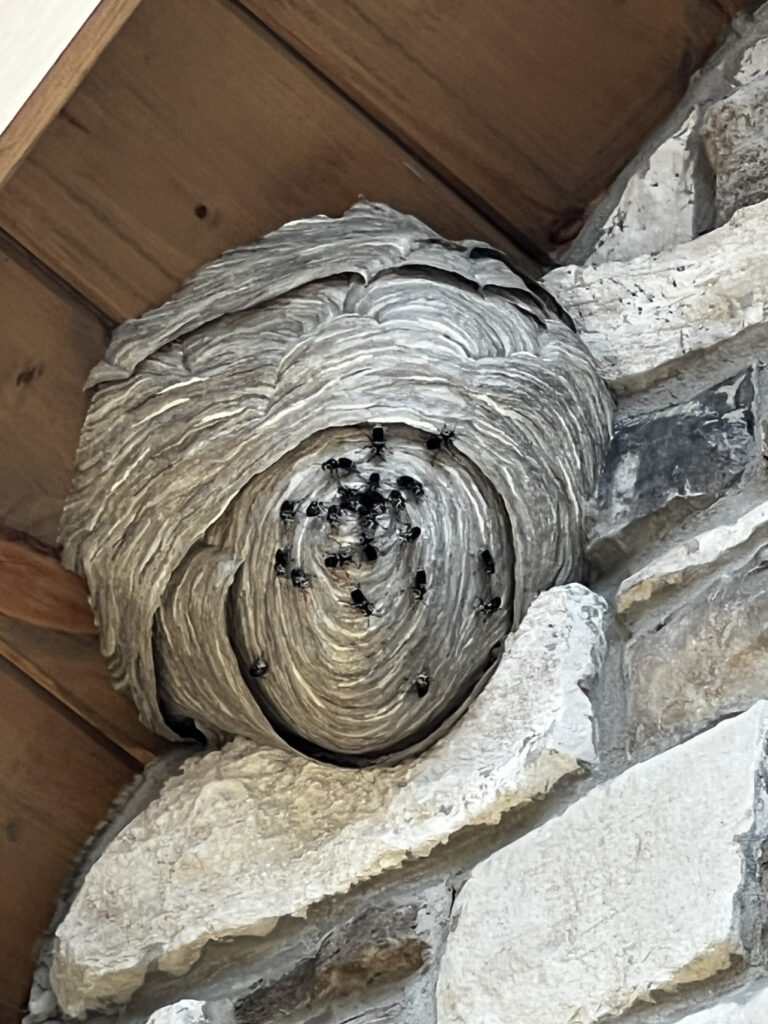
Yellow jackets build enclosed paper nests with a rough gray or tan exterior. Unlike many other wasps, they often prefer hidden nesting locations, such as:
- Underground in abandoned rodent burrows
- Inside wall voids
- Under decks or porches
- In attics or crawl spaces
Paper Wasp Nests
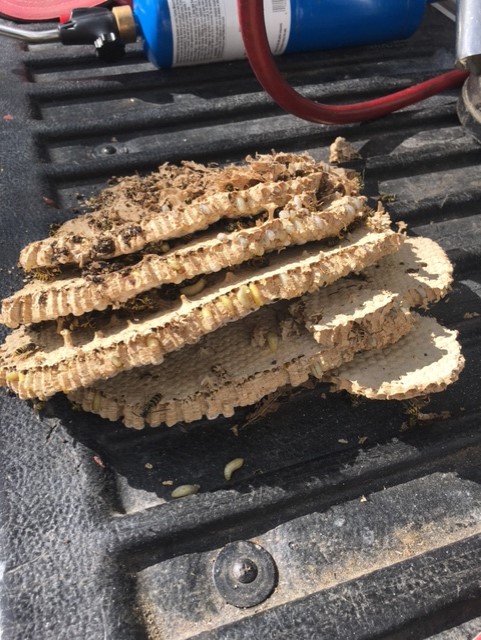
Paper wasps create open, umbrella-shaped nests that expose the individual honeycomb cells. These nests are often easy to recognize because they hang from protected surfaces and remain visible.
Paper wasps commonly build nests:
- Under eaves and roof overhangs
- Porch ceilings
- Deck railings
- Sheds and garages
- Outdoor light fixtures
Bald-Faced Hornet Nests
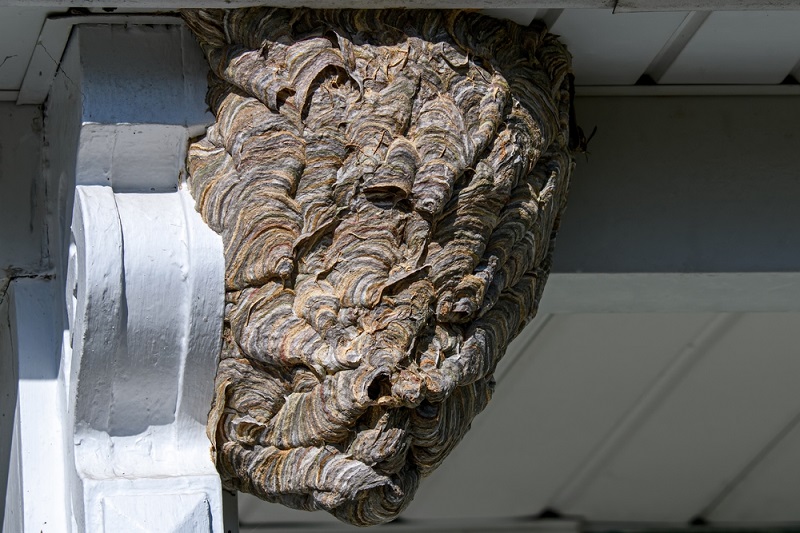
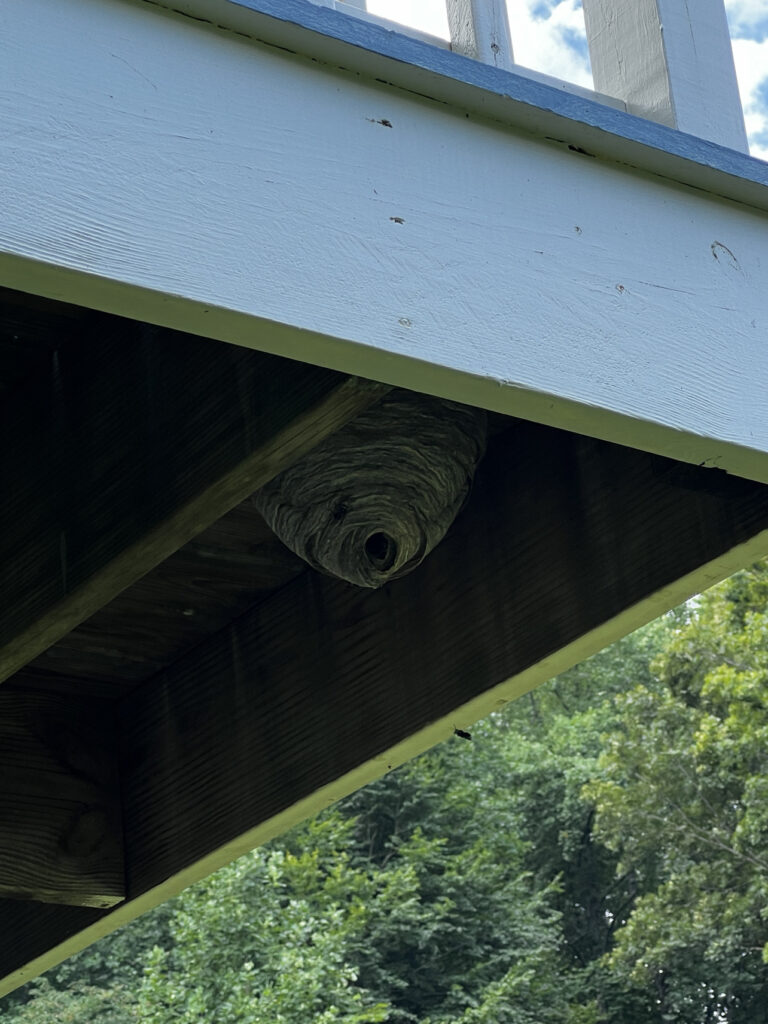
Bald-faced hornets construct large, enclosed aerial nests that may reach the size of a basketball or larger by late summer. Their gray paper nests are often suspended above the ground.
Homeowners frequently spot these nests:
- In trees and shrubs
- Attached to houses
- Under the roof peaks
- Near garages, sheds, or barns
Solitary Wasp Nests
Solitary wasps don’t live in large colonies and are typically much less defensive than social wasps. While they can sting, they are generally focused on hunting prey and building individual nests.
Mud Dauber Nests
Mud daubers, considered one of the least aggressive wasp species around homes, build small tube-shaped nests made from mud. These nests often appear as clusters of narrow mud tubes attached to walls or ceilings.
They commonly nest:
- Inside garages and barns
- Under eaves
- Along exterior walls
- In attics and storage areas
Cicada Killer Wasp Nests
Cicada killers are large wasps that dig burrows in the ground. Their size often causes concern, but they are usually not aggressive toward people.
You may notice their nests:
- In lawns
- Along sidewalks and driveways
- In flower beds
- Around loose or sandy soil
Ground Digger Wasp Nests
Ground digger wasps, which tend to be less aggressive than other species, also create underground burrows, usually in dry, exposed soil.
They often nest:
- In bare patches of lawn
- Garden beds
- Along fences
- Around landscaped areas
When Is a Wasp Nest Dangerous?
A wasp nest becomes more dangerous when:
- The nest is close to doors, walkways, patios, or play areas
- The species is aggressive, such as yellow jackets or bald-faced hornets
- Someone in your household has a sting allergy
- The nest is hidden inside walls, attics, or other parts of the home
- The colony has grown significantly during the summer
Even wasps that are not typically aggressive may defend their nest if they perceive a threat nearby.
Things to Consider Before DIY Wasp Nest Removal
Before attempting DIY removal, consider:
- Wasps can respond quickly when a nest is disturbed
- Hidden nests may have multiple entry points
- Store-bought products may not eliminate the entire colony
- Some nests are difficult to reach safely
- Protective clothing does not guarantee protection from stings
Attempting removal can be especially risky when the nest is elevated, concealed inside a structure, or occupied by an aggressive species.
When to Call a Professional
Professional wasp removal is generally the best course of action when:
- You are allergic to wasp stings
- You are uncomfortable approaching the nest
- The nest is inside the structure of your home
- The nest is large or difficult to access
- You suspect yellow jackets or bald-faced hornets are present
If you are unsure what type of wasp nest you are dealing with or do not feel comfortable removing it safely, Critter Control can help. Our specialists identify nesting activity, remove problem colonies, and help reduce the chances of future nesting around your property.
Wasp nests typically have a papery texture made from chewed wood fibers and saliva. They can appear gray or brown and may be round, umbrella-shaped, or enclosed, depending on the species.
Nests are often found under eaves, inside attics, in wall cavities, in trees or shrubs, or even underground in some cases.
Common types include paper wasps, yellowjackets, and hornets, each with slightly different nest shapes and placement preferences.
Yes, getting too close can provoke wasps, which may sting to defend their nest. It’s best to observe from a safe distance.
Activity is usually highest during late spring through early fall, especially during warm daylight hours.
Some nests can grow quite large over the season, ranging from the size of a golf ball to as big as a basketball or larger.
Avoid disturbing it and consider contacting a pest control professional, especially if the nest is near high-traffic areas.