

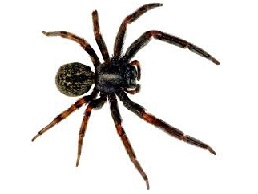
Spiders can be unsettling houseguests! While many arachnids are beneficial because they help decrease other pests, most homeowners prefer not to share their homes with them due to their spider webs and in some cases, spider bites!
Types of Spiders Inside Homes:
- Common House Spider
- Cellar Spider
- Wolf Spider
- Jumping Spider
- Black Widow Spiders
- Brown Recluse Spiders
In the United States, the only venomous spiders are black widow spiders and brown recluse spiders.
Signs of Spider Infestation
Spiders often go unnoticed, but they leave behind telltale signs. If you’re seeing any of these, it’s a good idea to check quiet, undisturbed areas like basements, attics, garages, and crawl spaces.
Common Signs of a Spider Infestation:
- Spider webs in corners or behind furniture
- Egg sacs (small silk bundles)
- Live spider sightings
- Shed exoskeletons
- More insects than usual (a food source)
Small dark droppings or smudge
Where to Look for Spiders
Spiders love quiet, undisturbed areas. When you’re looking around your home, check these common spots:
Indoors: Closets, garages, basements, attics, around ceilings, light fixtures, windows, under and behind beds and furniture, inside shoes, boxes of stored items, hanging clothing, above suspended ceilings, behind baseboards, and around ducts.
Outdoors: Around the exterior of your house, under rocks, boards, yard debris, in barns, sheds, and woodpiles, behind window shutters, and beneath lumber. Shrubs, vines, and tree limbs that touch your house can also provide them with cozy hiding spots and an easy “bridge” to your home.
When to Call the Professionals
While many of these DIY methods are effective, if you’re dealing with infestations, it often requires specialized skills and equipment to remove spider activity fully.
- Inspection & Identification
Our inspection involves exterior and interior of your home, to identify current spider problems. - Spider Treatment and Extermination
We utilize a combination of treatment methods, exclusion techniques, and removal of webs at resting sites to help deter spiders. - Exclusions & Sanitation
Long-term spider control protection. - Repairs & Remediation
On-going treatments keep your house free from spiders.
Find Service in your Area:
Get them out.
Keep them out.®
Experiencing a wildlife or pest issue? We can help! Complete this form and your local Critter Control® office will contact you to assist.
A spider has eight legs with four on each side of its body. The pests lack antennae and wings. Instead, arachnids have two main body parts: the head and abdomen.
Size and coloring vary by species. Many kinds of spiders feature recognizable markings that help to identify them.
Spiders live in diverse habitats. Environments ranging from tropical regions and deserts to gardens and garages usually have some type of thriving spider population. In any climate, they establish themselves near a consistent food source.
Are spiders known to enter homes or yards?
Property owners often have to deal with spiders in living spaces. The pests enter through any means possible, but most get inside by way of open doors and windows. Cracks in siding or roofing serve as entry points as well.
Do spiders harm people or property?
Many people suffer from a deep-seated fear of spiders, and bites from some species can result in serious symptoms. However, most types of spiders have mild bites that are not medically significant.
In addition, these pests do not damage homes, though their webs create the need for extra cleaning in hard-to-reach places.
Keeping houses free of clutter helps to reduce potential indoor nesting sites. Controlling insects that spiders eat also works as a form of prevention. Homeowners can decrease the pests’ presence by vacuuming regularly as well.
Though traps and sprays may seem like effective repellents, these methods do little to get rid of spider infestations. Those experiencing problems should contact a specialist. Pest removal teams have training on how to control spiders most effectively.
This type of pest control is not available in all markets. Please contact your nearest Critter Control location to see if traditional pest control service is available in your area.