

Key Takeaways
- Bats in the attic can pose health risks and cause structural damage, so identifying an infestation early is crucial.
- Look for visual signs such as bat sightings at dusk, dark rub marks, and guano droppings to detect an infestation.
- Listen for sounds like high-pitched squeaking and scratching to confirm the presence of bats.
- Detect odors like ammonia from urine and musty smells from guano, indicating a mature colony.
- Consult a professional for humane removal and ensure compliance with legal protections for bat species.
You’ll rarely notice a bat infestation when it starts. Bats are small and nocturnal, so it is easy to miss the first time they get into the attic. Most people notice several signs of bats rather than a single definitive piece of evidence.
While bats play an important role in the environment, it is not okay to have bats in the attic. Their presence within a human dwelling poses significant risks to the structure and your health. Identifying an infestation early is critical to preventing structural damage and mitigating severe health hazards.
Based on what you’ve seen, heard, and smelled, you can identify a bat infestation.
What Do You See Outside: Visual Signs of an Infestation
Your home’s exterior is the first line of defense and the most obvious source of evidence. By conducting a systematic perimeter check, you can identify the colony’s “flight paths” and entry points.
1. Sighting Bats at Dusk and Dawn
The most definitive visual evidence is observing the bats as they leave. Position yourself at a vantage point where you can see the roofline against the fading light of dusk. Bats typically exit their roost 15 to 30 minutes after sunset to forage. Conversely, at dawn, they return to the roost. Look for small, erratic silhouettes swirling around chimneys, gable vents, or loose fascia boards.
2. Discoloration and Rub Marks Near Entry Points
Bats possess natural oils in their fur and skin. As they squeeze through tight crevices—some as narrow as half an inch—these oils, combined with dirt and urine, leave behind a distinct residue. Look for dark, brownish-black oily stains around small gaps in the siding, corners of the eaves, or near shingles. These “rub marks” act as a biological roadmap indicating a primary entry point.
3. The Accumulation of Guano (Droppings)
Unlike birds, which scatter droppings, bats often defecate just before entering or exiting their roost. Check your porch, windowsills, and the ground directly beneath eaves for concentrated piles of droppings. A vertical accumulation against the side of the house is a primary indicator of a roost directly above.
What Do You Hear: Sounds That Signal a Bat Colony
While bats are relatively quiet during the day, a large colony will produce audible signals, particularly when disturbed or preparing for flight.
1. High-Pitched Squeaking
Bats communicate using vocalizations. While much of their echolocation is ultrasonic and beyond human hearing, they do emit sharp, metallic squeaks and social “chatter” that can be heard through ceilings and walls.
2. Scratching and Rustling Within Walls or Attics
As bats move to find more comfortable temperatures or shift positions within the roost, you may hear scratching sounds. This often sounds like light scuttling or the crinkle of paper. These noises are most prevalent at dusk and just before dawn.
3. Chirping During Temperature Fluctuations
On exceptionally hot days, bats may move lower in the wall voids to escape the heat of the attic, leading to increased vocalization. Similarly, sudden cold snaps can trigger activity as the bats cluster together for warmth.
What Am I Smelling?: Detecting the Presence Through Scent
A mature bat colony produces a scent profile that is unmistakable once detected. These odors are not merely unpleasant; they indicate the presence of decomposing organic matter.
1. The Pungent Odor of Ammonia
Bat urine has a very high concentration of urea. In a confined, poorly ventilated space like an attic, this evaporates into a sharp, acrid ammonia smell. If a room or crawlspace smells like a dirty litter box despite having no pets, bats are a likely culprit.
2. The Musty Scent of Stagnant Guano
As guano accumulates and begins to decompose, it emits a heavy, musty, and sweet-rotten odor. This scent is pervasive and can eventually penetrate drywall, lingering in the home’s living spaces even after the bats are gone.
Interior Evidence: Signs Within the Living Space
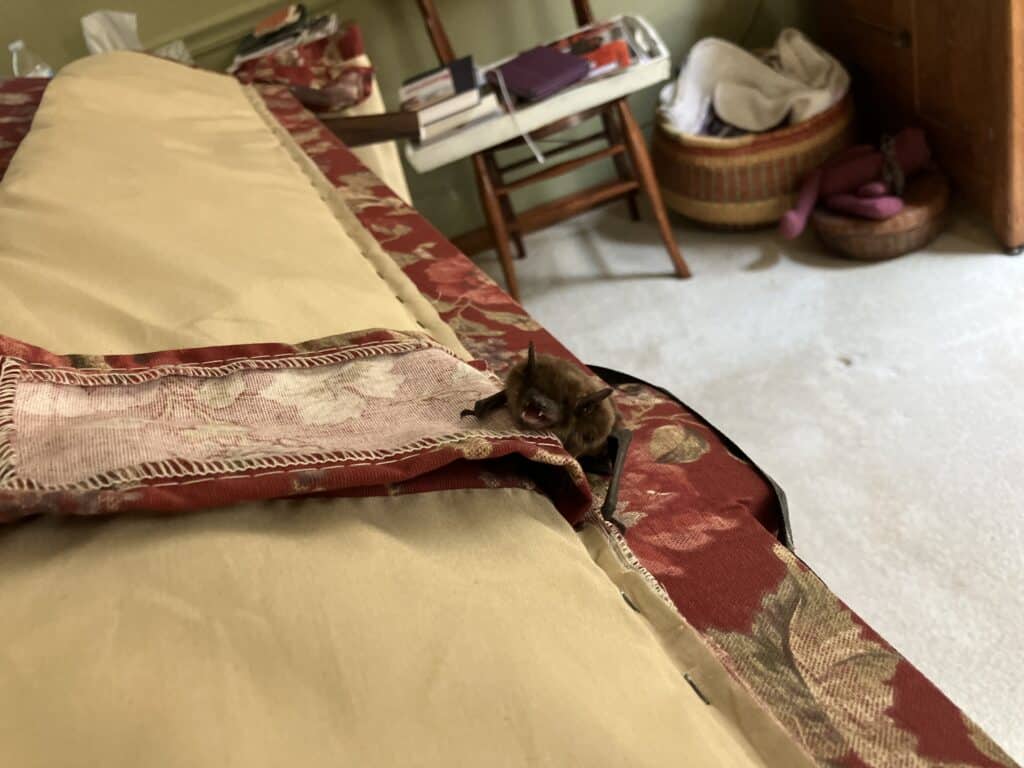
When a colony gets large enough, you might start to notice physical evidence inside the living areas of your home. In some cases, a bat can become disoriented and end up in the primary living areas of your home, like a bedroom.
When an infestation reaches a critical mass, or when younger bats become disoriented, signs will begin to manifest inside the primary living areas.
1. Unexpected Stains on Ceilings and Walls
Large accumulations of guano and urine in the attic can eventually seep through the ceiling. This appears as dark, yellowish-brown staining that may be mistaken for a water leak. However, unlike water leaks, these stains are often accompanied by a foul odor.
2. Dead Bats in Basements or Living Areas
Finding a dead bat is a clear sign of an established colony. Juvenile bats often take “wrong turns” and end up in the living space via the chimney or utility gaps. Do not handle a dead bat without heavy gloves and a shovel; they can still harbor pathogens or parasites.
Health and Safety Hazards from a Bat Infestation
Ignoring a bat infestation is a dangerous gamble. The longer the colony remains, the higher the risk to the residents and the building’s integrity.
1. Histoplasmosis Risks
The most severe threat is Histoplasma capsulatum, a fungus that grows in bat guano. When the guano is disturbed, fungal spores become airborne. If inhaled, they cause Histoplasmosis, a serious respiratory infection that can lead to chronic lung disease or systemic infection.
2. Ectoparasites: Bat Bugs
Bats carry their own species of parasites, known as “bat bugs.” These are closely related to bed bugs. If the bat colony is removed but the nesting site is not properly sanitized, these bugs will migrate into the living quarters to find a new host—humans.
3. Structural Corrosion and Fire Hazards
The acidic nature of bat urine and guano is corrosive. Over time, it can rot wooden support beams and degrade insulation. Furthermore, if guano accumulates around electrical wiring, it creates a significant fire hazard by trapping heat and corroding wire insulation.
What Should I Do if I Think I Have Bats?
If you observe two or more of the signs listed above, it is time to consult a professional wildlife specialist.
Evaluating the Scope of the Infestation
A professional can determine the colony’s size and identify every potential entry point. They use specialized equipment, such as thermal cameras and borescopes, to locate bats tucked deep within structural voids.
The Importance of Humane Exclusion Over Bat Extermination
Across the United States and Canada, it is illegal to kill bats. Professional exclusion involves installing “one-way doors” that allow bats to exit the home but prevent their re-entry. This is the only effective and legal method for long-term removal.
Legal Protections for Bat Species
Many bat species are protected under federal and state laws, especially during “blackout periods” when flightless pups are present (typically mid-summer). A professional ensures that your removal process complies with the Endangered Species Act and local wildlife regulations.
Summary Checklist for Homeowners
To determine if you have a bat problem, perform a systematic audit using this checklist:
- Exterior: Check for dark, oily rub marks around eaves and vents.
- Ground level: Look for shiny, metallic-flecked droppings on porches or windowsills.
- Attic: Inspect for “pyramids” of guano and the smell of ammonia.
- Auditory: Listen for scratching or high-pitched squeaking at sunset.
- Visual: Monitor the roofline at dusk for emerging silhouettes.
If you confirm these signs, maintain a safe distance and contact a certified wildlife professional immediately. Do not attempt to seal entry points yourself until you are certain all bats have exited, as trapping them inside will lead to further structural damage and health risks.