

Call Today for a Free Inspection
Hours of Operation
Monday-Friday 7:00 a.m. – 5:00 p.m.
Saturday 7:00 a.m. – 12:00 p.m.
Sunday Closed
24 Hour
Emergency Service Available
Military Veterans and Seniors:
Ask about our 10% off coupon
Serving the following locations:
By County: Orange County, Osceola County, Seminole County
- Altamonte Springs
- Apopka
- Avalon Park
- Azalea Park
- Baldwin Park
- Bay Hill
- Bay Lake
- Belle Isle
- Buena Vista
- Buenaventura Lakes
- Casselberry
- Celebration
- City of Kissimmee
- City of Orlando
- Clermont
- Conway
- Doctor Phillips
- Eatonville
- Edgewood
- Eustis
- Fairview Shores
- Forest City
- Goldenrod
- Groveland
- Heathrow
- Holden Heights
- Horizon West
- Hunters Creek
- Kissimmee
- Lake Buena Vista
- Lake Hart
- Lake Mary
- Lake Nona
- Leesburg
- Lockhart
- Longwood
- Maitland
- Meadow Woods
- Montverde
- Mount Dora
- Oak Ridge
- Oakland
- Ocoee
- Orlovista
- Oviedo
- Pine Castle
- Pine Hills
- Rosemont
- Sand Lake
- Saint Cloud
- Sanford
- Sanlando Springs
- Sky Lake
- South Apopka
- South Port
- Southchase
- Tangelo Park
- Tavares
- The Villages
- Union Park
- University Park
- Waterford Lakes
- Wekiwa Springs
- Williamsburg
- Windermere
- Winter Garden
- Winter Park
- Winter Springs
- Zellwood
Testimonials


Local Affiliations




Request an Appointment
Create an account and request a time that works for a free inspection.
Orlando’s warm climate keeps squirrels active year-round. Abundant oak trees, palms, and suburban landscaping provide easy access to rooftops. During breeding seasons, female squirrels frequently seek sheltered attic spaces to build nests and raise young, making even small openings attractive entry points.
If you find squirrels in your home, damage like ripped-up attic insulation is common as they build nests and settle in. In addition to building nests, they must keep their constantly growing teeth in check by gnawing at wooden structures in your attic, which can lead to costly repairs. Even a small infestation can quickly grow out of control, as squirrels use pheromones to attract others.
Common Squirrel Entry Points
For Orlando homeowners, squirrels often gain access through small openings in the roofline, attic, and exterior structure. Common squirrel entry points include:
- Roof vents and attic vents
- Gable vents
- Soffits and fascia boards
- Damaged roof shingles or roof decking
- Gaps around chimneys and chimney flashing
- Eave intersections where roof sections meet
- Openings around utility lines, cable lines, and pipes
- Loose or rotted trim boards
- Construction gaps along the roof edge
- Uncapped chimneys
- Damaged siding
- Crawl space vents
- Gaps around garage roofs and detached structures
- Open attic louvers
Squirrel Damage
If squirrels find a way into your home, they are there to stay. They need the shelter to keep their young safe from the wind, rain, and extreme temperatures. That means in the midst of the scorching Florida heat or the chilly winter nights; squirrels will be seeking shelter in your home. To build their nests, squirrels will rip out the insulation in your walls, tear up papers or old clothes, and ruin your belongings. The longer they stay, the smellier your home will get, as their urine and feces soak into your house.
Since their teeth are always growing, they constantly need something to gnaw on to keep them filed down. This means they’ll chew on your wooden roof fixtures, baseboards, walls, and electrical wiring. If they get into your walls and rip out your insulation, that can drive your energy costs up and may require you to get a new A/C unit.
Attic Restoration after Squirrel Infestation
After we remove the squirrels, we restore the damage.
We remove all the destroyed insulation. Because of the risk of airborne infectious diseases and contaminants, it is best to remove all insulation that may have come into contact with any squirrels. The existing materials are likely covered in urine and feces from the infestation, which puts humans at risk for illness. Open access to the attic can also cause mold in the attic’s insulation. Breathing in mold spores can cause allergic reactions and trouble breathing, among other health risks. Wear protective gear and use a vacuum to avoid skin contact while cleaning.
Insulation Reinstallation
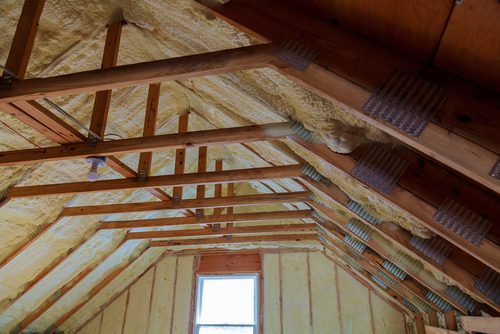
Now that you have removed the rodents, secured all possible entry points, and cleared the attic of any contaminated insulation, we install new insulation in your attic. You can use an insulation that works best for you, including the commonly used pink fiberglass option. Remember, insulation will compact over time, so the more you pack it, the better insulated your home will be. Insulation matters to ensure proper heat resistance for your climate. When selecting insulation for your home, remember that higher R-values mean greater heat resistance.
Get them out.
Keep them out.®
Contact Form
Experience a wildlife or pest issue? We can help! Complete this form, and your local Critter Control® office will contact you to assist.