

Texas is home to 32 bat species, the most in the United States (47 species of bats are in the country). Bracken Caves, just north of San Antonio, is home to 15 million bats and is the largest known bat colony! If you’re looking for something a little closer, the Fort Worth Botanical Garden is home to five different bat species.
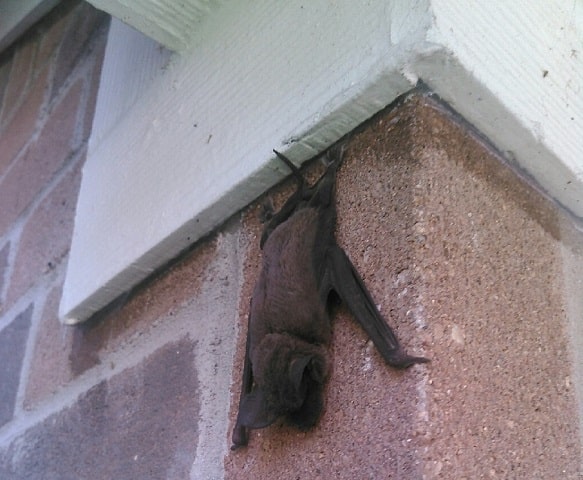
A suitable bat habitat has close access to water, ample food supply, and a safe place to roost during the day. Natural roosting locations include caves and hollowed trees. Suburban and agricultural landscapes provide similar habitat requirements. Bats will roost in mines, under bridges, in bards, in your attic, inside the walls, or on your roof.
Why are Bats Protected in Texas?
Out of the 32 local bat species, three are federally protected: the Mexican Long-nosed bat, the Tricolored bat, and the Northern Long-eared bat (recorded only once in Texas). The Southern Yellow bat is considered a threatened bat by the state, but it stays in the southern part of the state.
Bat Populations in Texas Threatened
Despite the benefits bats provide, the bat populations are threatened.
- White-nose syndrome is a fungal disease that spreads through bat colonies and has almost eliminated the Northern long-eared, little brown, and tri-colored bats.
- Bats do not reproduce as quickly as other wildlife. The females typically give birth to one or two pups a year. Slow reproduction puts the species at risk for population decline.
- Pesticides used by farmers reduce the number of bugs available for bats to eat.
- Wind turbines kill hundreds of thousands of migrating bats around the world.
Benefits of Bats in Texas
All bats in Cedar Hill are insectivores (no vampire bats). Some small bats can consume up to 1000 small insects in a single hour. A nursing female bat can consume more than 4000 insects a night. It is estimated bats save U.S. farmers roughly $23 billion each year by reducing crop damage and limiting the need for pesticides.
Roosting Bat Concerns in Cedar Hills
Bats provide tremendous value; however, you do not want bats roosting in your house. Bats pose very little direct danger to people, but they can spread diseases and damage your property.
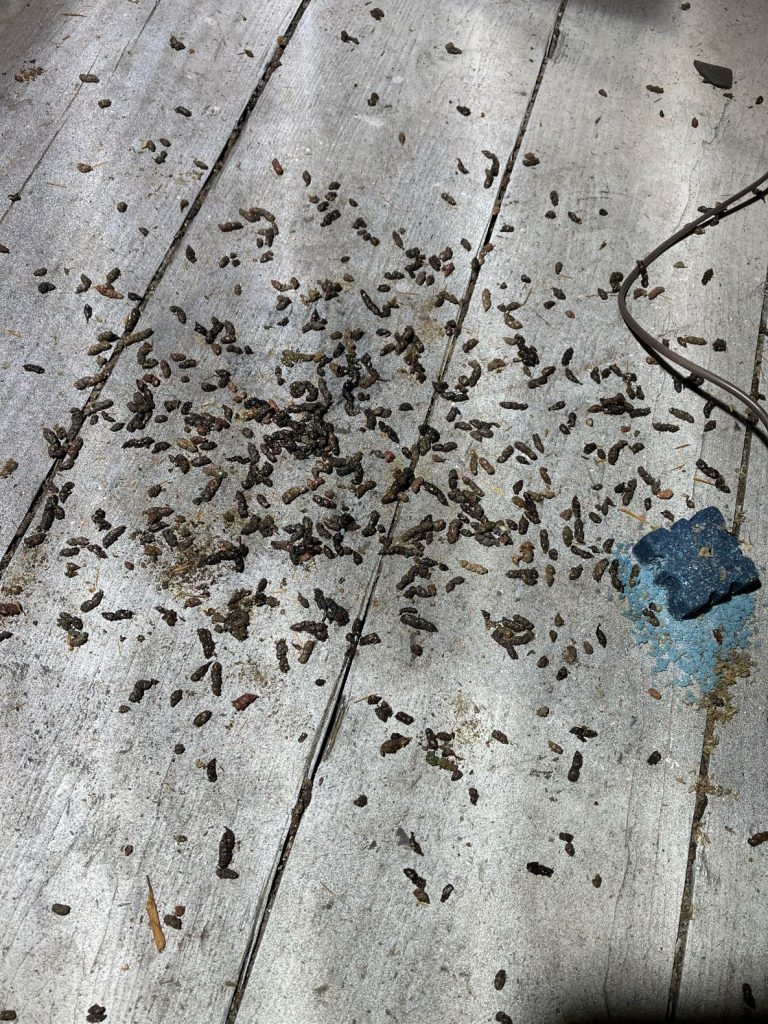
Bats defecate where they roost. Bat droppings, or guano, can accumulate within walls and attics as well as on the ground and roof tiles. The nutrient-rich droppings cultivate the growth of histoplasmosis fungus, which causes severe respiratory problems in humans.
Bats are indeed capable of contracting and transmitting the rabies virus. Rabies is transmitted via scratch, bite, or when infected saliva comes into contact with human eyes, mouths, or open wounds. So if you find bats in your house, avoid contact!
Bats also harbor ticks and fleas. Those parasites can find new hosts like your family and pets.
Bat Removal in Cedar Hills, TX
To get rid of bats in Cedar Hills, the most effective and humane method is with a bat valve. The exclusion device allows bats to fly out on their own but keeps them out. In the state of Texas, it is illegal to hunt a bat with an exception if that bat is inside a structure.
Bat Exclusions Restrictions in Texas
The current bat regulations in Texas are:
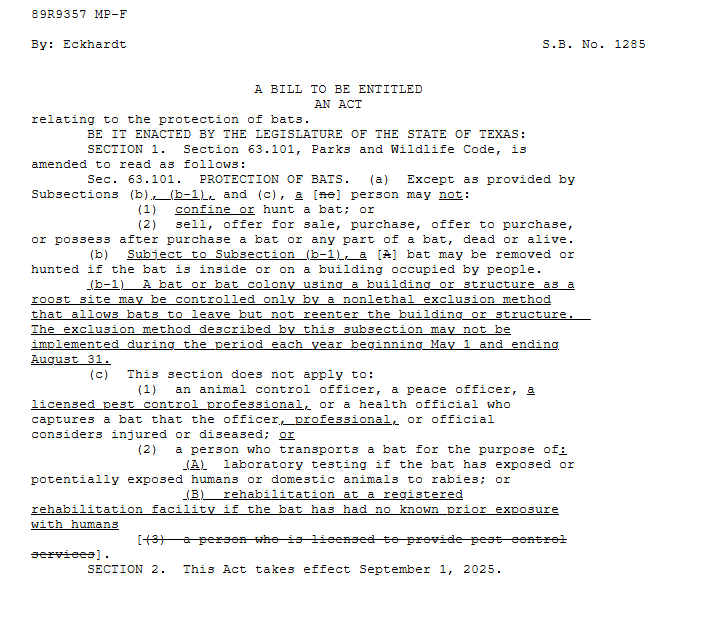
Sec. 63.101. PROTECTION OF BATS. (a) Except as provided by Subsections (b) and (c), no person may:
(1) hunt a bat; or
(2) sell, offer for sale, purchase, offer to purchase, or possess after purchase a bat or any part of a bat, dead or alive.
(b) A bat may be removed or hunted if the bat is inside or on a building occupied by people.
(c) This section does not apply to:
(1) an animal control officer, a peace officer, or a health official who captures a bat that the officer or official considers injured or diseased;
(2) a person who transports a bat for the purpose of laboratory testing if the bat has exposed or potentially exposed humans or domestic animals to rabies; or
(3) a person who is licensed to provide pest control serviceshttps://statutes.capitol.texas.gov/Docs/PW/htm/PW.63.htm#63.101
However, legislation revises and expands the protection of bats to take effect September 1, 2025. The bill requires only nonlethal exclusion methods to be used for bat control, and the bat valve cannot be installed between May 1 and August 31.
Who should call for bat removal in Dallas-Fort Worth Metroplex?
You should call a licensed Nuisance Wildlife Control Operator in Texas ecause bats must be removed from structures through a process of exclusion, not extermination. Regardless of the laws, at Critter Control, we only use the most humane and ethical removal methods for bats.
How to Get Rid of Bats
The most effective and humane way to remove bats is by utilizing a bat valve with a full home exclusion. Exclusion, not bat exterminator. A bat valve allows for bats to exit your home but not re-enter. Since each bat removal is unique, our specialist will use or create a bat valve specifically for your home.
Once the bat valve is installed, all other entry points will be sealed, allowing bats to exit only through the valve. The removal process typically takes 3-7 days. Our specialist will perform a final attic inspection before removing the valve. After removing the valve, the final entry point will be sealed, leaving your home bat-free.

.jpg)
.jpg)
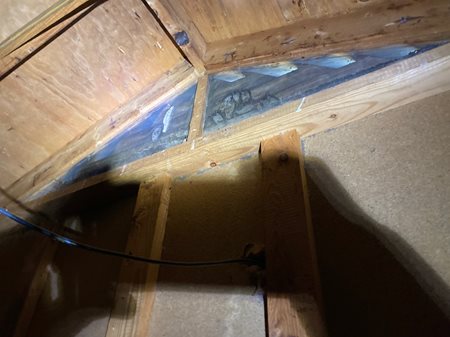
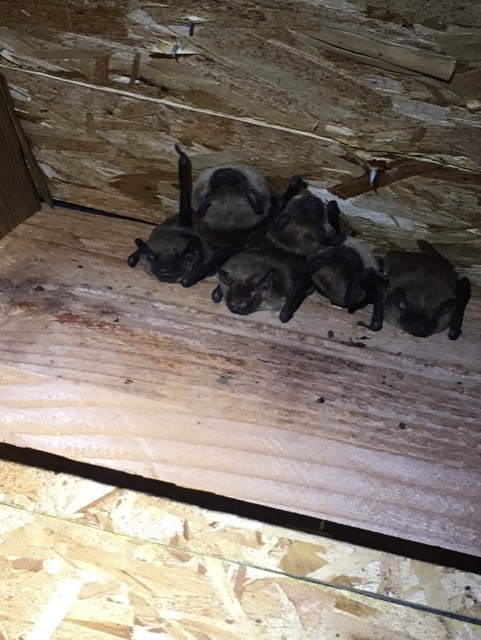
Pictures of Bats in the Attic
Bat Guano Identification – Signs of Bats in Attic
How Bats Get into Your House
Contact Form
Reviews of Critter Control in Dallas-Fort Worth, Texas
Spring and summer are the most common times of year for people in Raleigh-Durham to experience a bat infestation. Bats are relatively harmless to people. It is exceedingly rare to get bitten by a bat. In fact, bats around your property can help with pest control. Flying insects like mosquitoes make up the majority of their diet.
But bats in the attic are dangerous. People tend to notice a foul odor first. The accumulation of guano and urine damages insulation, spreads diseases, and creates a foul odor. It’s also common to see bats flying out of your house, especially if the maternity colony is rather large. Bats leave rub marks or dark smudges where they crawl out of your attic. Finally, if you have bats in the attic, you can hear chirping or squeaking sounds.
Follow a bat inspection with the Critter Control team in Durham.
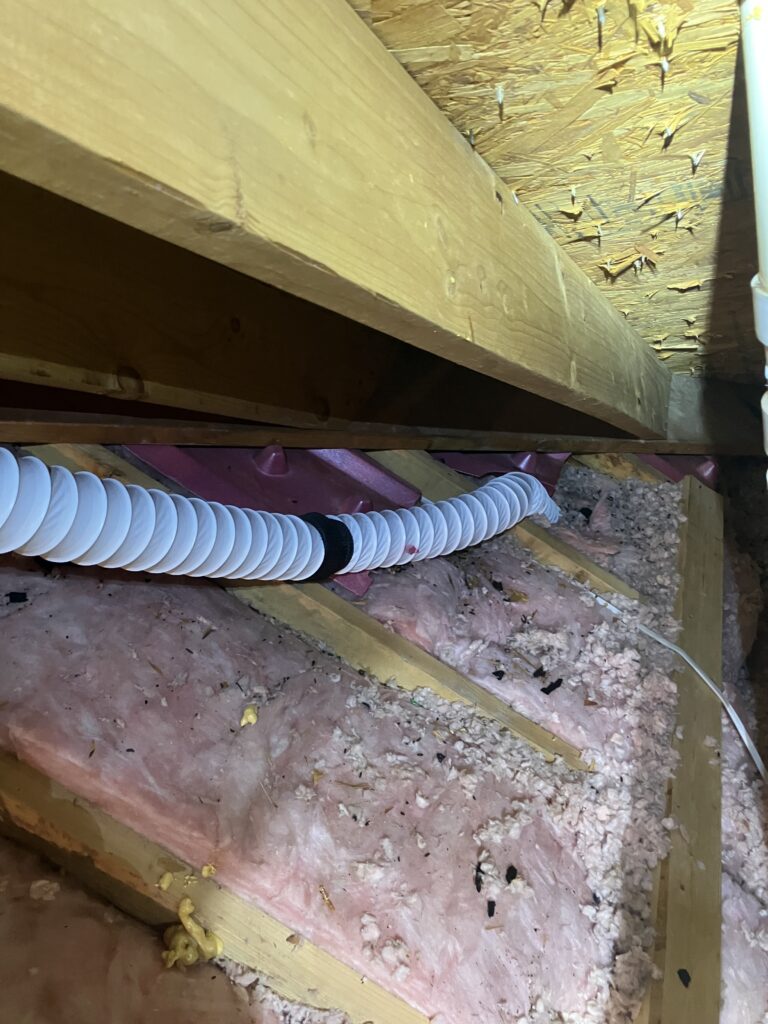
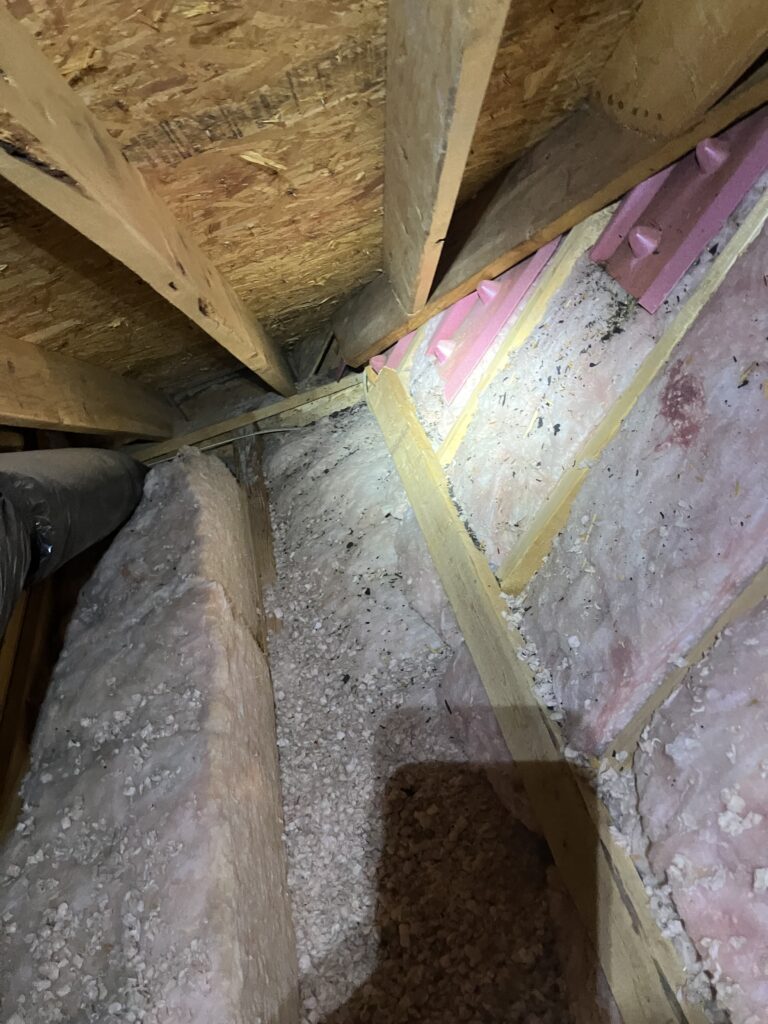
Bat Guano in Attic Insulation
How to Find Where Bats are Getting In
Bats cannot create their own opening like other nuisance wildlife, but they need a gap no bigger than 3/8ths of an inch—about the size of a dime. The only efficient bat control is to seal all entry points. If you leave one gap open, the bats can return.
The most common bat entry points on a house:
- Attic vents
- Soffits
- Fascia boards
- Ridge Vents
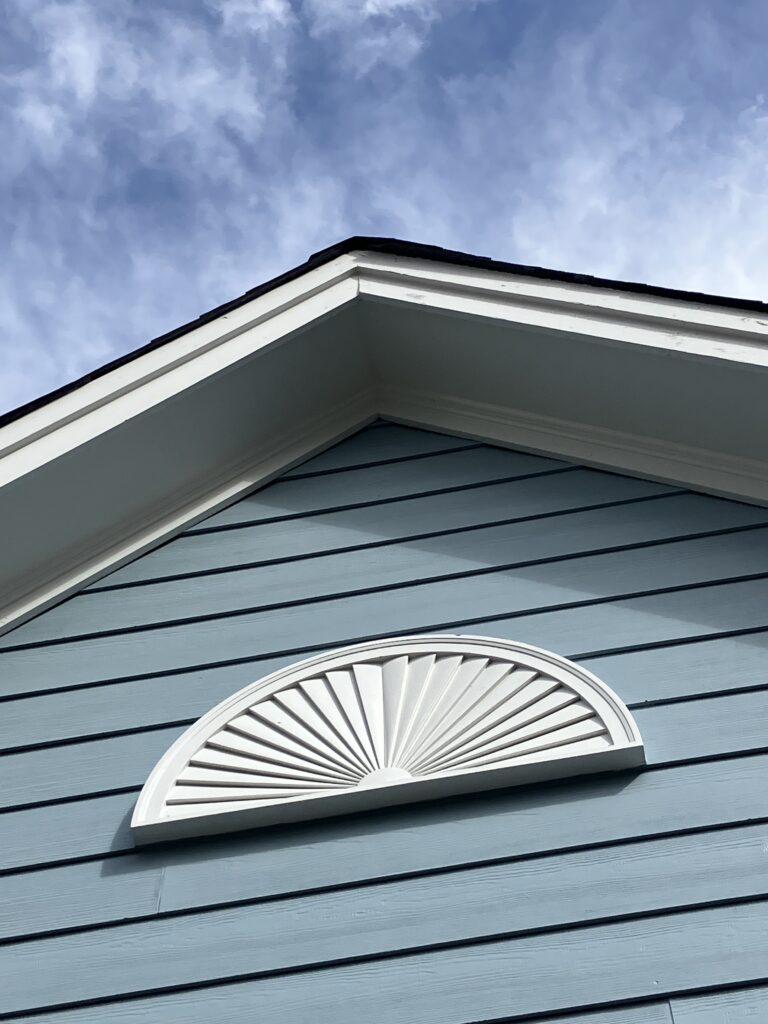
- Gable Vents
- Roof returns or eaves
- Siding
- Chimneys
To illustrate the variety of entry gaps a bat uses, follow along this visual tour.
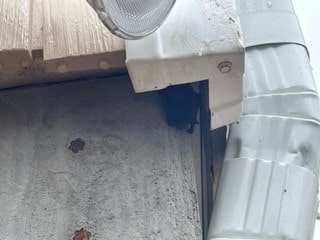
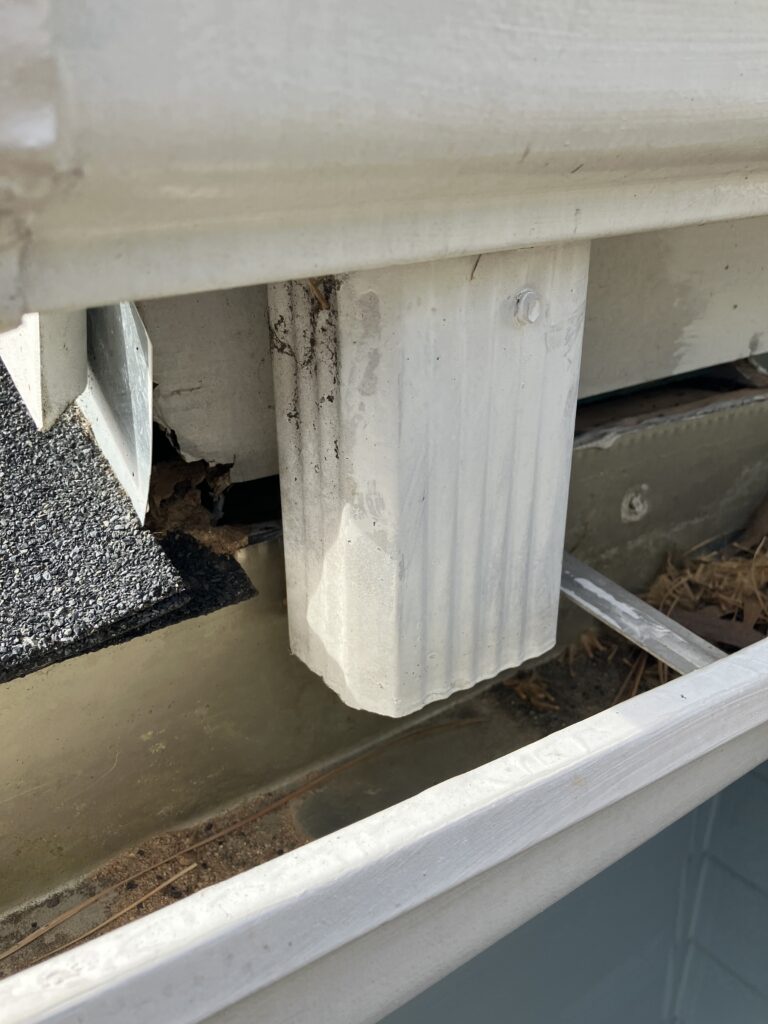
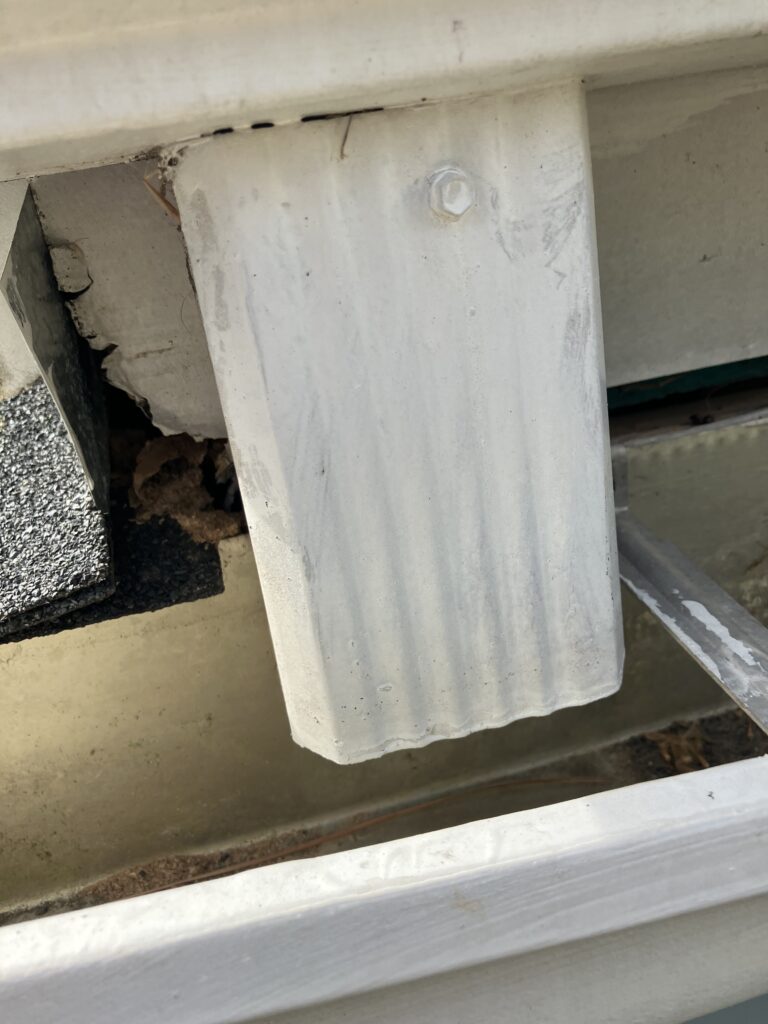
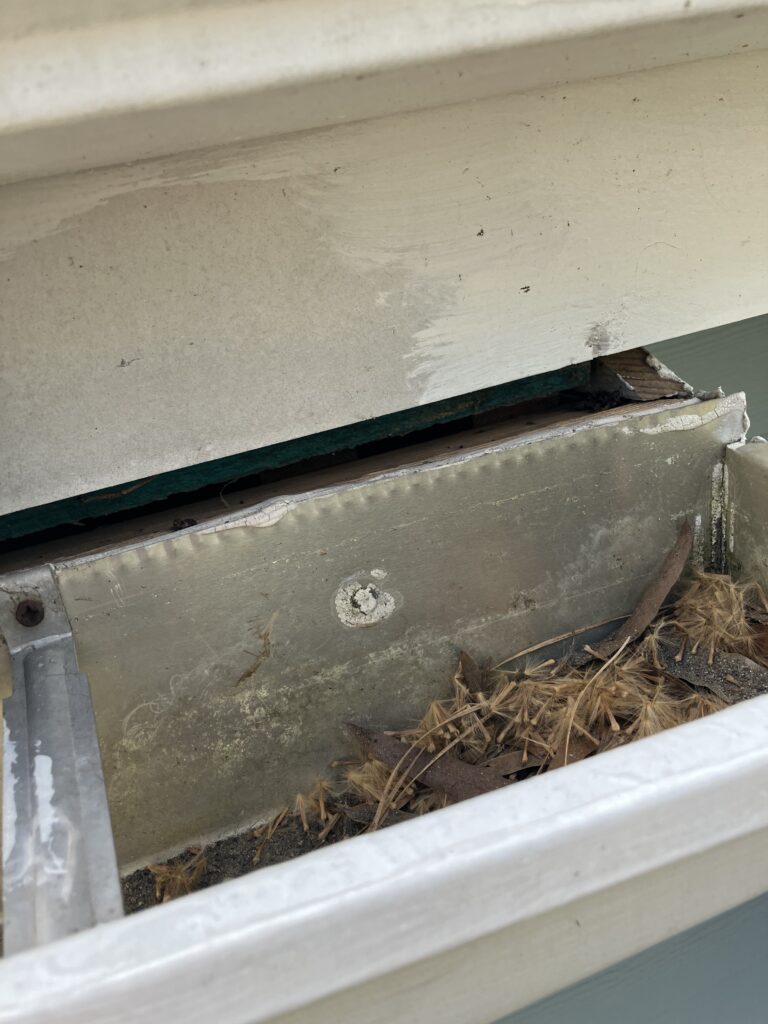
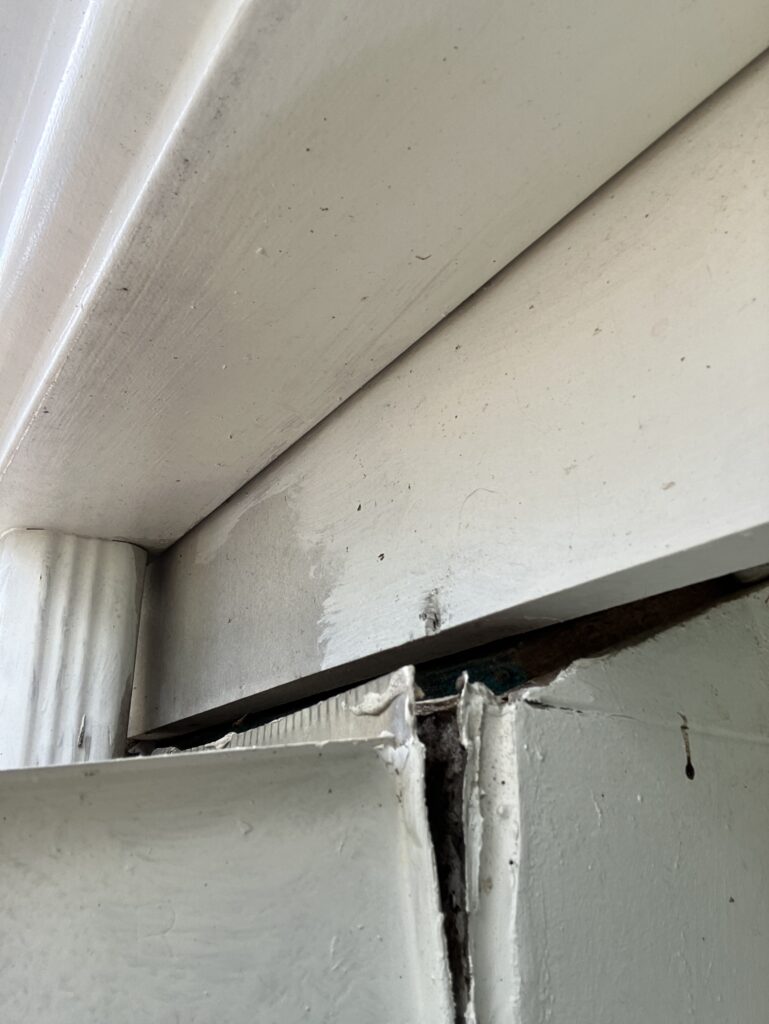
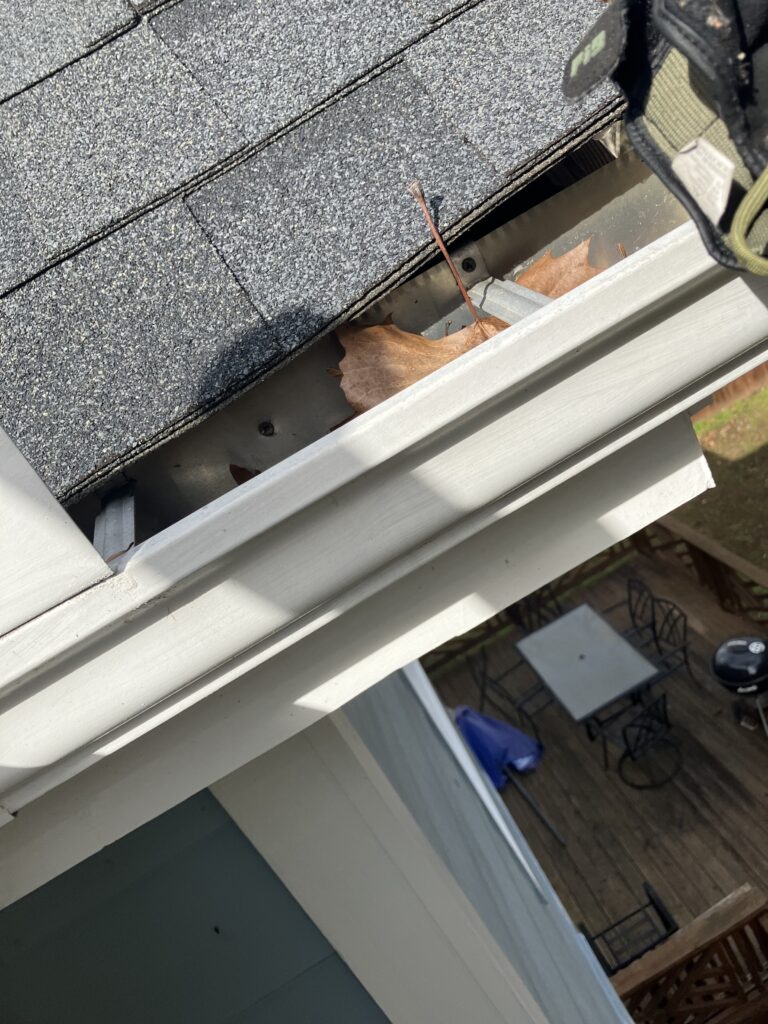
Fascia Boards Behind the Gutter
Bats found a construction gap on the fascia board of this house. Construction gaps are common in the South. They help with attic ventilation and can prevent leaks.
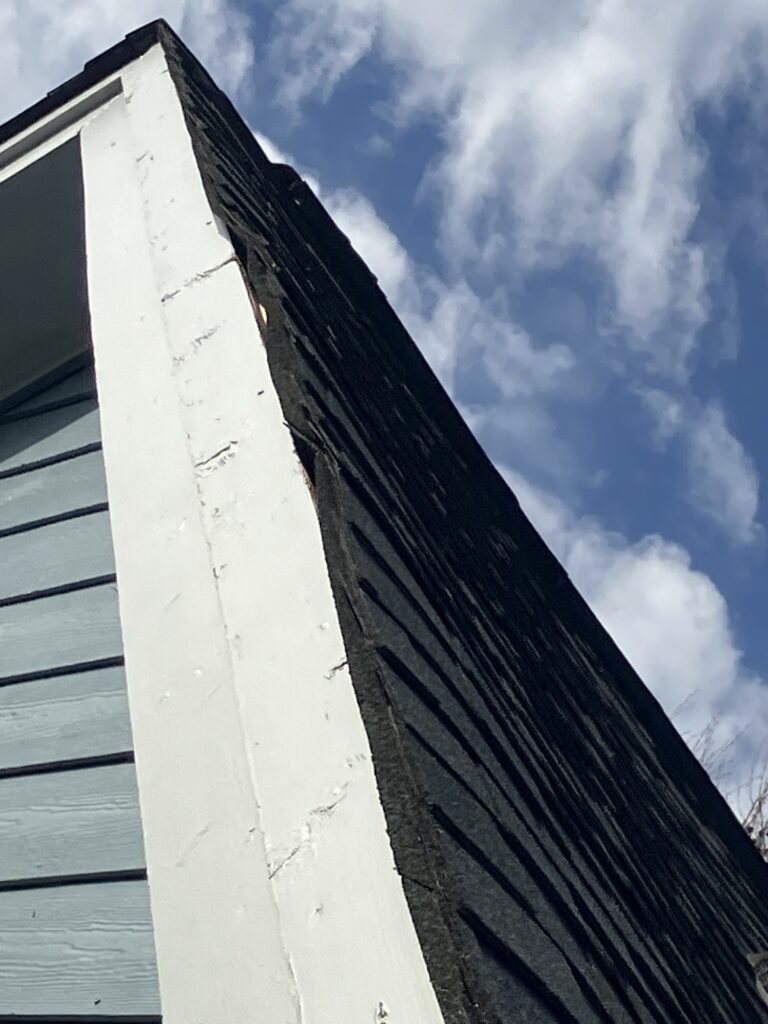
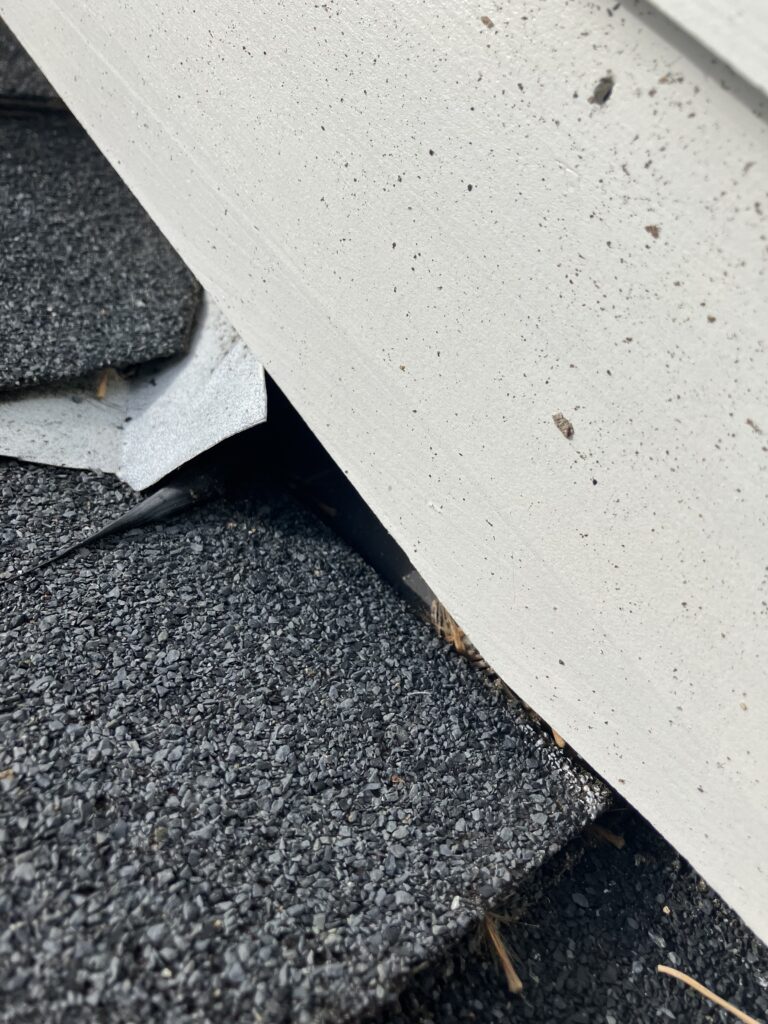
Loose Shingles
Some of these can be difficult to see. The bats were able to squeeze under loose shingles where to roof ends and meets the gutters.

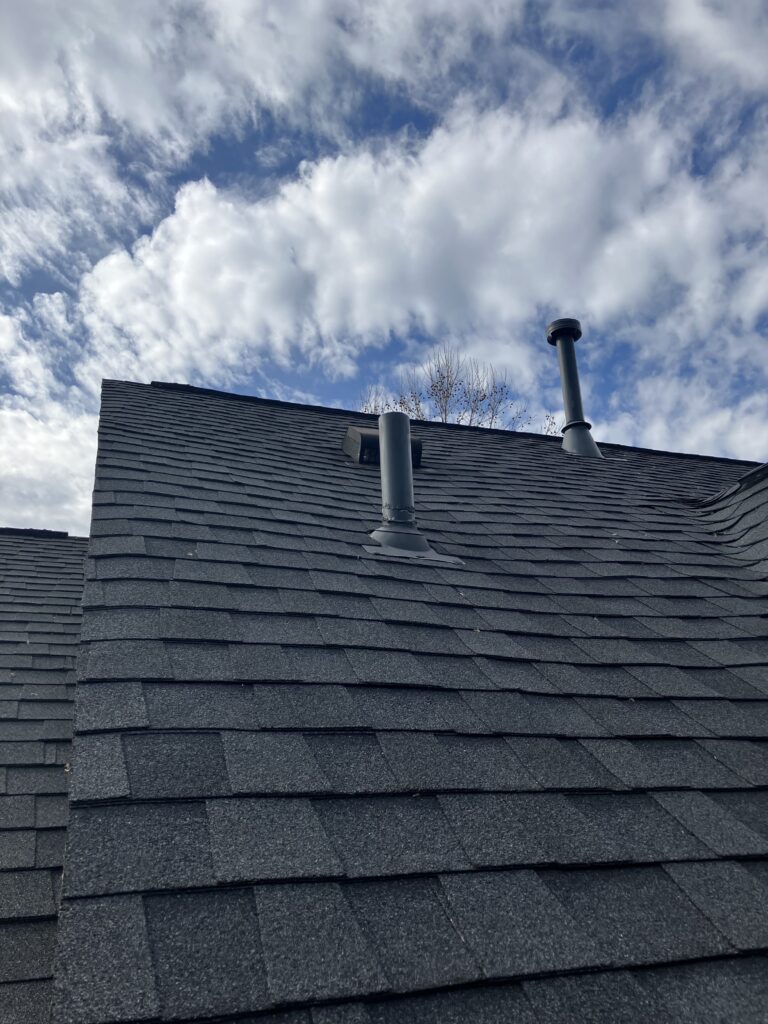
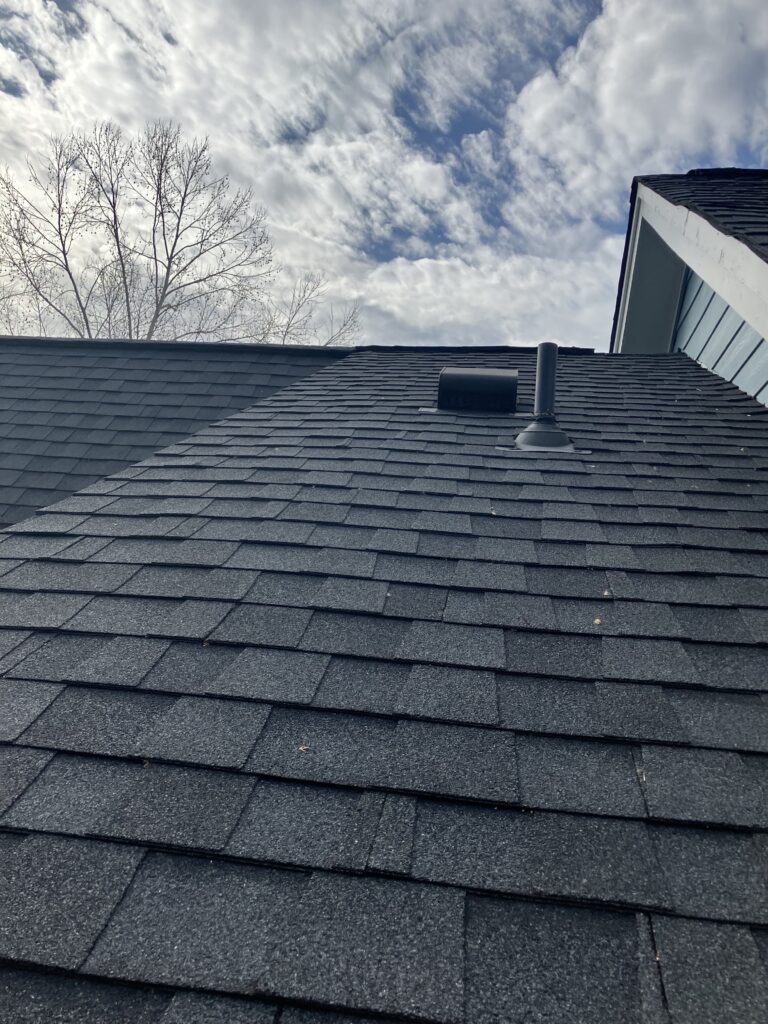
Roof Vents
If there is a bat infestation in the attic, every roof vent needs to be checked. From the ground, these may seem secure, but it is impossible to spot a dime-sized hole from 20 feet away. During the Critter Control bat inspection, we climb onto the roof and scour the attic to find all entry points.
Soffits
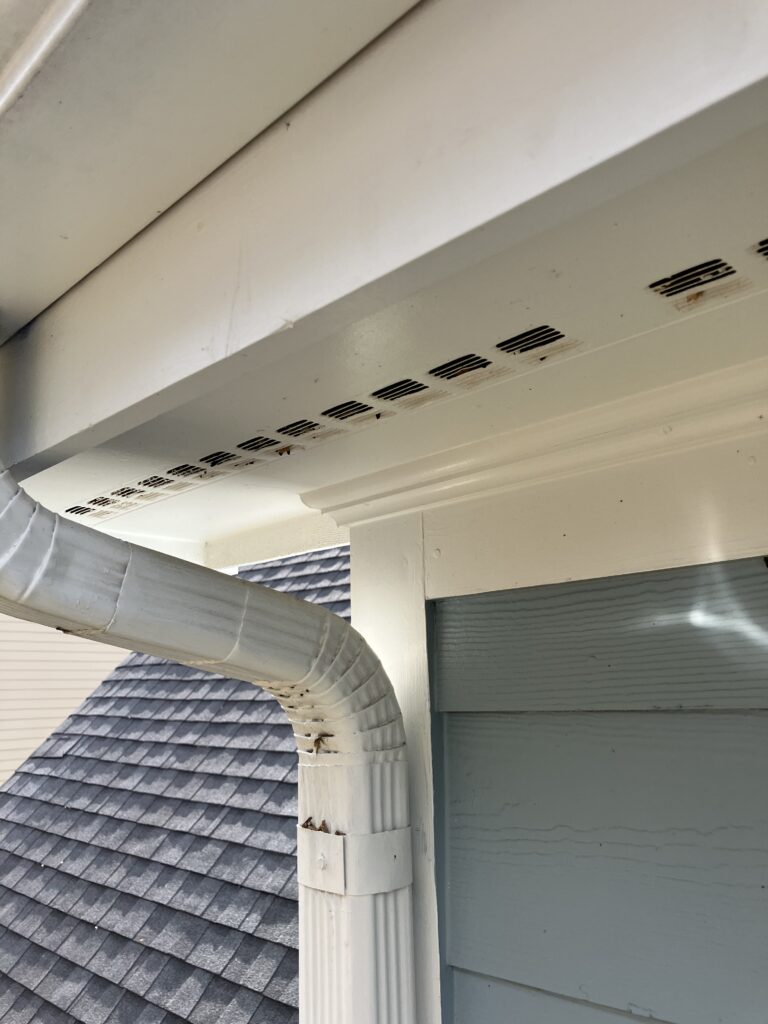
These soffit vents have no apparent damage, but a bat can get through these gaps!
Other Bat Entry Points
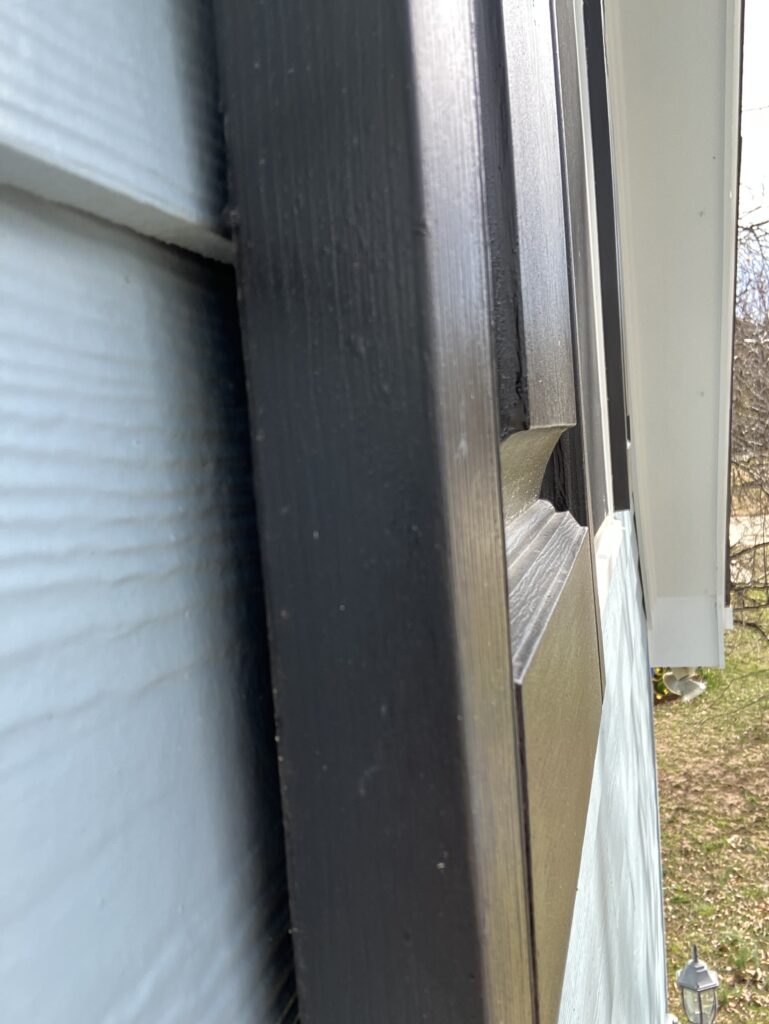
Bats Behind the Shutters
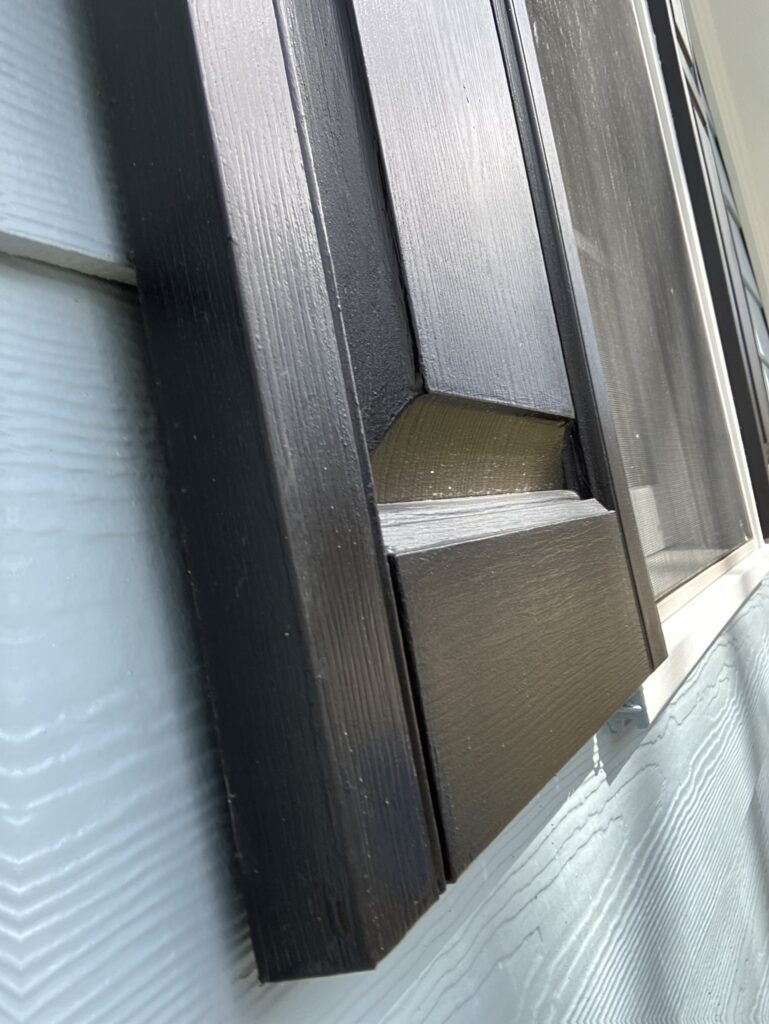
Bats look for darkness for shelter during the day. Some species will roost on trees, under leaves or bark. The small gap between the exterior of the wall and the window shutters provides all the space a bat needs.
Professional Bat Removal
Humane bat removal is best left to the professionals at Critter Contorl. Most homeowners do not have the experience or the skills to identify all the potential bat entry points on your house. Attempting DIY bat removal can leave you vulnerable to a continued bat infestation. Furthermore, Most states have specific dates when bat removal can be done. If juvenile bats are present (commonly the case during the summer), it is inhumane to install bat exclusions. The mothers cannot return to the juveniles, leaving the young starving. At Critter Control, we have the training and experience to find all bat entry points which is essential for effective bat removal.
All photos courtesy of Critter Control Triangle
Bats Hiding in an Attic
These bats were discovered in a Kansas City, MO attic. If you suspect bats in your attic, call the professionals at Critter Control at 1-800-274-8837, or visit https://www.crittercontrol.com/office-finder.If you have bats in your attic, you might notice them flying out of your attic at dusk. Observe from a distance! Watch where the bats are exiting from but avoid close contact. Bats are nocturnal, so you’ll typically see them leaving your home around dusk as they go out to forage for insects. Look for small openings around your roofline, eaves, vents, or chimney. Bats can squeeze through gaps as small as 3/8 of an inch.
Watch Bats Leaving Attics
Video from Houston and The Woodlands.
There are thirteen species of bats in Florida. The big brown bat and little brown bat are two of the most common bat species to roost in your attic.
Bats are found in nearly every geographic region in Florida. Favorite environments include tropical forests, woodlands, open fields, both suburban and urban communities, and even deserts. Roosting requirements usually depend on the species, but caves, trees, hollowed logs, rock crevices, and human dwellings serve as excellent habitats.
Should I Call an Exterminator for Bat Control?
You should call a wildlife control operator like the professionals at Critter Control. Exterminators are trained to handle pests using chemicals. At Critter Control, we have decades of experience and training to safely remove bats from your attic, repair the damage, and seal your house to prevent future infestations.
Florida Administrative Code rule 68A-4.001 on General Prohibitions and 68A-9.010 on Taking Nuisance Wildlife says it is illegal to kill any bat. In addition, you can’t take, transport, store, buy, sell, or possess a bat at any time. Bats have additional protections during the maternity season. They cannot be harassed or encouraged to leave their roost in any way. In Florida, bats cannot be taken as nuisance wildlife, even if they are causing a nuisance.
Some small bats can consume up to 1000 small insects in a single hour. A nursing female bat can consume more than 4000 insects a night. It is estimated bats save U.S. farmers roughly $23 billion each year by reducing crop damage and limiting the need for pesticides.
Bat Populations in Florida Threatened
Despite the benefits bats provide, the bat populations are threatened.
- White-nose syndrome is a fungal disease that spreads through bat colonies and has almost eliminated the Northern long-eared, little brown, and tri-colored bats.
- Bats do not reproduce as quickly as other wildlife. The females typically give birth to one or two pups a year. Slow reproduction puts the species at risk for population decline.
- Pesticides used by farmers reduce the number of bugs available for bats to eat.
- Wind turbines kill hundreds of thousands of migrating bats around the world.
Roosting Bat Concerns in Tallahassee
Bats provide tremendous value; however, you do not want bats roosting in your house. Bats pose very little direct danger to people, but they can spread diseases and damage your property.
Bats defecate where they roost. Bat droppings, or guano, can accumulate within walls and attics as well as on the ground and roof tiles. The nutrient-rich droppings cultivate the growth of histoplasmosis fungus, which causes severe respiratory problems in humans.
Bats are indeed capable of contracting and transmitting the rabies virus. Rabies is transmitted via scratch, bite, or when infected saliva comes into contact with human eyes, mouths, or open wounds. So if you find bats in your house, avoid contact!
Bats also harbor ticks and fleas. Those parasites can find new hosts like your family and pets.
Bat Removal in Tallahassee, Florida
To get rid of bats in Tallahassee, you need to use exclusion, not an exterminator.
Bat Exclusion Restrictions in Florida
Bat maternity colonies begin to form in early April. These roosts are frequently near areas prone to insect swarms such as fields, ponds, or neighborhoods. In the late spring or summer, homeowners who see bats leaving an attic or overhang at twilight may need to check for an infestation.
If you need bat removal between April 15 and August 15, you need a special permit to install bat exclusions.
Spring is ideal for bat removal as it coincides with their return from hibernation or migration but before maternity season starts. After maternity season, the bat colony disperses. Some bats return to the same roost year after year. If you want to prevent bats from entering your home, preventative exclusion is the best precaution you can take.
How to Get Rid of Bats
The most effective and humane way to remove bats is by utilizing a bat valve in conjunction with a full home exclusion. A bat valve allows for bats to exit your home but not re-enter. Since every bat removal service in Tallahassee is unique, our specialist will use or create a bat valve specifically for your home.
Once the bat valve is installed, all other entry points will be sealed, allowing for bats to exit only through the valve. The removal process typically takes 3-7 days. Our specialist will perform a final attic inspection before removing the valve. After removing the valve, the final entry point will be sealed, leaving your home bat-free.